In the gardens of the Americas, the birds that dart through the branches have honed their survival wisdom over millions of years of evolution to cope with the harsh weather of the natural world. Their behavioral patterns are like time-tested “survival strategies,” offering humans valuable insights for dealing with extreme weather conditions.
Precise early warning mechanisms are the first lesson birds offer humanity. Many common birds in American gardens, such as the blue jay, exhibit unusual behavior hours before a storm arrives—they frequently shuttle between their nests and feeding grounds, accelerate their food storage pace, and fly at significantly lower altitudes. This acute sensitivity to changes in air pressure and humidity stems from specialized sensory organs within their bodies. Although humans now possess advanced weather satellites and monitoring equipment, birds' “biological early warning” model suggests that, beyond technological monitoring, we can further refine multi-dimensional early warning networks: for example, by integrating abnormal behavior data from wildlife in different regions as supplementary references for weather warnings, especially in remote areas or regions with insufficient monitoring equipment coverage, such biological signals can provide more time for disaster prevention.
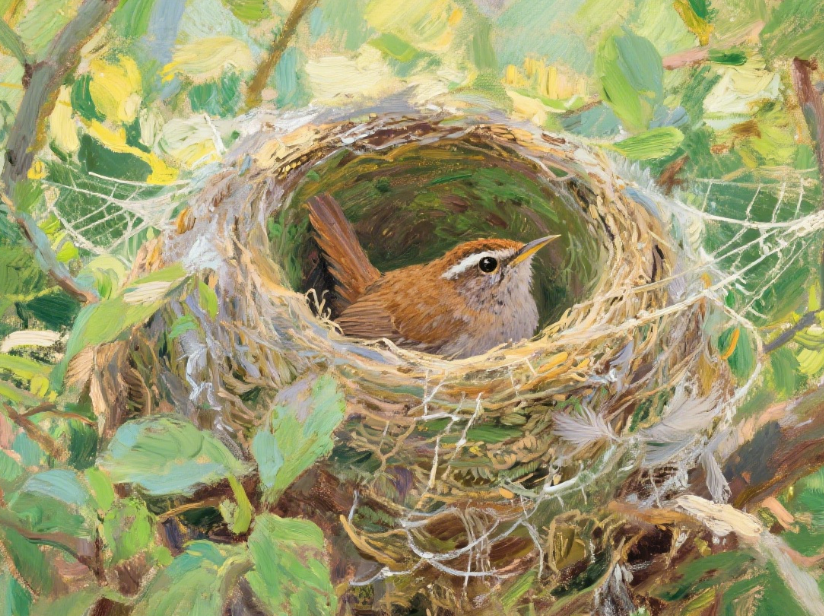
The art of nest-building in birds also embodies engineering wisdom for wind and water resistance. Carolina wrens use spider silk to weave plant fibers into bowl-shaped nests, with dense walls that have some elasticity to reduce vibrations during strong winds. North American redbirds often build their nests in the middle layers of dense shrubbery, using branches and leaves to form natural wind barriers. The nest bottoms are lined with soft feathers and moss, providing insulation and absorbing rainwater. This inspires humans to prioritize biomimetic structures and environmental integration in architectural design: for example, drawing inspiration from the elastic woven structure of bird nests to develop building materials with cushioning properties; in site selection and layout, fully utilizing surrounding vegetation to form windbreaks, reducing the direct impact of extreme winds on buildings; and optimizing roof drainage design by referencing the water-repellent layer principle of bird nests to enhance a building's waterproofing and water resistance.
In the face of prolonged adverse weather, birds' energy management strategies are also worth learning from. During prolonged blizzards, American goldfinches reduce their metabolic rate, entering a state similar to “hibernation” to minimize energy expenditure; while redpolls take advantage of brief weather improvements to consume fat-rich berries voraciously, stockpiling energy for the next round of extreme cold. This suggests that humans should establish a more scientific resource reserve and allocation system when dealing with prolonged extreme weather: for example, setting up emergency supply storage points in urban planning, rationally allocating resources such as food and energy based on the climate risk characteristics of different regions; simultaneously promoting energy-saving technologies to improve energy utilization efficiency, ensuring basic living needs can be maintained during extreme weather-induced energy shortages.
Additionally, birds' collective collaborative behavior demonstrates collective wisdom in crisis response. Before a heavy rain, cliff swallows fly in groups to collectively seek safer nesting sites; in cold weather, mountain finches huddle together, using the strength of the group to withstand the cold. This inspires humans to strengthen cross-regional and cross-departmental collaboration when facing adverse weather: for example, establishing a unified emergency command system to enhance information sharing and coordination among departments such as meteorology, water conservancy, and transportation; simultaneously encouraging community residents to engage in mutual assistance and cooperation, forming a collective force to address extreme weather and enhancing overall disaster prevention and mitigation capabilities.
From the birds in the Americas, humans can not only learn specific coping techniques but also grasp the survival philosophy of adapting to nature and being flexible. When facing the increasingly frequent adverse weather conditions, combining these natural insights with modern technology may enable us to confront nature's challenges with greater composure.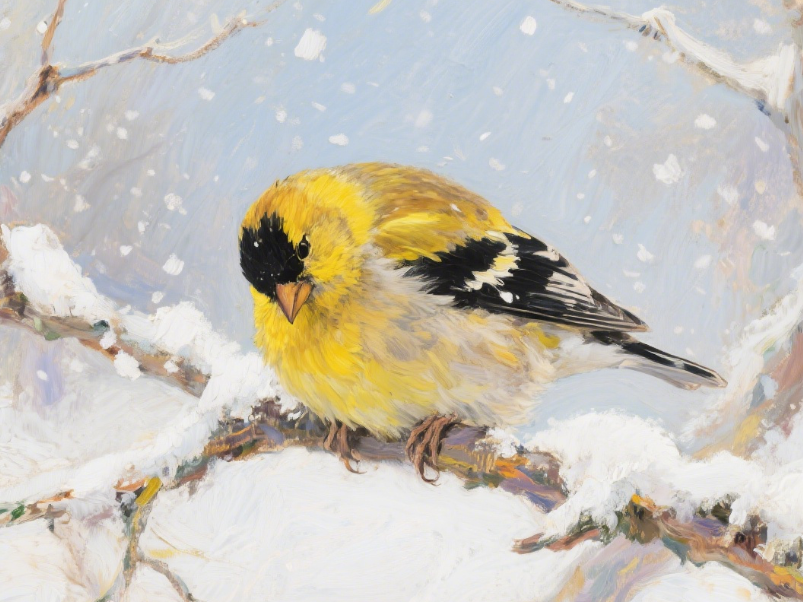
When it comes to coping with harsh weather conditions in nature, what can humans learn from the birds in American gardens?
Aug 4, 2025 Bird knowledge presenters