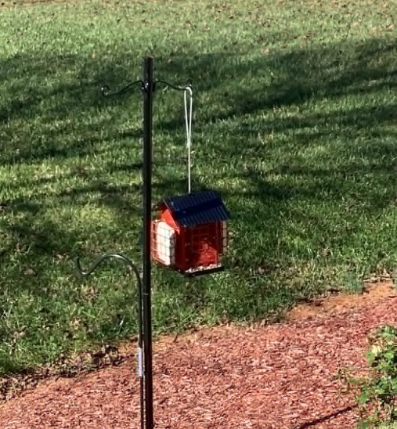
In the hot summer, when choosing the metal material for bird feeders in American courtyards, it is necessary to comprehensively consider factors such as high temperature resistance, corrosion resistance, safety for birds, and material stability. The following are detailed material recommendations and analysis for the summer climate characteristics of the Americas, including high temperatures, strong ultraviolet radiation, high humidity or heavy rainfall in some areas:
1、 Preferred recommended material: 304 stainless steel
304 stainless steel is the best choice for summer American courtyard bird feeders, with core advantages reflected in the following aspects:
Super high temperature resistance and UV resistance: The melting point of 304 stainless steel is as high as 1450 ℃, and it will not deform, soften or release harmful substances in the common 35-45 ℃ high temperature environment in the Americas during summer; At the same time, it can resist long-term exposure to strong ultraviolet rays, with a surface that is not easily faded or cracked, and a service life of over 10 years.
Excellent anti-corrosion performance: Some parts of the Americas have rainy summers (such as Florida in the southeast and occasional monsoon rainfall in Arizona in the southwest), and 304 stainless steel contains 18% chromium and 8% nickel, which can form a stable oxide film on the surface, effectively resisting rust corrosion caused by rainwater and dew. Even if exposed to humid environments for a long time, there will be no problem of rust shedding and contaminating bird food.
Safe and bird friendly: This material is free of heavy metals such as lead and mercury, and has a smooth surface that is not easy to scratch the claws or feathers of birds; And it will not release odors like some metals at high temperatures, avoiding birds refusing to use bird feeders due to their sensitive sense of smell.
Suitable for common bird species in the Americas: Whether it is small tits, warblers, medium blue jays, or main Cardinals, the 304 stainless steel bird feeder's load-bearing capacity (usually able to withstand 5-10 medium birds staying at the same time) and structural stability can meet the needs, and it is not easy to leave food residue during cleaning, reducing bacterial growth.
2、Recommended Material: Anodized Aluminum Alloy
If considering cost or lightweight requirements, anodized aluminum alloy is a cost-effective choice, especially suitable for suspended bird feeders:
High temperature stability is good: the melting point of pure aluminum is about 660 ℃, but after anodizing treatment, a 5-20 μ m thick oxide film will be formed on the surface, which not only improves high temperature resistance (can withstand short-term high temperatures of 80-100 ℃, far exceeding summer ambient temperatures), but also prevents direct contact of aluminum elements with bird food or rainwater, avoiding oxidation corrosion.
Lightweight and easy to install: The density of aluminum alloy is only about 1/3 of stainless steel, which can reduce the pressure on the support and lower the risk of falling for bird feeders suspended under branches or eaves; At the same time, the material is easy to process into hollow out, grid and other shapes, which is convenient for birds to eat, and the surface is smooth and easy to clean.
Attention: It is necessary to choose products that have undergone formal anodizing treatment (non ordinary spray painted aluminum alloys) to avoid the detachment of the oxide film and exposure of the aluminum substrate - untreated aluminum may react with acidic substances in rainwater and bird food at high temperatures, releasing harmful substances. In addition, aluminum alloy has weak load-bearing capacity and is not suitable for scenes where large birds (such as woodpeckers and pigeons) frequently stay.
3、 Metal materials to avoid
Iron and ordinary steel (not stainless steel): These materials are prone to rusting in high temperature and high humidity environments in summer. Rust not only pollutes bird food and affects bird health, but also quickly corrodes the structure of bird feeders, with a service life usually less than one year; And the iron material is heavy, making installation and movement inconvenient.
Galvanized metal (zinc sheet, galvanized iron wire): Zinc may experience "hot-dip galvanizing layer peeling" at high temperatures. Birds may ingest the peeled zinc particles or come into contact with zinc ions, which may cause poisoning (especially for small songbirds); In addition, the galvanized layer is prone to aging under ultraviolet radiation, causing the surface to become rough and potentially scratching bird claws.
Copper and copper alloys (brass, bronze): Copper is prone to produce copper green (alkaline copper carbonate) in humid environments. Although a small amount of copper green is less toxic to the human body, the metabolic system of birds is sensitive, and long-term exposure may lead to digestive system problems; Moreover, copper material has strong thermal conductivity, and its surface temperature will sharply rise (up to 60-70 ℃) after exposure to sunlight in summer, which may burn bird claws.
4、 Additional suggestions for using metal bird feeders in summer
Location selection: Regardless of the type of metal material used, the bird feeder should be installed in a semi cool place (such as under a tree shade, on the east or north side of a building), avoiding direct sunlight at noon - even 304 stainless steel may have a surface temperature exceeding 50 ℃ after exposure, which not only accelerates the deterioration rate of bird food (such as seeds and nuts), but also makes birds refuse to stay due to "fear of heat".
Regular cleaning: High temperatures in summer can easily lead to food mold and residue accumulation. It is recommended to rinse the metal bird feeder with clean water every week and soak it in diluted white vinegar (1:10 ratio) for 10 minutes every month. This can remove oil and bacteria without corroding the metal surface (especially suitable for stainless steel and anodized aluminum alloy).
Combined with insulation design: Wooden trays and plastic insulation pads can be installed at the bottom or support structure of the bird feeder to reduce the direct contact area between metal and bird claws and lower the risk of burns; If the bird feeder is suspended, a nylon rope (instead of a metal chain) can be used to suspend it, avoiding the overall temperature rise caused by thermal conductivity of the metal chain.
Overall, in the summer courtyard environment of the Americas, 304 stainless steel is the optimal choice that balances safety, durability, and practicality, suitable for most birds and usage scenarios; If the budget is limited or lightweight design is required, regular anodized aluminum alloy products can be chosen, but attention should be paid to load-bearing and material safety. Avoiding the use of metals that are prone to rusting and release harmful substances, while taking into account the characteristics of the summer environment for proper installation and maintenance, is necessary to ensure that the bird feeder is both durable and provides a safe place for yard birds to forage.
We recommend our bird feeder!