Multidimensional response mechanisms of courtyard birds in the Americas to external invasion and disturbance
As a special ecological space at the junction of city and nature, the American courtyard is home to dozens of bird species such as the main Cardinals, Vermilion Finches, and Blue Jays. When faced with external disturbances such as construction noise, frequent human activities, and pet invasions, these birds will form a complete response system through short-term stress response, mid-term behavioral adjustment, and long-term ecological adaptation. Their strategies reflect both species survival wisdom and the fragile balance of the urban ecosystem.
1、 Short term stress: immediate defense and risk avoidance behavior
In the early stages of external interference, the primary goal of birds is to avoid risks, and birds of different body types and diets exhibit divergent reactions. Smaller songbirds such as the home sparrow and the dark eyed bunting will activate a rapid escape mechanism within 0.5-3 seconds of the appearance of the disturbance source - usually moving towards dense shrubs or tall trees in the middle layer, while emitting high-frequency warning sounds with a frequency of up to 5-8kHz, which can alert companions to danger and are not easily detected by mammalian predators. Larger blue jays and mourning doves adopt an "observation decision" mode, staying in place for 10-20 seconds to assess the level of threat. If it is a low-risk disturbance such as slow passage by humans, they only adjust their body orientation to stay away from the disturbance source; If encountering high-risk situations such as pet chasing, engage in short distance gliding to escape, with flight trajectories often taking a zigzag shape to confuse pursuers.
The stress response of birds during the nesting period is more intense. The male main Cardinals during the breeding season exhibit aggressive defense, frequently flapping their wings and making sharp calls in the face of disturbances approaching the nest (such as humans approaching within 3 meters), and even briefly diving to deter them; The female bird prioritizes protecting the chicks, quickly gathering them under her wings and adjusting the nest temperature by changing the fluffiness of her feathers to prevent the chicks from losing temperature due to parental departure from the nest under stress. Research has shown that short-term high-intensity disturbances (such as decoration noise lasting for more than an hour) can increase cortisol levels in courtyard birds by 40% -60%, leading to a 30% decrease in foraging frequency, and some individuals may even exhibit temporary nest abandonment behavior.
2、 Mid term adaptation: dynamic adjustment of behavioral patterns
When interference persists (such as courtyard renovation construction lasting 1-2 weeks), birds will enter an adaptive adjustment stage, with the core strategy being "spatial reconstruction" and "time mismatch". In terms of spatial utilization, they will redefine the functional areas within the courtyard: shifting the foraging area from near disturbance sources (such as flower beds during construction) to relatively quiet corners (such as around balcony flower pots), and setting up warning posts at higher positions (such as tree tops) to expand the field of view and detect danger in advance. For birds such as the Karoo reed wren that rely on shrubs to build their nests, they will choose to raise their nest position from 1 meter above the ground to 2-3 meters above the branching point of the branches to reduce the probability of being affected by human activities.
Time mismatch is reflected in the adjustment of activity rhythms. The North American goldfinch, which is usually active between 7-8 am and 5-6 pm in the morning, will shift its peak foraging time to 6-7 am in the morning and 6-7 pm in the evening, avoiding the most frequent periods of human activity; Birds that rest at night, such as barn owls, will shorten their stay in the courtyard, increase their frequency of hunting outside, and reduce their contact with nighttime construction lights. This time adjustment is not without cost - studies have found that birds forced to change their activity rhythms experience a 15% -20% decrease in energy intake efficiency, and some individuals may experience a 5% -8% decrease in weight during the disturbance period.
3、 Long term impact: changes in population structure and ecological functions
If external interference persists for a long time (such as courtyard expansion projects lasting for more than 3 months), it will have a deep impact on bird populations and even change the structure of the entire courtyard ecosystem. From a population perspective, the first phenomenon to emerge is the "species replacement" phenomenon: the number of birds with strong tolerance to disturbance (such as sparrows and pigeons) gradually increases, while sensitive species (such as orange breasted warblers and grey cat mockingbirds) choose to migrate to quieter parks or suburbs, resulting in a 20% -30% decrease in bird diversity in the courtyard. This substitution will disrupt the original balance of the food chain - for example, after a decrease in sensitive bird species that feed on insects, the number of pests such as aphids and scale insects in the courtyard may increase by 15% -25%, indirectly affecting plant health.
Long term interference can also alter the reproductive strategies of birds. Species such as the Baltimore oriole, known for their high reproductive success rates, will reduce the number of eggs laid per litter (from the usual 4-5 to 2-3), while extending the incubation period to improve offspring survival rates through the strategy of "fewer but better"; However, migratory birds such as thrushes may delay their migration time or shorten their stay period, resulting in some individuals missing the optimal breeding window. The more subtle impact lies in the intergenerational transmission of behavioral habits - young birds frequently come into contact with disturbed environments during their growth process, which can form a "low alert threshold", that is, their response to human activities becomes sluggish. This habit may continue to affect the subsequent 2-3 generations of individuals, increasing their risk of survival in the wild.
4、 Human intervention: eco-friendly strategies to reduce interference
After understanding the coping mechanisms of birds, humans can reduce the impact of external disturbances on courtyard birds through targeted measures. In construction interference, the "segmented construction" mode can be adopted, dividing the project into short cycle operations of 1-2 days, with 3-4 days of recovery time reserved in between, allowing birds enough time to adjust their behavior; Simultaneously set up temporary protective barriers (such as green dust nets) to reduce noise transmission and provide temporary shelter for birds. In daily activities, avoid frequent pruning of shrubs or soil turning during the bird breeding season (spring from March to June), and maintain 10% -15% of the "wild area" in the courtyard (such as keeping an untrimmed lawn or naturally growing flower clusters) to provide safe nesting and foraging space for birds.
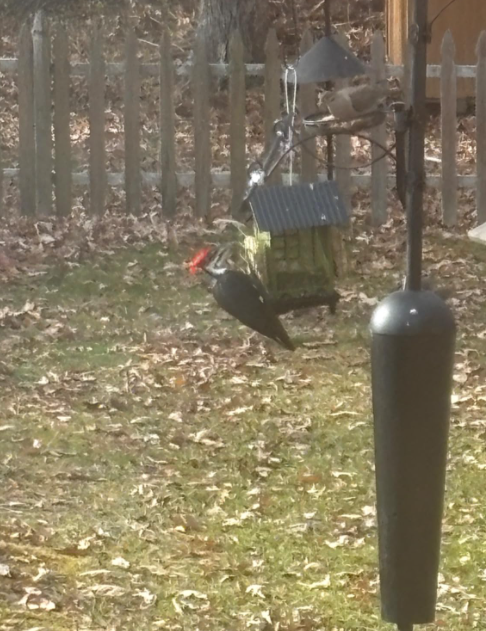
In addition, scientifically setting feeding points and water sources can also alleviate the pressure caused by interference. Choosing to place feeders in a corner of the courtyard away from human activities, regularly supplementing with food such as millet and sunflower seeds, while keeping the water source clean, can help birds maintain energy intake during disturbances; Avoid using strong spotlights and minimize courtyard lighting at night to minimize the impact on bird rest and reproduction. These measures not only protect courtyard birds, but also maintain the biodiversity of urban ecosystems, allowing humans and nature to coexist harmoniously in courtyard spaces.
We recommend our Flowafoli bird feeder!