1、 Emotional Healing and Psychological Comfort: Natural Therapists in Cities
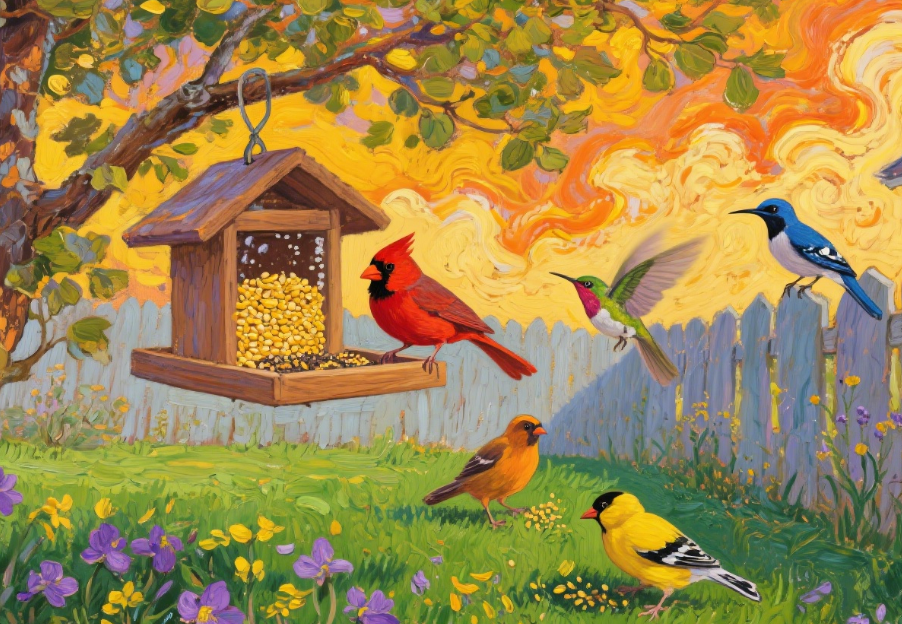
In the fast-paced urban life of the Americas, courtyard bird feeders have become a "natural healing window" for relieving anxiety. When brightly colored birds such as the main Cardinals and Goldfinches visit frequently, human attention shifts from electronic screens to natural dynamics - the bird pecking posture, the scene of bird interaction, can trigger the release of serotonin in the brain, effectively reducing stress hormone levels. Especially for elderly people living alone or those in high-pressure workplaces, daily observation of bird activities has become a fixed "mental recharge moment". This low threshold natural interaction fills the emotional gap of "nature deficiency syndrome" in modern life.
2、 The vibrant classroom of ecological education: reconstructing the cognitive connection between humans and nature
Bird feeders are important carriers for ecological education in American families. For children, by observing the feeding habits of different bird species (such as woodpeckers preferring nuts and hummingbirds relying on nectar) and migration patterns (such as the cluster visits of autumn yellow rumped warblers), they can intuitively understand abstract concepts such as the "food chain" and "seasonal changes". This immersive experience is much easier to form deep memories than textbook knowledge. At the same time, adults will gradually establish an awareness of "ecological responsibility" in the process of maintaining bird feeders (such as regular cleaning and changing feed according to the season), realizing the direct impact of human behavior (such as using pesticide free feed) on bird survival, and promoting broader environmental protection behaviors (such as reducing the use of pesticides in courtyards).
3、 Invisible Bonds in Community Relationships: Building Shared Natural Memories
In suburban America, bird feeders often become a "social topic" among neighbors. Residents will share rare bird species attracted by their own bird feeders (such as occasional snowy owls), exchange feed selection experiences, and even participate in the "Community Bird Counting" activity together. This kind of interaction centered around nature breaks down the barriers of "neighborhood unfamiliarity" in modern communities and forms emotional connections based on shared natural experiences. Many communities also use bird feeders as decorative elements in public spaces (such as wooden bird feeding stations in parks), making "bird watching" a shared leisure activity for residents and further strengthening community cohesion.
4、 Unique extension of life aesthetics: endowing daily scenes with natural poetry
The bird feeder itself has both practical and aesthetic value, becoming an important element in American courtyard design. From vintage wrought iron bird feeders to suspended glass hummingbird feeders, different styles of utensils are harmoniously matched with courtyard landscapes such as hydrangea flowers and wooden fences, enhancing the aesthetic level of living spaces. More importantly, the visit of birds injects dynamic beauty into the static courtyard - in spring, hummingbirds shuttle between flowers and feeders, and in winter, sparrows jump next to snow covered feeders. These scenes become a natural poetry of "rare but unattainable" in daily observation, giving ordinary life a unique aesthetic significance in an instant.
What is the value and significance of using bird feeders in American courtyards for humans
Aug 26, 2025 Bird knowledge presenters