In the ecological landscape of American gardens, birds do not passively receive human-provided “feeding services.” Instead, through behavioral preferences, population interactions, and ecological needs, they offer multidimensional “feedback signals” that guide human choices in selecting bird feeders. This “two-way interaction” not only enhances the efficiency of bird feeder usage but also helps humans create garden ecosystems aligned with birds' natural habits, achieving harmonious coexistence between humans and birds. Below, we analyze how birds provide concrete assistance in feeder selection across four core dimensions:
I. Feeding Behavior: Screening Feeder Types
Significant differences in feeding habits among bird species directly reflect their “selection preferences” for feeders, indicating the suitability of equipment. For example, finches (such as the Northern Cardinal and House Finch) typically feed while standing. If these birds frequently visit your yard yet ignore hanging perch feeders while congregating on platform feeders, it indicates that platform designs better suit their claw-gripping and pecking needs. — The open platform allows them to stand securely while observing their surroundings to avoid threats.
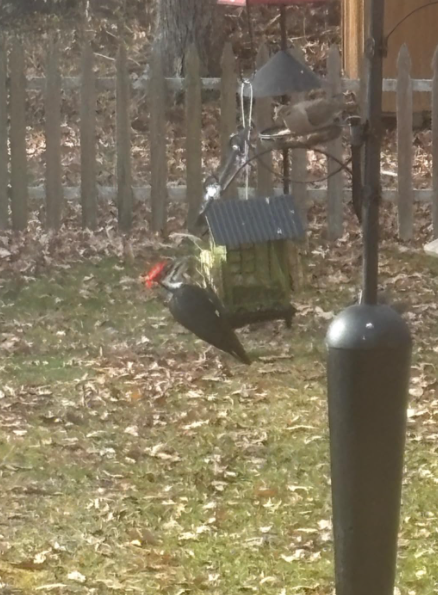
Woodpeckers and nuthatches, however, favor vertical feeding. If they frequently peck at tree trunks but avoid feeders, it may signal the need for a “bark feeder”: These feeders mimic tree bark texture, can be mounted directly on tree trunks, and embed nuts, dried insects, and other foods into grooves, aligning with their natural vertical foraging habits. Additionally, hummingbirds exhibit highly directional preferences for tube feeders—if a tube feeder's spout diameter is too wide or too narrow, hummingbirds will reduce their time or even switch to other feeding sites. This directly provides humans with a basis for adjusting the “food outlet specifications” of feeders.
II. Optimizing Feeder Location and Quantity Through Aggregation Patterns
The frequency and duration of bird gatherings serve as natural indicators for assessing feeder placement. If birds depart shortly after landing or persistently circle nearby without approaching, two primary issues may exist: first, insufficient safety—such as placement too far from shrubbery (preventing swift escape from predators) or too close to human activity zones (frequent disturbances heighten bird vigilance); second, poor visibility—birds prefer “feeding spots with clear surroundings.” If branches block the feeder's view, even abundant food struggles to attract long-term visits.
Concurrently, bird population size indicates the feeder's “capacity requirements.” For instance, during spring and fall migration seasons, if the number of birds in the yard suddenly increases and the existing feeder shows signs of “food competition” (such as sparrows gathering around the feeder but unable to feed simultaneously), it indicates the need to add more feeders or choose equipment with a “multi-port design” (such as a hanging feeder with 6-8 feeding ports) to prevent competition from depriving some birds of food.
III. Identifying Feeder Deficiencies and Maintenance Needs Through “Rejection Behavior”
Bird rejection of feeders often signals equipment flaws or inadequate cleaning. For instance, if birds frequently approach feeders but refuse to land and feed, structural safety hazards may exist: sharp edges on metal brackets (potentially injuring bird claws), or cracked plastic components (causing food spillage or trapping bird beaks). If birds suddenly lose interest in feeders during summer, inspect whether high temperatures have spoiled food (e.g., fermented sugar water, moldy seeds) or if residual food debris inside the feeder (breeding bacteria, harming bird health) is present—their “withdrawal” is actually an instinctive avoidance of an “unsafe food environment.”
Additionally, observing birds' adaptation to “new feeder designs” can inform human adjustments to equipment. For instance, when first using a “squirrel-proof feeder” (with spring-loaded baffles), birds may hesitate to feed due to unfamiliarity with the baffle mechanism. By observing their attempts (e.g., pecking at the baffle, trying to enter from the sides), to fine-tune the flap's sensitivity. This allows birds to trigger the feeding mechanism more easily while maintaining squirrel deterrence.
IV. Guiding the Integration of Bird Feeders with Garden Environments Through Ecological Interaction
Understanding the ecological needs of North American garden birds can also help humans integrate feeders with garden elements like plants and water sources, creating a more complete “bird-friendly environment.” For instance, if ground-feeding birds (such as pheasants or quails) are common in the yard, simply scattering food on the ground may lead to it becoming soggy from rain or being stolen by other animals. In such cases, the birds' foraging behavior suggests the need for a “ground-level feeder”— — These feeders feature waterproof trays and can be secured near low vegetation, aligning with ground-feeding habits while providing cover from surrounding plants.
Additionally, birds' reliance on water sources influences feeder placement: proximity to water bowls or fountains significantly extends their visit duration and feeding frequency. This suggests positioning feeders 5-10 meters from water sources to create a seamless “feed-drink” pathway, enhancing garden appeal for birds. Furthermore, if berry-bearing plants (such as holly or elderberry) are present in the garden, birds will alternate between feeding on these plants and the feeder throughout different seasons. This behavior also guides humans in adjusting the “food variety” offered at feeders—for instance, supplementing dried berries in feeders during winter when wild berries diminish, aligning with birds' seasonal dietary needs.
In essence, observing the behavior of American backyard birds provides humans with a direct channel to understand their needs. By studying their feeding preferences, gathering patterns, and ecological interactions, we can not only select more suitable feeders but also create backyard spaces that respect birds' natural habits— This “bird-oriented” selection logic ultimately achieves mutual benefit for both humans and birds: birds gain a stable food source, while humans enjoy close-up observation and appreciation of nature's beauty, transforming gardens into “micro-ecological windows” where humans and nature converse within the city.
We recommend our Flowafoli bird feeder!