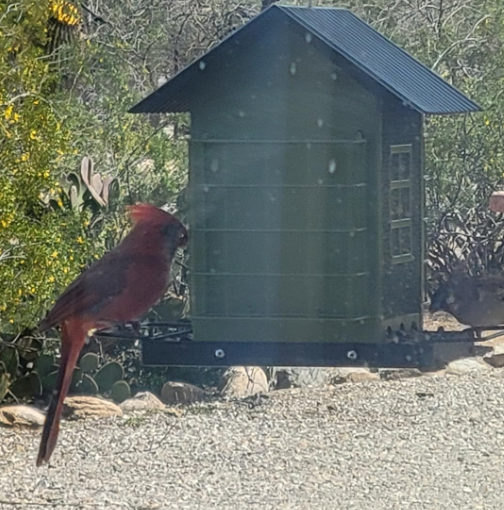
Communication between Humans and Garden Feeding Birds in the Americas: Multiple Benefits of Assisting Their Eating Behavior
In the courtyard ecosystems of the Americas, bird feeders are an important link between humans and wild birds. The communication between humans and birds referred to here is not traditional language exchange, but rather the transmission of key information related to safety and food to birds through environmental signal design, behavioral guidance, and food supply regulation. This kind of 'communication' has multidimensional benefits for the feeding behavior of birds, ensuring their survival efficiency and promoting the ecological balance of the courtyard where humans and birds coexist.
1、 Reduce feeding risks and enhance foraging safety
In American courtyards, birds face multiple threats from natural enemies (such as eagles and cats) and environmental disturbances (such as human activities and pet movements) when feeding with bird feeders. Through communication, humans can effectively reduce these risks and create a safe feeding environment for birds.
Space signal transmission: designating safe eating areas
Humans can transmit "safety signals" by fixing the position of bird feeders and setting up protective facilities. For example, installing bird feeders at a distance of 1.5-2 meters from the ground, away from dense shrubs (to avoid being ambushed by natural enemies), and close to trees (to facilitate quick evasion of birds when attacked), this spatial layout itself is a form of "silent communication" - birds will associate specific bird feeders with "low-risk" through repeated observation, forming stable eating habits. In addition, hanging reflective strips or wind chimes around bird feeders can trigger birds' alert responses when ground predators such as cats approach. This "warning signal" can help birds avoid danger in advance and reduce stress reactions when feeding.
Time rule guidance: Avoid high-risk periods
The daily activity patterns of humans, such as yard cleaning and pet walking time, can indirectly become a "safe time reference" for birds. Most birds have strong environmental memory abilities. If humans replenish food at fixed times (such as 7-9 am and 5-7 pm) for a long time, and there is less activity in the courtyard during this period (such as no large equipment operation or pets being kept indoors), birds will gradually associate "specific time+bird feeders" with "safe eating". This pattern guidance can reduce the foraging behavior of birds during high-risk periods (such as noon when humans are frequently active and dusk when natural enemies are active), and lower the probability of accidental casualties.
2、 Optimize dietary structure to ensure balanced nutrition
There are significant differences in the dietary habits of different bird species in the Americas, such as sparrows, blue jays, and hummingbirds. If the feeding equipment is single, it can easily lead to nutritional imbalances in birds. Humans can help birds optimize their diet and meet their survival and reproductive needs through "food signal transmission" and "supply regulation".
Matching communication between food types and bird preferences
Humans can adjust the types of food fed by bird feeders by observing their feeding choices, forming a "targeted supply" communication model. For example, hummingbirds have a high dependence on nectar. Humans add diluted sucrose water (simulating natural nectar) to dedicated hummingbird feeders and avoid mixing it with other bird foods (such as grains). This "matching of food types with bird needs" can directly transmit a signal to hummingbirds that "there is suitable food here", attracting them to eat frequently; For omnivorous blue ravens, humans can mix nuts, grains, and dried insects in the bird feeder to transmit a "comprehensive nutrition" signal through a "diversified food combination", meeting their comprehensive needs for protein, fat, and carbohydrates. In addition, humans can also transmit environmental adaptation signals through "seasonal food adjustment" - birds need more energy to resist the cold in winter, and at this time, they increase high-fat nuts and perilla; In spring, birds enter their breeding season and supplement with high protein insect dried and cooked egg yolks to help them adjust their diet according to seasonal changes and ensure nutritional balance.
Regulation and communication to avoid food waste and pollution
Food spoilage and residue are common problems with bird feeders, which can easily lead to bird diseases. By regularly cleaning bird feeders and controlling food intake, humans convey the message of 'food safety here' to birds. For example, during high temperatures in summer, humans clean bird feeders every 2-3 days to prevent honey and grains from becoming moldy, and adjust the amount of feeding according to the bird's eating speed (ensuring that it can be consumed on the same day without residue). This "clean and quantitative" regulation can help birds form the awareness that "bird feeder food is risk-free" and reduce gastrointestinal diseases caused by ingesting spoiled food. At the same time, humans can set up bird feeders in different areas (such as separating grain feeders from nectar feeders) to avoid contamination from different foods and further ensure the food safety of birds.
3、 Stabilize food supply and alleviate survival pressure
In some parts of the Americas, there are seasonal food shortages (such as plant wilting and insect reduction in winter), or urbanization leads to a reduction in natural feeding grounds for birds. The "stable supply" of bird feeders can alleviate the survival pressure of birds through "signal transmission" and help them cope with environmental challenges.
Long term signal transmission of food stability
If humans can regularly supplement bird feeders with food over a long period of time (such as releasing them at fixed times every day, even in adverse weather conditions), birds will consider bird feeders as a "reliable source of food" through long-term observation. This signal of "stable supply" is crucial for winter survival - for example, in the winter of northeastern North America, snow covers the ground and birds find it difficult to find natural food. The continuous food supply of bird feeders can reduce the energy consumption of long-distance foraging and lower the mortality rate caused by hunger. Research has shown that in areas with a stable supply of bird feeders over the long term, the overwintering survival rate of birds is 30% -40% higher than in areas without feeders. This is precisely the direct assistance of "stable food signals" to bird survival.
Emergency communication for dealing with extreme weather conditions
In extreme weather such as rainstorm, snowstorm and high temperature, birds' foraging ability will be greatly reduced. At this point, humans transmit the signal of "emergency food support" to birds through behaviors such as "increasing food intake" and "clearing obstacles around bird feeders" (such as snow and fallen leaves). For example, after a blizzard, humans promptly clear the snow around bird feeders to ensure that birds can reach them smoothly, and add high-energy foods (such as peanuts and sunflower seeds) to the feeders to help birds quickly replenish energy and resist the impact of extreme environments. This' emergency communication 'can enable birds to quickly find food during special periods, reducing survival crises caused by environmental changes.
4、 Promote symbiosis between humans and birds, maintain ecological balance in the courtyard
The communication between humans and birds not only benefits birds, but also guides their feeding behavior, maintains the ecological balance of the courtyard, and forms a virtuous cycle.
Indirect benefits of controlling courtyard pests
Some bird species, such as swallows and sparrows, feed on insects. Humans can attract these carnivorous birds by planting plants that attract insects near bird feeders, such as cosmos and lavender, and supplementing them with insect stems in moderation. Birds not only feed on bird feeders, but also prey on pests such as aphids and caterpillars in the courtyard. This communication mode of "guiding birds to hunt" can reduce the dependence of the courtyard on chemical pesticides and achieve ecological pest control. For example, the common tit in North American gardens, if attracted to settle through bird feeders, can prey on 50-100 pests per day, effectively protecting the health of courtyard plants.
Long term benefits of promoting stable bird populations
Through communication on "safety assurance," "balanced nutrition," and "stable supply," the survival rate and reproductive success rate of birds in the feeding area will be significantly improved, thereby promoting the stability of local bird populations. For example, in a courtyard with bird feeders, the success rate of breeding nests for bluebirds is about 25% higher than in an area without feeders due to sufficient food and less interference from natural enemies, and the survival rate of chicks is also higher. The stability of this population can maintain the diversity of courtyard ecology - the behavior of birds spreading plant seeds and pollinating (such as hummingbirds) will further promote the growth of courtyard plants, forming a virtuous ecological cycle of "birds plants humans".
In summary, the "communication" between humans and bird feeders in American courtyards is essentially the transmission of key information about safety, nutrition, and stability to birds through environmental design, behavioral patterns, and food regulation. This kind of communication can not only optimize the feeding behavior of birds, enhance their survival and reproductive abilities, but also promote the balance and sustainable development of courtyard ecology, ultimately achieving a harmonious coexistence between humans and birds.
We recommend our Flowafoli bird feeder!