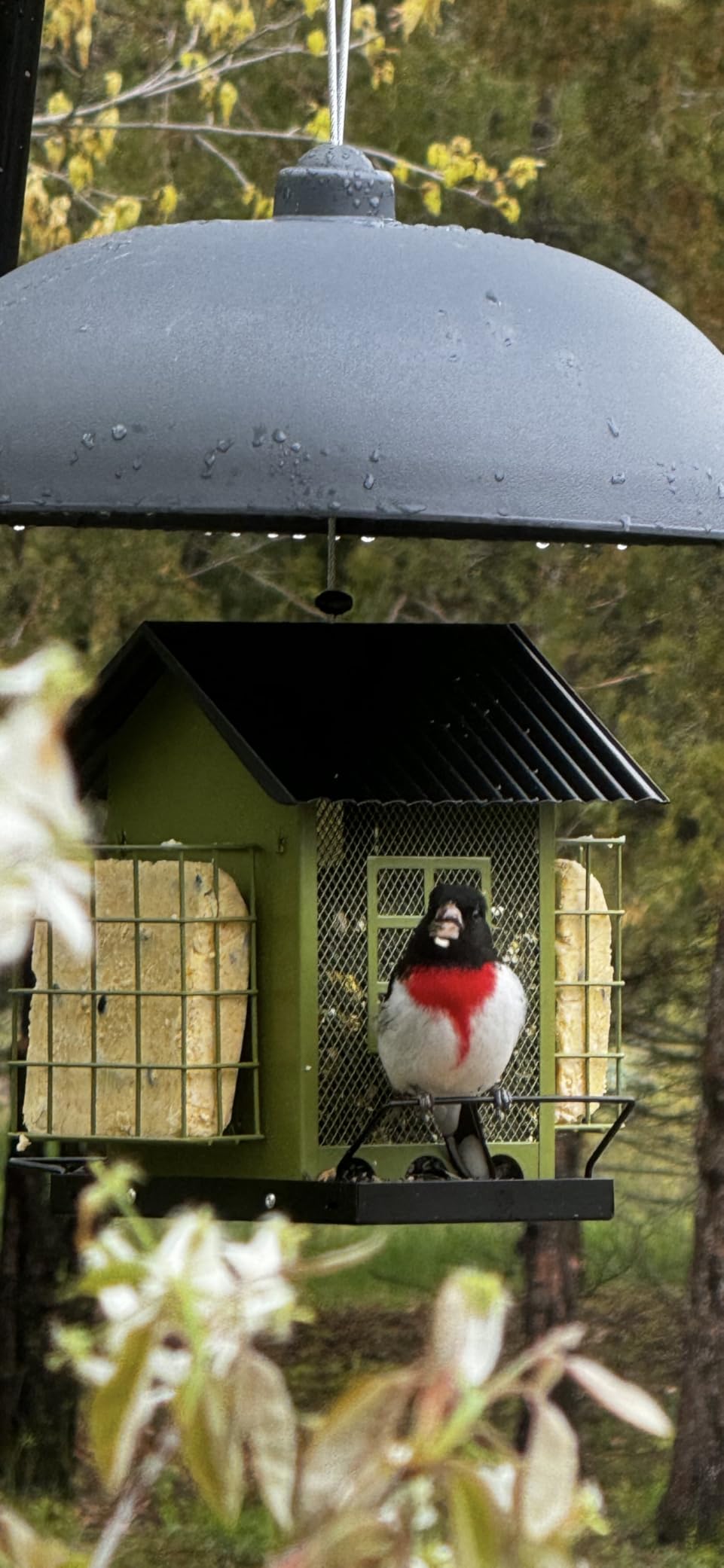
1、 Ultimate durability: the core advantage in dealing with long-term outdoor wear and tear
Compared to non-ferrous materials such as plastic and wood, iron bird feeders have a crushing advantage in durability:
Strong resistance to physical wear and tear: The metal structure can withstand the friction and impact caused by frequent bird pecking and habitation, avoiding problems such as plastic cracking and wood deformation. Ordinary plastic bird feeders are prone to breakage of the feeding trough edges under frequent use, while iron bird feeders generally have a lifespan of 5-8 years, which is 3-4 times longer than plastic models.
Excellent anti-aging and corrosion performance: the high-quality iron bird feeder has been galvanized, sprayed with plastic and other anti-corrosion treatments, which can resist the long-term erosion of rain and ultraviolet rays. In the humid and rainy southern regions, wooden bird feeders are prone to mold and decay, while plastic bird feeders become brittle and aged due to ultraviolet radiation. Iron feeders can maintain structural stability and do not require frequent replacement.
2、 Biosafety: Key Design for Guarding Bird Health
Iron material solves the core safety hazards of non-ferrous bird feeders:
Eliminate the release of harmful substances: Poor quality plastic bird feeders may release plasticizers in high temperature environments, while wooden bird feeders may use coatings containing formaldehyde for corrosion prevention. These substances can attach to food and harm the health of birds. The iron bird feeder with food grade safety coating has no risk of chemical substance migration and meets the safety standards for bird contact.
Reduce the risk of bacterial growth: Plastic and wooden surfaces are prone to residual bird food residue and feces, and material pores are prone to mold growth (such as Aspergillus, which can cause respiratory diseases in birds). The surface of the iron bird feeder is smooth and can be thoroughly cleaned by rinsing with clean water and wiping at high temperatures, reducing the probability of bacterial transmission.
3、 Functional upgrade: adapted to diverse feeding needs
The iron bird feeder, with its material characteristics, achieves functional design that is difficult for non-ferrous models to match:
Preventing Squirrel and Large Bird Invasion: By using thickened metal mesh holes (diameter ≤ 2cm) or installing metal anti rollover barriers, it can accurately prevent squirrels from stealing food and large birds such as pigeons and magpies from occupying the feeding trough, ensuring stable feeding for small songbirds (such as sparrows and spotted birds). Plastic bird feeders are prone to being chewed or overturned by squirrels due to insufficient material strength.
Flexible adaptation to different types of bird food: The iron trough can be designed as a deep trough structure, suitable for various bird foods such as pellet feed, seeds, and animal fat blocks. For example, a dedicated Suet bird feeder requires a metal frame to secure the grease block, preventing plastic from melting due to high temperatures caused by grease, which is a function that cannot be achieved by wood and plastic materials.
4、 Environmental adaptability: Dealing with complex outdoor scenes
In extreme environments, the performance advantages of iron bird feeders are more significant:
Low temperature frost resistance and high temperature heat resistance: In the winter below -20 ℃ in the north, plastic bird feeders are prone to becoming brittle and breaking due to low temperatures, and wood will expand and deform due to freezing, while iron materials can maintain structural stability. During high temperatures in summer, although the surface of iron may heat up, the matte coating design can reduce heat absorption and prevent plastics from releasing harmful substances due to high temperatures.
Wind resistance and stability: Iron bird feeders have a relatively large weight (usually 2-3 times that of plastic models), and can be securely fixed to tree branches or poles with metal hooks, making them less prone to shaking and tipping in windy weather. Plastic bird feeders, due to their light weight, are prone to being blown over by the wind, causing bird food to spill and affecting their feeding efficiency.
5、 Long term economy: cost-effectiveness return of high cost investment
Although the initial purchase cost of iron bird feeders (about 50-200 yuan) is higher than that of plastic ones (20-50 yuan), they are actually more economical in long-term use:
Reduce replacement frequency: As mentioned earlier, the service life of the iron bird feeder is 3-4 times that of the plastic model. Calculated based on the average annual usage cost, the iron model is only one-third of the plastic model.
Reduce maintenance costs: Wooden bird feeders require regular application of anti-corrosion paint, plastic models require frequent cleaning of gaps and residues, while iron models only require 1-2 anti-corrosion coating inspections per year, resulting in lower maintenance costs.
We recommend our Flowafoli bird feeder!