Across the vast expanse of the American continent, from tropical rainforests to frigid tundras, over 4,000 species of birds call home. Though these diverse creatures lack the complex emotional cognitive systems of humans, they can still exhibit emotions through unique behaviors, sounds, and physiological changes. Through long-term observation and experimentation, scientists have discovered that the emotional expressions of American birds are both species-specific and aligned with the survival logic of nature.
(1) Courtship and Joy: A Spectacular Visual and Auditory Feast
As the scent of spring fills the air, American birds enter their active courtship period, during which their behaviors seem to reflect inner “joy.” Male prairie grouse gather at specific courtship sites, spreading their fan-shaped tail feathers, inflating their chest air sacs, and producing deep “thudding” sounds through vigorous shaking, while continuously jumping and using exaggerated movements to attract the attention of females. This courtship display, lasting several hours, is not only a demonstration of strength and endurance but also a passionate invitation to potential mates.
Blue-crowned laughingthrushes establish intimate connections through gentle chirping and mutual feather preening. Male peacock-colored starlings perform complex formation flights in the air during courtship, their metallic feathers shimmering in the sunlight like an aerial ballet, conveying their courtship enthusiasm to female birds. Behind these courtship behaviors lie changes in hormone levels within the birds. Elevated levels of hormones like testosterone prompt them to adopt more proactive courtship postures.
(2) Defense and Fear: Postures and Sounds as Warnings
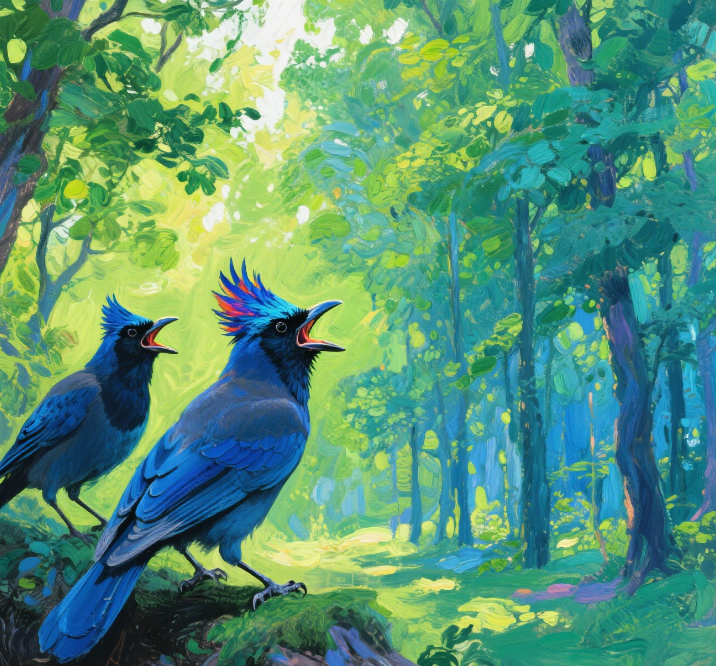
When faced with threats, American birds quickly switch to a defensive state, exhibiting emotions akin to “fear” or “anger.” When predators approach, the blue jay emits a sharp, piercing alarm call. This high-frequency chirping serves not only as a warning to its companions but also as a deterrent to predators. Simultaneously, it erects the feathers on its head, making itself appear larger, and adopts an aggressive posture to attempt to scare off the enemy.
When ostriches sense danger, they tuck their necks close to the ground, lower their bodies, and use their protective coloration to hide themselves. If they cannot evade the threat, they will either sprint away or use their strong legs to counterattack. When red-tailed hawks feel their territory is being invaded, they circle in the air and emit loud screeches while diving to intimidate intruders. Their sharp eyes and outstretched talons clearly demonstrate their determination to defend their territory. These defensive behaviors are survival strategies developed by birds through long-term evolution, helping them protect themselves and their offspring in environments filled with danger.
(3) Social and Emotional: Subtle Signals in Group Interactions
In group living, American birds demonstrate their “emotions” through rich interactions. Black-billed magpies strengthen their bonds with peers by preening each other's feathers. This behavior not only keeps feathers clean but also releases endorphins, fostering trust between individuals. When a bird in the group is injured, other members slow their flight speed and stay by its side, exhibiting behavior akin to care.
During migration, Canada geese form a “V” formation, taking turns leading the flock to conserve energy while emitting coordinated calls to maintain formation and safety. This high level of collaboration and harmony reflects the strong bonds formed through group living. During food competition, birds may engage in aggressive behavior. For example, American robins determine food ownership through staring, vocalizations, and brief physical conflicts. These interactions are external expressions of their social and emotional states.
(4) Environmental Adaptation and Emotional Fluctuations
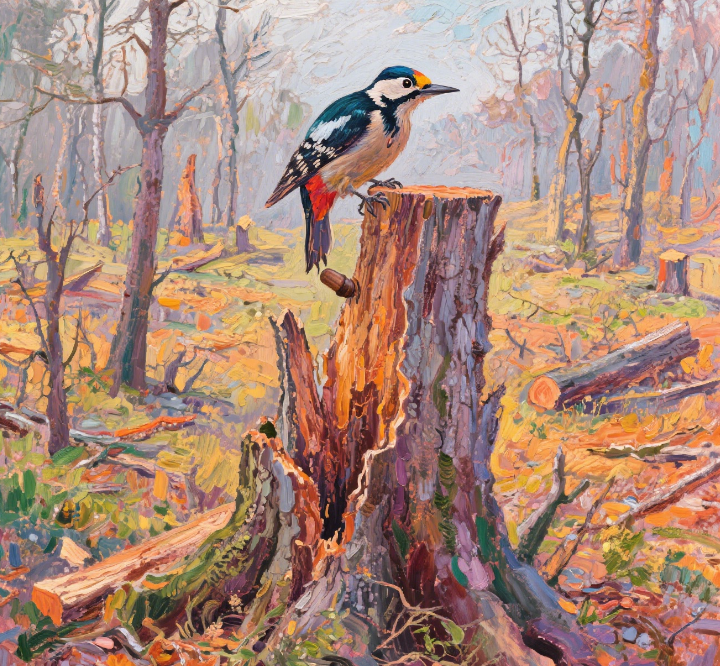
Environmental changes also influence the emotional expressions of American birds. When faced with extreme weather or habitat destruction, birds exhibit anxiety and restlessness. For example, after a forest is logged, woodpeckers frequently tap on remaining stumps, searching for food while adapting to the loss of their habitat. Changes in the frequency and intensity of their behavior reflect inner tension and unease.
In artificial breeding environments, some birds exhibit abnormal behaviors such as feather plucking, which is believed to be a manifestation of stress and emotional suppression. However, when they are reintroduced to natural environments with ample space and abundant food resources, their behaviors gradually return to normal, indicating that the environment significantly influences birds' emotional states.
The emotional expression of American birds is an important means for them to adapt to their environment, reproduce, and maintain social relationships. Although their “emotions” differ fundamentally from human emotions, these diverse behaviors and signals open a window into the world of birds, allowing us to glimpse the mysteries of how these vibrant creatures survive and communicate in nature. As scientific research continues to deepen, we may gain a more comprehensive understanding of the underlying mechanisms of bird emotional expression, further bridging the gap between humans and these beautiful creatures.
The above provides a multi-faceted overview of emotional expression in American birds. If you are particularly interested in the behavior of a specific bird species or wish to learn more about a particular type of bird, feel free to share your thoughts with me.