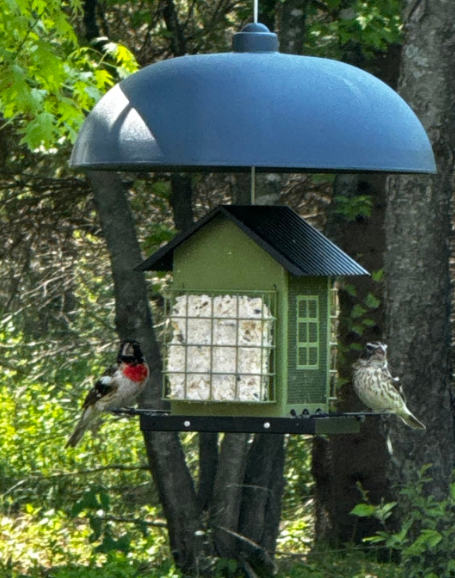
In the courtyard ecology of the Americas, iron bird feeders have become an important foraging place for many courtyard birds due to their strong durability and outstanding resistance to natural enemy damage. The selection of such bird feeders by birds is not a random behavior, but a comprehensive judgment based on their own physiological structure, dietary preferences, safety needs, and environmental adaptability. From the tiny American goldfinch to the medium-sized main Cardinals, different bird species have unique screening criteria for the material details, structural design, and functional configuration of iron bird feeders.
1、 Basic screening based on physiological adaptability: matching body shape with feeding organs
The primary consideration for birds is whether the feeding device can adapt to their own body size and feeding organs, which is a prerequisite for achieving efficient feeding. For small songbirds commonly found in American gardens, such as black crowned sparrows and songbirds, they prefer iron bird feeders with moderate port sizes and small roosters. This type of bird has a small body size and a slender beak. If the metal port of the iron bird feeder is designed as a circular opening with a diameter of 8-12 millimeters, it can perfectly match the size of their beak, making it easy to peck at common feeds such as sunflower seeds and thistle seeds. At the same time, the small anti slip habitat platform below the port can provide stable feeding support for them, avoiding feeding failure due to body imbalance
Birds with special dietary habits have more precise requirements for the structure of iron feeders. For example, climbing birds such as woodpeckers rely on vertical feeding habits and prefer iron bird feeders that can be suspended vertically, have metal hooks or climbing grids. This design allows them to attach vertically like tree trunks, making it convenient for them to feed on board oil feed or nut fragments inside the feeders. Although hummingbirds mainly rely on nectar feeders, some omnivorous hummingbirds also access iron feeders with small metal grids to feed on small insects attached to the grid. Therefore, the precision of the grid aperture becomes their key screening criterion.
2、 Core considerations based on security requirements: natural enemy avoidance and environmental protection
Birds in American courtyards are constantly threatened by natural enemies such as squirrels and crows, so the safety protection function of iron bird feeders is one of the core factors they choose. The iron material itself has the characteristic of being resistant to biting, which is an important reason why birds prefer iron bird feeders over plastic ones - squirrels and other rodents cannot gnaw through the metal shell, which can effectively protect the feed from being stolen and also avoid the bird feeder losing its value due to damage. On this basis, birds will further screen for iron bird feeders with targeted protective designs.
In addition, birds also pay attention to the weatherproof design of iron bird feeders, which is related to the freshness of the feed and their own feeding comfort. Iron bird feeders with metal rainproof roofs (such as umbrella shaped iron bird feeders) can effectively block rainwater from soaking feed and prevent it from becoming moldy and spoiled - moldy feed can harm bird health, so birds instinctively avoid feeders without rainproof designs and feed that is prone to moisture. In the hot summer, iron bird feeders with sunshade design can also provide birds with a shaded feeding area, reducing discomfort caused by high temperature environments; In winter, well sealed tubular iron bird feeders can reduce the impact of cold winds on feeding and become the preferred choice for birds.
We recommend our Flowafoli bird feeder!