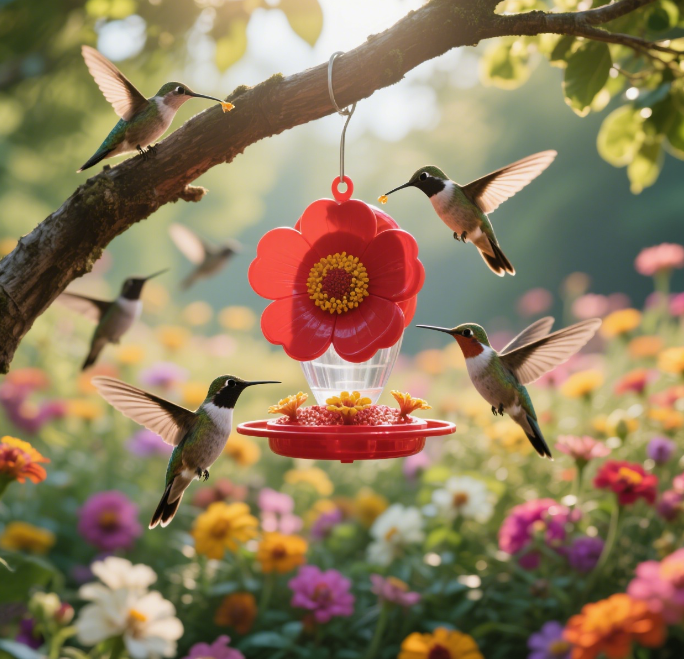
Among the lush flowers, one can often spot the agile figures of hummingbirds, swiftly flapping their wings as they dart between blossoms to sip nectar. Today, an increasing number of people are able to enjoy this enchanting scene at home through hummingbird feeders. So, how exactly do hummingbird feeders attract these birds to feed?
(1) Mimicking the appearance of natural flowers
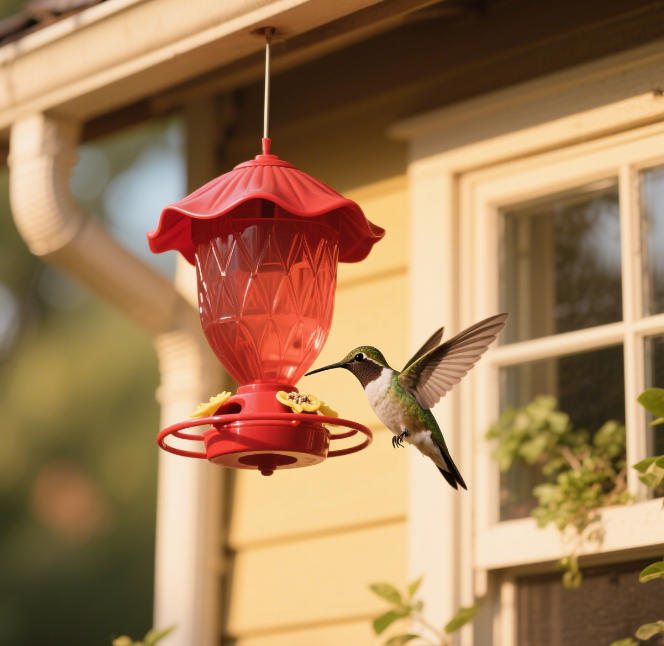
Hummingbirds are highly sensitive to color, particularly favoring red. In nature, many nectar-rich flowers exhibit vibrant red hues, serving as a crucial visual cue for hummingbirds to identify food sources. Hummingbird feeders capitalize on this trait, with most using red as the primary color. Some feeders are designed in the shape of flowers, and others even add red decorative elements, such as red flower shapes or red feeding ports, to visually mimic the familiar appearance of flowers, tricking hummingbirds into thinking they are natural flowers and attracting them. Additionally, some feeders incorporate further design details, such as mimicking the texture and shape of petals, as well as the droplet effect on flowers, to enhance their appeal to hummingbirds.
(2) Providing suitable nectar substitutes
Nectar is the primary food source for hummingbirds, and the nectar substitutes contained within hummingbird feeders are key to attracting them. This nectar substitute is typically made by mixing white sugar and water in a specific ratio, usually 1 part sugar to 4 parts water. This formula closely matches the sweetness and nutritional content of natural nectar, meeting the hummingbird's energy needs. When preparing the nectar substitute, use purified water or cooled boiled water, avoiding tap water containing chlorine or other chemicals to prevent harm to the hummingbird's health. Additionally, ensure that the white sugar is fully dissolved, as undissolved sugar granules may clog the feeding ports of the feeder, affecting the hummingbirds' ability to feed. Furthermore, to maintain the freshness of the nectar substitute, it should be replaced regularly, especially in hot weather, to prevent spoilage and bacterial growth, which could harm the hummingbirds' health.
(3) Creating a safe and comfortable feeding environment
Hummingbirds are naturally cautious and have high requirements for the safety of their surroundings. Hummingbird feeders are designed and placed with this behavior in mind. Feeders typically have a stable structure that can be securely hung or placed in an appropriate location, preventing them from swaying in the wind or falling easily, allowing hummingbirds to feed with peace of mind. Additionally, the location of the feeder is crucial. It is generally placed in areas with some shelter yet open visibility, such as under branches or near eaves. This allows hummingbirds to have a place to hide in case of danger while also enabling them to clearly observe their surroundings and detect potential threats promptly. Furthermore, the area around the feeder should be free from excessive disturbances, such as loud noises or frequently moving objects, to create a relatively quiet and safe feeding space for hummingbirds.
(4) Emitting scents that attract hummingbirds
Although hummingbirds have relatively underdeveloped sense of smell, they can still perceive certain scents. The nectar substitute in hummingbird feeders emits a sweet scent when white sugar dissolves during preparation. This sweet scent serves as a familiar signal to hummingbirds, attracting their attention. Furthermore, some feeders are made from odorless or naturally scented materials to avoid disrupting hummingbirds with unpleasant odors from the material itself. Furthermore, when hummingbirds discover a suitable food source, they leave chemical signals through their secretions or behavior to communicate to their peers that food is available, attracting more hummingbirds to feed.
In summary, hummingbird feeders successfully attract hummingbirds to feed by simulating the appearance of natural flowers, providing suitable nectar substitutes, creating a safe and comfortable feeding environment, and emitting scents that attract hummingbirds. By carefully designing and using hummingbird feeders, people can not only observe the beauty and agility of hummingbirds up close but also provide a stable food source for them amid changes in the natural environment, promoting harmonious coexistence between humans and nature.
The above content explains the principles behind how hummingbird feeders attract hummingbirds from multiple perspectives. If you would like to learn more about the key considerations for selecting a feeder or the details of making nectar substitutes, feel free to let me know.
We recommend our FlowaFoli bird feeder!