The following is an overview of the practical application of metal bird feeders in American gardens:
Types and Features
Tube-shaped bird feeder: Typically tubular in shape, featuring multiple feeding ports and perching bars, capable of holding a large quantity of seeds.
Platform-style bird feeder: Features a flat platform suitable for placing various types of bird food, attracting a variety of bird species such as red-breasted robins and jays. Cleaning is relatively convenient, and the metal platform is durable and resistant to damage from wind and rain.
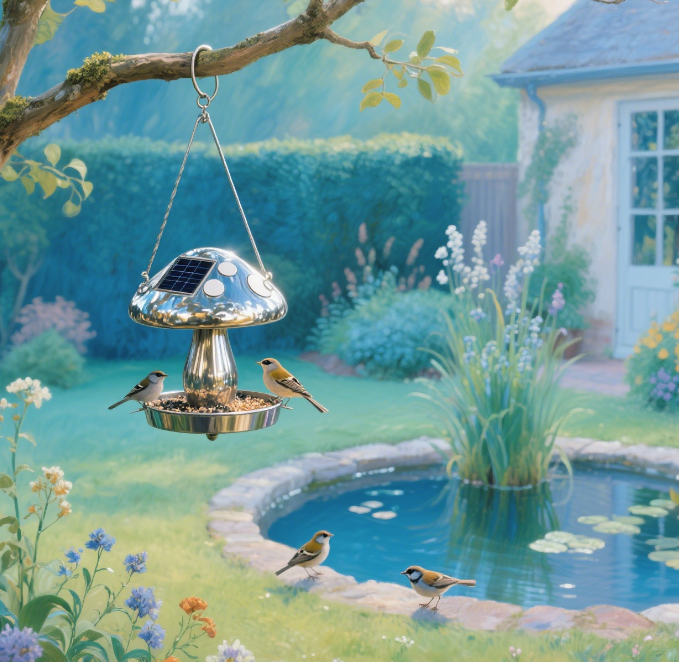
Hanging bird feeders: Suspended from branches, eaves, or other locations using ropes or hooks, such as the mushroom-shaped solar-powered bird feeder. These feeders feature a unique design, made from thickened metal with a polished surface, ensuring durability and aesthetic appeal. The adjustable steel wire allows for flexible height adjustment.
House-shaped bird feeder: Resembling a small house, it provides birds with a relatively enclosed feeding space, offering them a sense of security. Metal house-shaped bird feeders are better equipped to withstand external environmental influences, thereby extending their service life.
Functions and Benefits
Attracting Birds: Different types of metal bird feeders can attract various wild birds, adding vitality and liveliness to the garden. Common birds such as red-breasted robins, goldfinches, and titmice are drawn to feeders with different shapes and colors.
Convenient Bird Watching: Placing bird feeders near windows or leisure areas in the garden allows people to observe bird behavior and habits up close, enjoying the pleasure of bird watching and adding interest to daily life.
Supporting Local Wildlife: During food-scarce seasons, especially in winter or during bird migration periods, the food provided by bird feeders offers essential energy supplementation for birds, aiding their survival and reproduction.
Placement Location
Near vegetation: Place near trees or shrubs to provide birds with safe nesting and hiding spots, giving them a sense of security while feeding and allowing them to quickly fly away to avoid predators.
Avoid windy areas: Avoid windy locations to prevent bird food from being blown away by strong winds and to ensure birds are not disturbed by strong winds while feeding.
Open areas: Choose relatively open areas in the yard, such as the center of the lawn or near the terrace, to allow birds to spot the feeder from a distance and facilitate human observation of the birds.
Away from busy areas: Avoid placing the feeder near roads or areas with heavy foot traffic to minimize human disturbance and allow birds to feed undisturbed.
Regular maintenance
Clean regularly: Clean the bird feeder at least once a week to prevent food residues and droppings from accumulating and breeding bacteria and parasites, which can affect bird health. Removable metal bird feeders, such as tubular feeders with removable bases, are easier to clean.
Inspect for damage: Regularly check the bird feeder for damage, deformation, or rust. Repair or replace damaged parts promptly to ensure the feeder's safety and functionality. For rusted areas, perform rust removal and repainting as needed.
Replenish food: Regularly check the remaining food supply and replenish it promptly to ensure the feeder always has an adequate food supply, attracting more birds to feed.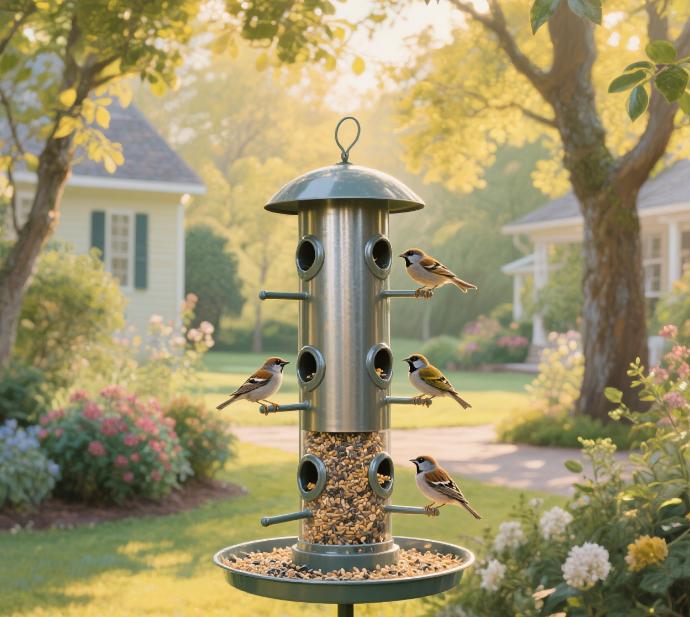
The practical application of metal bird feeders in American gardens
Jul 4, 2025 Bird knowledge presenters