In American gardens, bird feeders are essential tools for attracting and observing birds. Their practical application involves multiple considerations, including bird behavior, garden environment, and maintenance requirements.
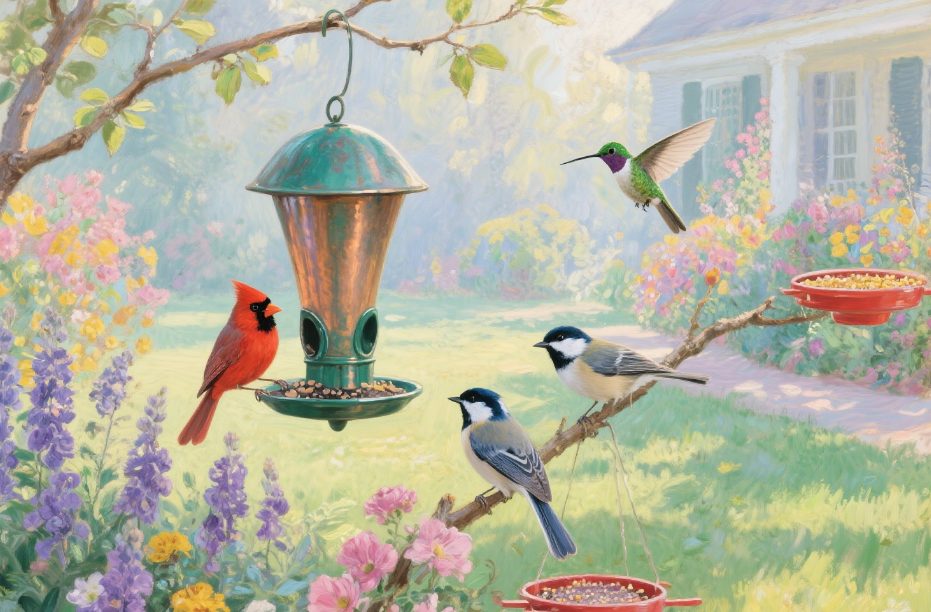
When it comes to the types of bird feeders, different materials and designs are suitable for different bird species and settings. Metal bird feeders are durable and effective at preventing damage from small animals like squirrels. They are ideal for open areas in gardens and attract larger birds with varied diets, such as blue jays and northern cardinals. Plastic bird feeders are lightweight, easy to clean, and relatively inexpensive, often used to attract small songbirds like chickadees and goldfinches. They can be hung from tree branches or eaves, providing a safe feeding environment for small birds. Additionally, there are specialized hummingbird feeders, typically red in color with small feeding ports, designed to precisely attract hummingbirds to feed, meeting their specific need for nectar.
The placement of bird feeders is crucial for attracting birds. Generally, bird feeders should be placed near trees or shrubs, allowing birds to have a place to hide from predators while feeding, thereby increasing their sense of security. Additionally, avoid placing bird feeders directly in front of windows to prevent birds from colliding with glass and getting injured. If the yard is large, multiple feeders can be placed in different locations to offer diverse food options and attract a wider variety of bird species. For example, placing mixed seeds in one feeder and suet in another can attract birds with different dietary preferences, such as woodpeckers that prefer suet and sparrows that favor mixed seeds.
Food selection is the core of feeder application. Different birds have different food preferences, and understanding these preferences can increase the success rate of attracting birds. Northern cardinals prefer sunflower seeds, so placing sunflower seeds in the feeder can likely attract them. Chickadees and titmice are interested in nuts and insect fragments, so adding these foods to the feeder can make them regular visitors to your yard. For hummingbirds, a specialized nectar solution must be placed in the feeder, typically made by mixing water and sugar in a specific ratio, and it should be replaced regularly to maintain freshness.
Regular maintenance of the feeder is also essential. Cleaning the feeder regularly prevents the growth of bacteria and mold, ensuring the health of the birds. It is generally recommended to clean it once a week using mild soapy water, then thoroughly dry it before refilling with food. Additionally, food should be replenished promptly to avoid leaving the feeder empty for extended periods, as birds may otherwise relocate to areas with alternative food sources. During the rainy season or humid weather, it is important to check for moisture or spoilage and replace the food promptly to ensure birds consume safe food.
Furthermore, in some regions of the Americas, seasonal changes can impact bird activity, necessitating adjustments to feeder usage. In winter, when food resources are relatively scarce, bird feeders provide an important energy source for birds. At this time, the supply of food should be increased, especially high-fat foods like suet, to help birds withstand the cold. In summer, when food sources are more abundant, the amount of food in bird feeders can be appropriately reduced, but a certain supply should still be maintained to keep birds loyal to the yard.
In summary, the practical application of bird feeders in American gardens for birdwatching is a systematic endeavor that must consider bird behavior, garden environment, and seasonal changes. Proper use can allow people to enjoy a greater variety of birds in their gardens and experience the vitality and beauty of nature.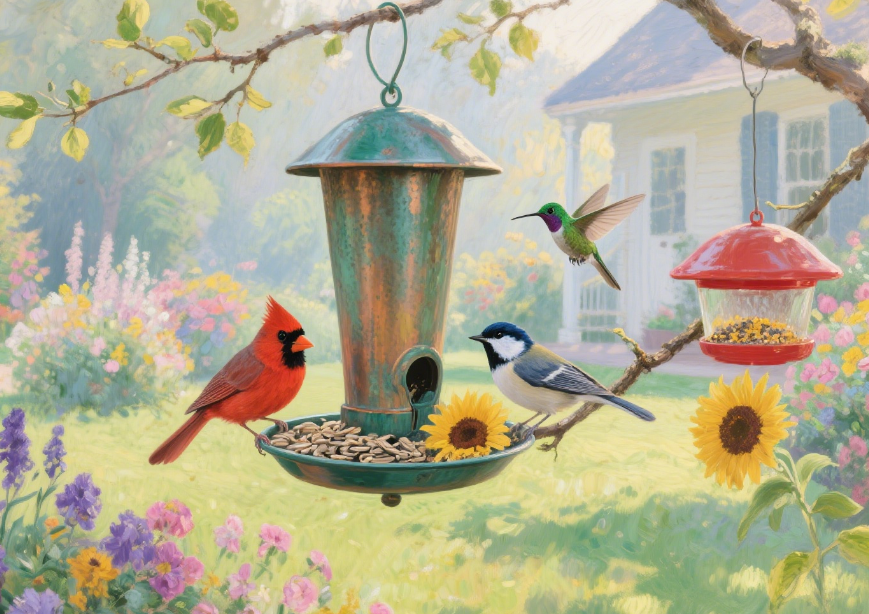
The practical application of bird feeders in American gardens for ornamental birds
Jul 15, 2025 Bird knowledge presenters