The following are practical applications of bird feeders in American gardens for observing various bird species:
Selecting the appropriate bird feeder
Tube-shaped bird feeder: Can be suspended or mounted on a pole, preventing access by predators such as cats. Suitable for small seeds, attracting birds like sparrows and starlings, which can only eat through small holes, limiting portion sizes and preventing overeating.
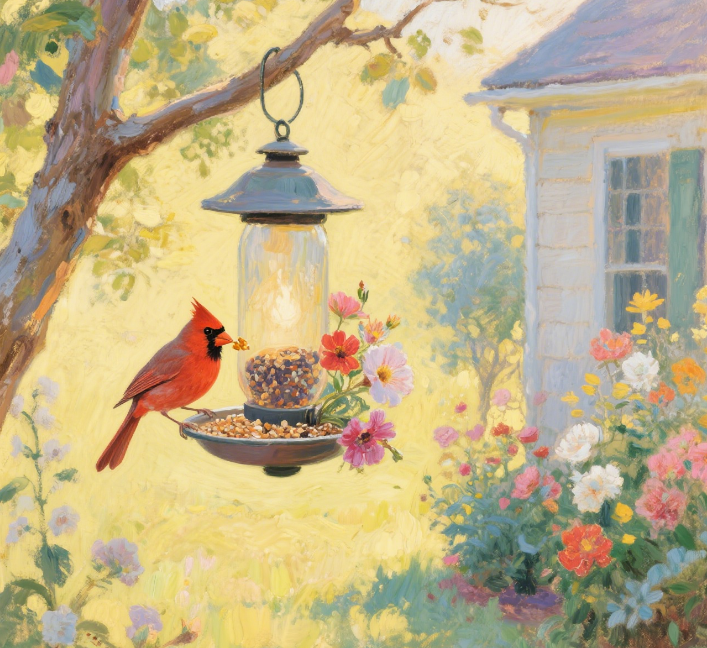
Lantern-style bird feeders: Also quite popular, they may be used by some birds for nesting even when not filled with food.
Platform bird feeders: Feature a flat surface for placing seeds, peanuts, fruits, or mealworms, suitable for observing larger birds like jays or mockingbirds. They typically have a roof to keep food dry.
Suzuki-style feeder: Typically a simple wire cage used to hold suet cakes, this feeder is frequently visited by woodpeckers, bluebirds, northern cardinals, chickadees, jays, nuthatches, titmice, and wrens.
Nectar feeder: Specifically designed to attract hummingbirds, it dispenses nectar through small holes and requires regular cleaning to prevent fermentation and mold growth.
Placing bird feeders
Consider observation angles: Ensure a good view from windows or resting areas within the courtyard to conveniently observe birds, allowing you to clearly see them feeding and resting without leaving your home.
Note the height: Different birds have different activity height ranges. To attract a wider variety of birds, set up feeders at different heights. For example, low-platform feeders are suitable for ground-feeding birds, while suspended tubular feeders or lantern-style feeders are suitable for birds that forage in shrubs and tree tops.
Avoid dangerous areas: Avoid placing feeders near window glass to prevent birds from colliding with windows and getting injured. If the yard is small and cannot be placed far from windows, place the feeder within 3 meters of the window. This way, birds will not have time to accelerate before reaching the window, reducing the risk of collision injuries.
Maintain a safe distance: Place bird feeders 10–15 feet away from shrubs and trees to provide birds with a place to rest and hide from aerial predators, while also preventing ground predators like cats from hiding nearby and attacking birds.
Distribute feeders: If your yard allows, set up multiple feeders and distribute them in different locations to accommodate the preferences of various bird species and prevent overly aggressive individuals from monopolizing all feeding points.
Choose appropriate food
Seeds: Such as millet and sunflower seeds, which are favorite foods for many small birds like sparrows and goldfinches, can be placed in tube feeders or platform feeders.
Fruit: Apples, oranges, grapes, etc., cut into small pieces, can attract bluebirds, orioles, and other birds.
Insects: Mealworms are an excellent protein source for bluebirds, orioles, woodpeckers, and other birds, and can be placed in platform feeders.
Suet: Suet is an energy source for woodpeckers and other birds. Make suet cakes and place them in suet feeders to attract woodpeckers and other birds.
Nectar: Use specialized nectar feeders filled with sugar water mixed in the correct proportions to attract hummingbirds. Be sure to replace the nectar regularly to prevent spoilage.
Regular Maintenance and Cleaning
Regularly clean bird feeders: Clean at least every two to three weeks, and more frequently in warm, humid weather. Use a 10% bleach solutionto clean glass, ceramic, and plastic feeders. Wooden feeders should be cleaned with hot soapy water and a stiff brush. Ensure they are thoroughly dried before refilling with food to prevent bacterial and fungal growth.
Replace food and water: Promptly remove any leftover or spoiled food to maintain freshness and cleanliness. Replace the sugar water in nectar feeders every 3–5 days, and increase the frequency in hot weather or direct sunlight.
Clean the surrounding area: Regularly sweep the ground beneath the feeder to remove fallen seeds, fruit shells, bird droppings, and other debris to reduce the proliferation of pests and pathogens.
Combine with smart devices for observation
Smart bird feeder: Equipped with a high-definition camera and AI recognition functionality, it can automatically identify bird species, record bird behavior, and allow real-time viewing and sharing via a mobile app, enabling you to monitor bird activity even when you are not in the yard.
Install surveillance cameras: Installing ordinary surveillance cameras near the bird feeder can also enable 24/7 monitoring of bird activity, facilitating observation of their behavioral patterns at different times of the day.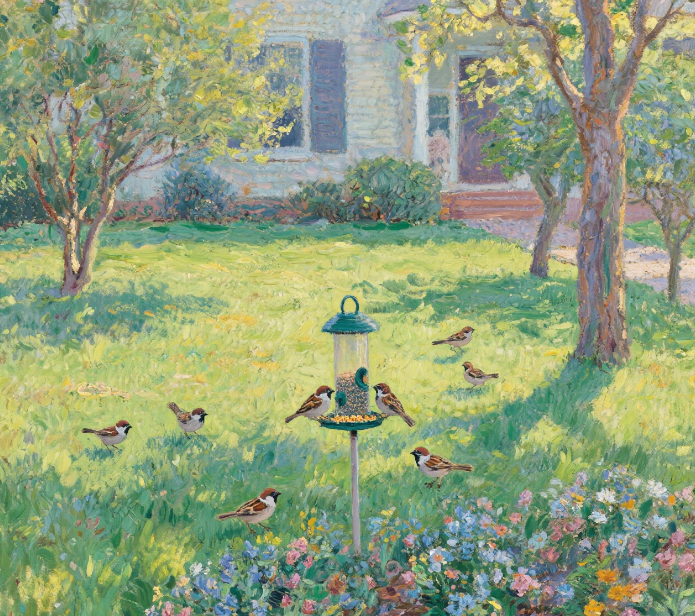
The practical application of bird feeders in American gardens for observing various types of birds
Jul 11, 2025 Bird knowledge presenters