Bird feeders are widely used in American gardens. Below, we will provide a detailed introduction from the perspectives of bird feeder types, location selection, and food choices:
(1) Choosing the type of bird feeder
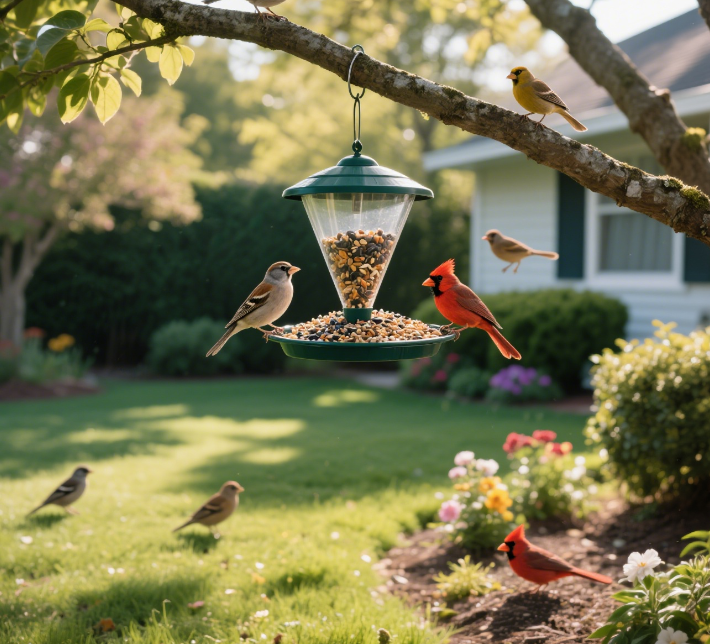
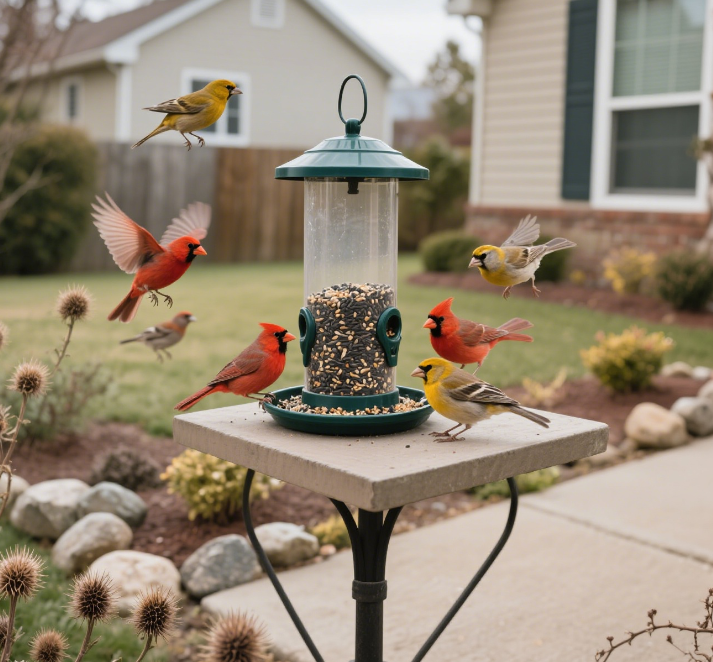
Funnel-shaped bird feeder: Typically a box with a roof, placed on a platform or hung from a branch. This type of feeder can hold a large amount of seeds and attracts various bird species, such as finches, jays, robins, sparrows, and chickadees.
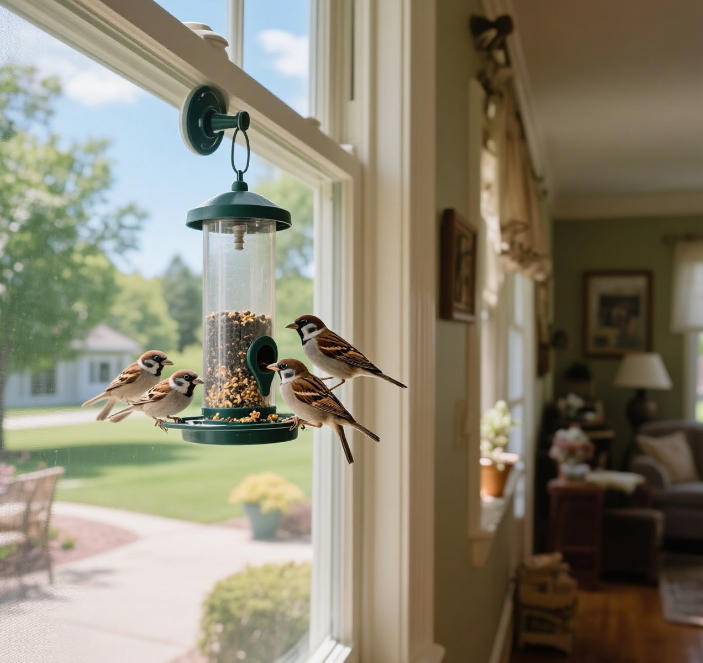
Window bird feeder: Secured to a window with suction cups, typically made of plastic, allowing close observation of birds. Suitable for attracting small birds such as finches, sparrows, chickadees, and tufted titmice.
Nyjer seed feeder: A specialized tubular feeder with a small opening, designed to dispense Nyjer seeds, primarily attracting small songbirds like redpolls and goldfinches.
Suet feeder: A cage or bag made of wire mesh or plastic netting, filled with suet, which can be nailed to a tree trunk or hung from a branch, attracting woodpeckers, nuthatches, chickadees, and jays.
Hummingbird feeder: Typically bottle-shaped or dish-shaped, made of plastic or glass, filled with artificial nectar or sugar water, and featuring red plastic flowers to attract hummingbirds. Some also include a plastic mesh screen to prevent bees and other insects from entering.
(2) Feeder placement
Height selection: Different bird species have different preferences for feeder height. Generally, feeders hung at 5–8 feet are suitable for attracting birds like the white-crowned sparrow, goldfinch, and chickadee; platform feeders placed 4 feet above the ground are suitable for ground-feeding birds.
Distance from obstacles: Install feeders approximately 10 feet away from natural obstacles such as trees and shrubs. This allows birds to seek shelter from predators before and after feeding while preventing predators from jumping directly onto the feeder from the obstacles. Additionally, place the feeder at least 30 feet away from windows or very close to windows (within 3 feet) to prevent birds from injuring themselves by colliding with windows.
Avoid Disturbances: Avoid placing bird feeders near noisy roads, air conditioner units, or other areas that may produce noise or vibrations, as this can startle birds.
Food Selection
Seeds: Black oil sunflower seeds are a very popular bird food that attracts a variety of birds, such as cardinals, sparrows, and goldfinches. Additionally, millet, oats, and sesame seeds are also favored by many birds.
Nectar: For hummingbirds, artificial nectar is the primary food source. Mix white sugar and water in a 1:4 ratio, boil, cool, and pour into a hummingbird feeder.
Suet: Suet is a high-fat food that provides abundant energy for birds in winter. Mix suet with peanut butter, cornmeal, etc., to form blocks, and place them in a suet feeder.
(3) Daily Maintenance and Management
Regular Cleaning: Clean the feeder regularly to prevent food residue, droppings, and mold from accumulating, which could affect bird health. Plastic, glass, and metal feeders are relatively easy to clean; use mild detergent and water, then rinse thoroughly.
Timely Food Replenishment: Regularly check the food levels in the feeder and replenish food promptly to ensure birds have an adequate food supply when needed. This is particularly important during winter and bird migration seasons.
Preventing Squirrel Theft: Squirrels may be attracted to the food in the feeder. Use methods to prevent squirrel theft, such as installing squirrel guards on the feeder or using specially designed squirrel-proof feeders.