Across the vast expanse of the Americas, thousands of bird species thrive, each with its own unique ecological habits and habitat preferences. As a transitional zone between urban areas and nature, courtyards provide birds with essential habitats for nesting, foraging, and breeding, thanks to the trees that grow there. Different types of trees, due to variations in their morphological structure, fruit and seed characteristics, and the density of their branches and leaves, attract different types of birds to nest, creating a rich and diverse ecological landscape of backyard birds.
1. Factors influencing bird nesting choices
Birds' nesting choices in backyard trees are not random but result from the combined influence of multiple factors. Food resources are one of the most critical factors. The fruits, seeds, nectar, and insects hidden in the bark and foliage of trees are important food sources for birds. For example, seeds rich in oils provide birds with ample energy, and such trees are particularly attractive to birds during the winter when food is scarce.
The structural characteristics of trees also play an important role. Tall, sturdy trees with numerous branches provide birds with ample nesting space and good visibility, helping them avoid predators and observe their surroundings. Dense foliage offers birds concealed nesting sites, reducing risks during the breeding process. Additionally, a tree's height, canopy spread, and its arrangement with other plants all influence birds' choices of nesting environments.
The geographical location and surrounding environment of the courtyard are equally important. Courtyards near water sources, forests, or wetlands are more likely to attract a variety of bird species. These areas provide birds with abundant food and suitable habitats, allowing them to move between the courtyard and the surrounding natural environment to access more abundant resources for survival.
2. Common Trees in American Courtyards and Corresponding Bird Species
(1) Oak Trees
Oak trees are common large trees in American gardens, with numerous species such as white oak and red oak. Oak trees produce acorns rich in starch and oils, which are a favorite food for many birds. Woodpeckers peck holes in oak tree trunks to search for hidden insects and also store acorns in these cavities for winter consumption; Crows and other corvid birds also have a particular fondness for acorns, collecting large quantities in the fall and burying them in various corners of the garden.
In addition to food resources, the sturdy branches and tall canopies of oak trees provide ideal habitats and nesting sites for many bird species. Owls prefer to roost in oak tree cavities, utilizing their excellent concealment for nocturnal hunting activities; raptors such as eagles also choose to build nests in tall oak trees, leveraging their elevated vantage point to survey surrounding prey and potential threats.
(2) Maple Trees
Maple trees are renowned for their beautiful leaves and abundant nectar. In spring, maple trees bloom profusely, secreting sweet nectar that attracts hummingbirds to feed. Hummingbirds, with their unique hovering flight ability, can precisely land on maple branches and use their long beaks to sip nectar. Additionally, maple leaves turn vibrant red or yellow in autumn, creating a unique landscape and providing an excellent foraging environment for insect-eating birds.
On the branches of maple trees, one can often spot small birds like chickadees. They dart and weave through the foliage, searching for insects and eggs hidden on the undersides of leaves. The relatively soft bark of maple trees is also suitable for some birds to hollow out nests, providing convenient conditions for their reproduction.
(3) Pine trees
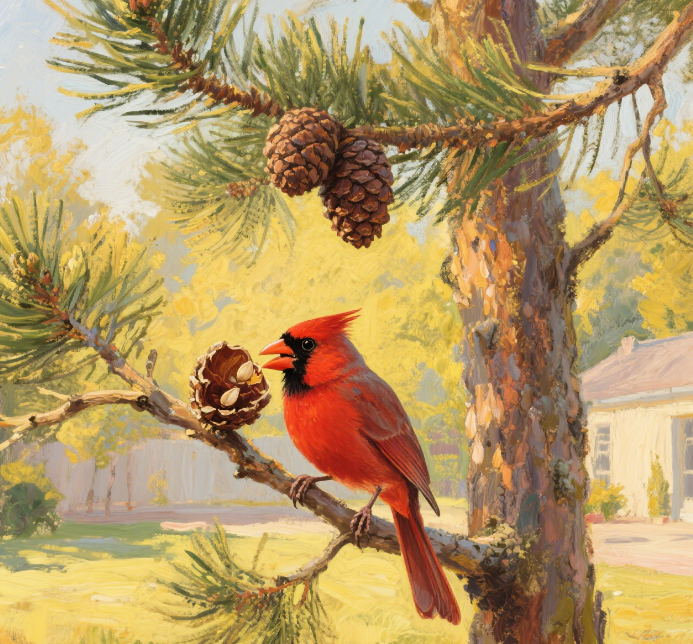
Pine trees have evergreen needles that provide warm shelter for birds during the cold winter. Their cones are an important food source for many birds, such as the red crossbill, whose unique beak shape allows it to skillfully open pine cones and extract the seeds inside. Birds like the pine grosbeak also store seeds from pine cones as reserve food.
Pine trees have sturdy branches and dense canopies, providing excellent nesting spaces for birds. Nests built by small birds like pine finches and titmice can often be seen among the branches. These birds use pine needles and small branches to weave intricate nests that are both warm and well-hidden, effectively protecting their eggs and chicks.
(4) Birch trees
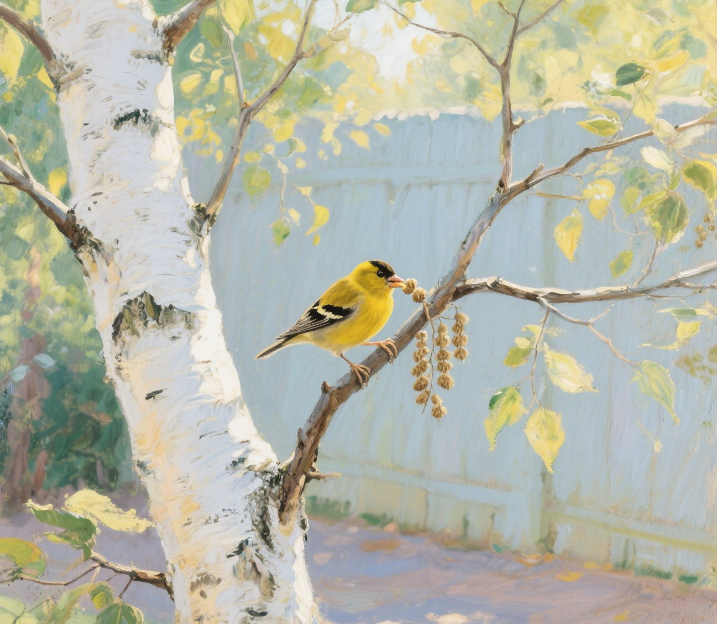
Birch trees have smooth, white bark and an elegant shape, making them a common sight in American gardens. Birch seeds are small and lightweight, dispersing in the wind during autumn and attracting small seed-eating birds such as goldfinches and robins. These birds circle around birch trees, catching seeds as they fall from the sky.
The hollows in birch trees are also popular nesting and breeding sites for birds. Woodpeckers peck out hollows in the trunks of birch trees, and after they leave, small birds such as owls and chickadees use these ready-made hollows as their nests for breeding. Additionally, many insect-eating birds inhabit the branches and leaves of birch trees, searching for pests like aphids and beetles, thereby maintaining the balance of the garden ecosystem.
3. Creating a Bird-Friendly Garden Tree Environment
After understanding the habitat preferences of American birds for garden trees, people can plan the planting of garden trees to create a more attractive habitat for birds. When selecting tree species, diversity should be prioritized, combining trees that bloom or bear fruit in different seasons to ensure a year-round supply of food resources for birds. For example, planting flowering trees like cherry blossoms and crabapples in spring attracts nectar-feeding birds; planting fruit trees like mulberries and cherries in summer provides fruits for birds; and in autumn, plant oak and maple trees to meet birds' needs for seeds and nuts.
Additionally, attention should be paid to the layout and combination of trees. Combine tall trees with low shrubs to form a multi-layered vegetation structure, providing suitable habitats for birds of different sizes and habits. Furthermore, artificial bird nests, bird feeders, and water sources can be set up in the garden to further attract birds to nest. Artificial bird nests should be designed according to the habits of different bird species, such as providing larger tree-hole-shaped nests for woodpeckers and smaller box-shaped nests for small birds like titmice.
Regularly prune trees to maintain good ventilation and lighting conditions, which not only benefits tree growth but also reduces the occurrence of pests and diseases, creating a healthy habitat for birds. However, during pruning, care should be taken to avoid damaging bird nests and habitats, and pruning should preferably be conducted after the bird breeding season has ended.
There is a close and complex relationship between American birds and garden trees. Different bird species select suitable trees as habitats based on their specific needs; in turn, garden trees promote seed dispersal and ecological balance by providing food and shelter for birds. By understanding and utilizing this relationship appropriately, we can create a more harmonious and vibrant backyard ecological environment, allowing more birds to make their homes in our backyards and share the beautiful natural space with humans.
The above content illustrates the interactive relationship between American birds and backyard trees. If you wish to learn more about a specific type of bird or tree, or have other supplementary needs, please feel free to contact me at any time.