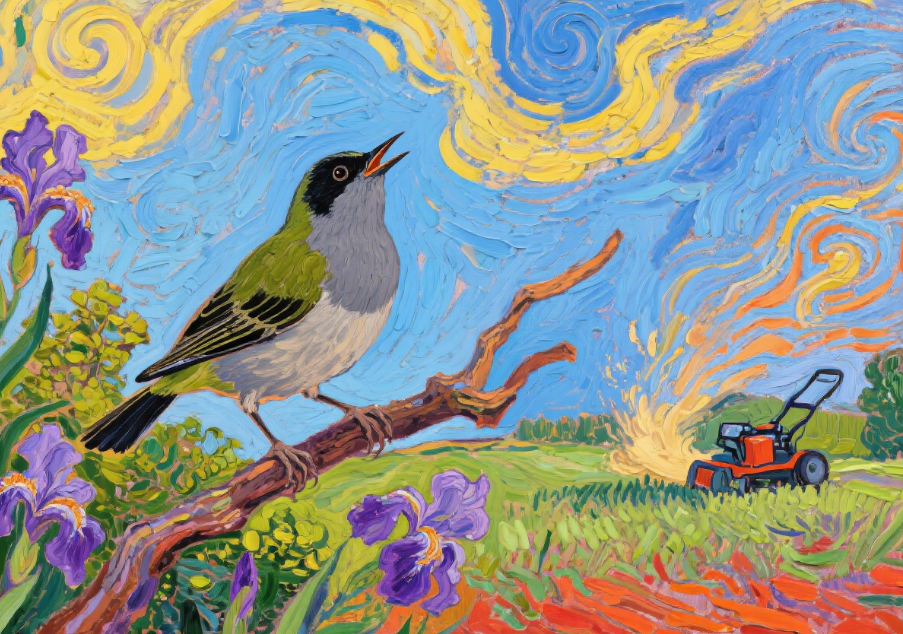
In the backyard ecosystems of the Americas, birds have developed complex interactions with human activities. From the house finch and robin in North American suburbs to the common hummingbird and gray-throated tanager in South American backyards, these birds have been exposed to human activities and environmental modifications for extended periods, gradually evolving efficient coping strategies. In-depth research into these strategies not only provides scientific basis for bird conservation but also offers valuable insights for human activities in urban governance, resource management, and crisis response.
I. Major Types of Human Disturbances Faced by Birds in American Gardens
Before analyzing the birds' coping mechanisms, it is essential to identify the common disturbance scenarios they encounter, which primarily fall into the following three categories:
Direct activity disturbances: These include human activities such as walking, gardening, children playing, and the chasing behavior of pets (such as cats and dogs) within yards. Such disturbances directly disrupt birds' foraging and nesting rhythms and may even threaten their safety. For example, in North American yards, domestic cats' hunting behavior is one of the primary causes of increased mortality rates among young robins.
Environmental modification disturbances: Human activities such as pruning garden vegetation, using pesticides, and installing artificial structures (e.g., clotheslines, solar panels) can disrupt the structure of bird habitats. For instance, excessive pruning of shrubs reduces nesting sites for hummingbirds, while the overuse of pesticides can lead to a decrease in bird food sources (e.g., insects, berries).
Human-induced noise disturbance: Traffic noise around yards and the roar of household appliances (such as lawnmowers and hair dryers) can interfere with birds' vocal communication. For birds that rely on singing for mating and warning their peers (such as the gray-throated bush sparrow), noise can lead to a decrease in their reproductive success rate.
II. Core strategies for birds to cope with human disturbance
In response to the above disturbances, American backyard birds have developed a multi-dimensional coping system through long-term adaptation, ranging from behavioral adjustments to physiological regulation. Specifically, this can be divided into the following three categories:
(1) Behavioral level: Flexibly adjust activity patterns to reduce exposure to disturbances
Spatial avoidance and zone utilization: Birds divide backyard spaces into “functional zones” based on the intensity of human activity. For example, the house finch selects foraging areas in the less-frequented edges of backyards (such as grassy areas near fences) and nesting areas in the middle branches of tall trees—avoiding direct human contact while reducing threats from pets through canopy cover. This “spatial isolation” strategy essentially balances “disturbance avoidance” and “survival needs” through precise environmental assessment.
Time-shifting and activity rhythm adjustment: To avoid peak human activity periods (such as daytime gardening or evening walks), many birds adjust their activity rhythms. For example, the Eurasian tree sparrow shifts its daytime foraging time to early morning (before humans wake up) or to dusk (after humans have rested); the brown-throated hummingbird temporarily leaves the yard when humans use noisy equipment like lawnmowers and returns to forage once the noise subsides. This “time-shifting” strategy demonstrates birds' rapid adaptability to environmental changes.
Group collaboration in vigilance behavior: Social birds (such as American goldfinches) reduce risks through “group vigilance.” When a bird detects humans or pets approaching, it communicates a warning signal to its companions through specific calls (such as short “chirp-chirp” sounds), prompting the group to collectively take flight or retreat to a safe area. This “information sharing + coordinated response” model significantly increases the group's survival probability, preventing individual birds from being preyed upon or disturbed due to insufficient vigilance.
(2) Physiological level: regulating stress responses to maintain survival functions
Precise regulation of stress hormones: Faced with persistent human disturbance, birds do not remain in a state of “high stress” — prolonged stress leads to excessive energy expenditure, impairing reproductive and immune functions. Instead, they regulate cortisol levels (a stress hormone) to achieve a “moderate response.” For example, house sparrows frequently exposed to human activities have lower baseline cortisol levels than populations distant from humans. However, when encountering sudden disturbances (such as humans suddenly approaching nests), cortisol levels rapidly rise, prompting escape or defensive responses; after the disturbance ends, cortisol levels quickly return to normal, avoiding energy waste. This “on-demand regulation” physiological mechanism is key to birds' “energy-efficient survival” in disturbed environments.
Optimized energy metabolism adaptation: Since human disturbance may lead to shorter foraging times and increased difficulty in obtaining food, birds optimize their energy metabolism. For example, gray-throated bush warblers store more fat during periods of abundant food (such as the berry-ripening season in gardens) as an “energy reserve” for disturbance periods; simultaneously reducing unnecessary flight activities to lower energy expenditure. This “reserve + conservation” metabolic strategy helps birds maintain survival in unstable resource environments.
(3) Ecological adaptation: Adjusting survival dependencies to integrate into human environments
“Artificialization” adaptation in nesting strategies: Some birds no longer rely on natural vegetation for nesting but instead utilize human-provided facilities. For example, tree swallows in North American gardens choose to nest in human-made birdhouses rather than natural tree cavities—birdhouses not only protect against wind and rain but also reduce threats from predators like snakes and squirrels; house sparrows, meanwhile, utilize gaps in buildings (such as under eaves or near air conditioner units) to nest, transforming human structures into “safe habitats.” This strategy of “actively utilizing artificial environments” reflects birds' “positive adaptation” to human activities, rather than mere avoidance.
Dietary “generalization” adjustments: To cope with the reduction of natural food sources caused by human activities, many birds expand their food sources and even rely on food provided by humans. For example, the Eurasian tree sparrow, which traditionally feeds on insects and earthworms, will actively consume human-discarded fruit scraps and pet food in garden environments; the American goldfinch frequently visits human-set bird feeders to supplement its diet with sunflower seeds and millet. This “dietary generalization” strategy reduces birds' dependence on single food resources and enhances their survival resilience in human-disturbed environments.
III. Core lessons humans can learn from birds' coping strategies
The “flexibility,” “collaboration,” and “adaptability” birds demonstrate in responding to human disturbance align closely with human needs in urban governance, resource management, and crisis response. Specific lessons that can be learned are concentrated in the following four areas:
(1) Spatial Planning: Learning “Zoning Utilization” to Balance Resources and Disturbances
Birds' “spatial avoidance and zoning utilization” strategy holds direct implications for human urban spatial planning. In urban development, we can adopt birds' “functional zoning” approach, dividing areas into different “ecological-living” zones based on human activity intensity: for example, in urban parks, establishing “core ecological zones” (off-limits to humans, serving as habitats for birds and insects), “buffer activity zones” (permitting low-intensity walking and birdwatching), and “high-frequency activity zones” (such as children's play areas and fitness zones). . This zoning model can meet human recreational needs while providing safe living spaces for wildlife, achieving “coexistence between humans and nature”—this is an expanded application of birds' “foraging zone - nesting zone” separation strategy in courtyards.
(2) Early Warning Mechanism: Drawing on “Group Vigilance” to Enhance Crisis Response Efficiency
The “group vigilance + information sharing” model of birds offers insights for human public safety early warning systems. In responding to urban disasters (such as fires or floods) or public health events (such as epidemics), we can establish a similar “multi-tiered early warning network”: For example, in communities, residents, property management, and community staff can form an “early warning group” to use smart devices (such as cameras and sensors) to monitor abnormal situations in real time. Once a risk is detected (such as a fire hazard or signs of epidemic spread), information can be immediately transmitted through community groups, early warning broadcasts, and other channels to guide residents in coordinating their response. This “distributed early warning + collaborative response” model can significantly reduce crisis response time and improve response efficiency—just as American goldfinches use group chirping to quickly avoid risks.
(3) Stress Management: Drawing on “hormonal regulation” to achieve “moderate response” and “resource conservation”
Birds' “on-demand regulation” of cortisol provides insights for human stress management and organizational resource allocation. At the individual level, when facing stress in work and life (similar to the “disturbances” faced by birds), we can learn from birds' “moderate response”: avoid prolonged “excessive anxiety” (corresponding to high cortisol levels in birds), regulate emotions through meditation, exercise, etc., “rapidly activate” when needing to concentrate on challenges (such as important work tasks), and promptly relax after task completion to reduce energy (psychological resource) waste. In organizational management, businesses or governments facing sudden situations (such as market fluctuations or public events) should also avoid “overreacting” (such as blindly investing large amounts of resources) and instead “precisely allocate” resources based on the severity of the event, solving problems while reducing costs—this is the human application of birds' “energy-saving survival” strategy.
(4) Resource Utilization: Learn “Dietary Generalization” to Enhance System Resilience
The core of birds' “food generalization” strategy is to reduce dependence on a single resource by expanding resource sources, which provides important insights for human resource management and sustainable development. In the energy sector, we can draw on this approach to reduce reliance on fossil fuels and vigorously develop diversified energy sources such as solar, wind, and hydro power (similar to birds expanding their food sources), thereby enhancing the resilience of energy systems and addressing the risk of energy shortages; In the agricultural sector, planting multiple crops (rather than a single crop) can prevent total crop failure due to pests and diseases while meeting diverse market demands (similar to birds consuming a variety of foods); in personal career development, “skill generalization” (such as mastering multiple professional skills) can help us navigate fluctuations in the job market and enhance our competitiveness — these are all extensions of birds' “adapting to disturbances and flexibly surviving” philosophy.
IV. Summary
The strategies employed by American backyard birds to cope with human disturbance are the result of long-term natural selection and environmental adaptation, with the core principles being “flexible adjustment, precise response, and collaborative survival.” From spatial utilization to group warning systems, from physiological regulation to resource adaptation, every strategy employed by birds reflects a profound understanding of the relationship between “disturbance and survival.” For humans, these strategies are not only the scientific basis for bird conservation but also the “natural wisdom” we need to navigate complex urban environments and achieve sustainable development. In the future, if we can combine this “natural wisdom” with human technology and institutions, we will surely build a more harmonious and resilient system of coexistence between humans and nature. 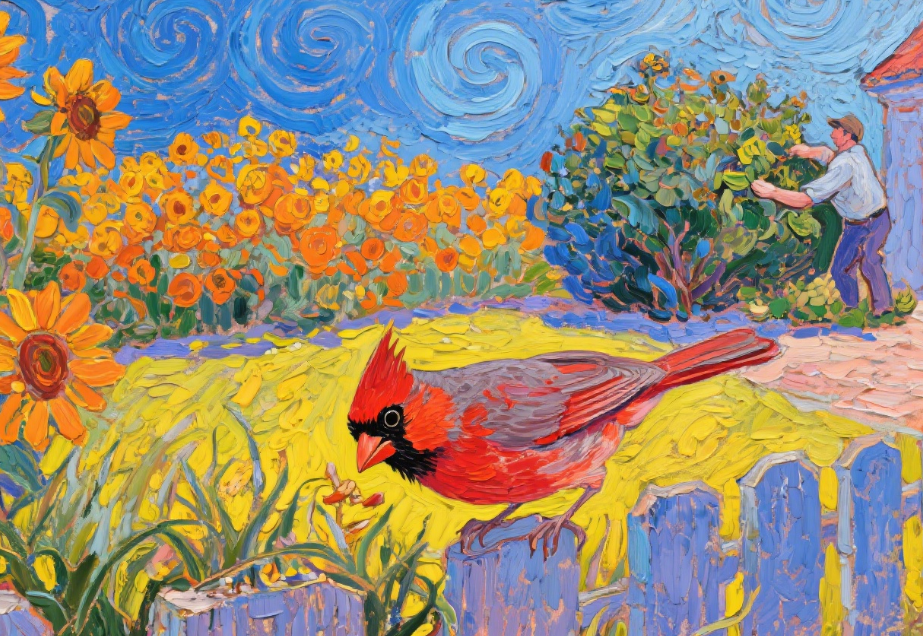
The measures and methods employed by birds in the Americas to respond to partial human interference in their surroundings, and what humans can learn from them.
Aug 15, 2025 Bird knowledge presenters