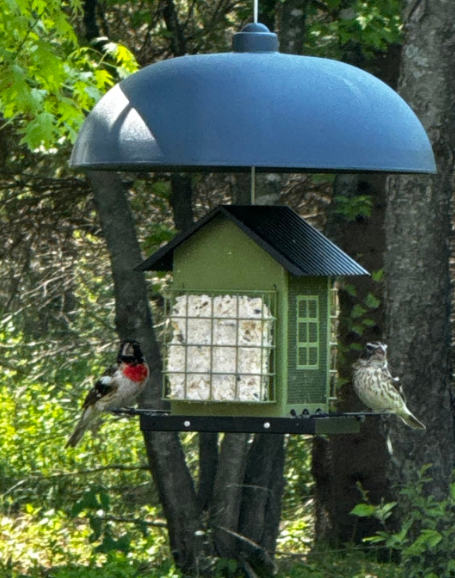
I. Ultimate Durability: Built to Withstand Harsh Environments
Metal bird feeders far surpass plastic, wood, and other non-metal materials in durability—their most fundamental advantage.
Resistance to Natural Wear and Tear: Plastic feeders exposed outdoors for extended periods often deteriorate, crack, or fade due to UV exposure, typically requiring replacement within 1-2 years. Wooden feeders are prone to moisture damage, mold growth, and insect infestation, and may warp or deform when absorbing water during rainy seasons. Iron feeders (especially rust-resistant galvanized iron or stainless steel) withstand wind, rain, and sun exposure. They maintain structural integrity even in high-temperature, humid, or frigid conditions, typically lasting 5-10 years—with premium products enduring far longer.
Superior Impact Resistance: In outdoor settings, feeders face challenges like squirrel gnawing, bird pecking, or accidental collisions (e.g., branch scrapes, wind-induced tree trunk impacts). Plastic feeders develop cracks when gnawed by squirrels, leading to seed leakage, while wooden feeders may sustain pecked holes. Iron feeders, however, boast high hardness and toughness. Squirrels struggle to gnaw through them, and bird pecking or minor impacts won't damage their structure. They maintain their food storage and feeding functions intact over the long term.
II. Safety Protection: Dual Safeguards for Birds and Feed
Compared to non-iron feeders, iron products offer superior safety advantages, protecting birds while minimizing feed waste and contamination.
Highly effective against squirrels and other “feed thieves”: Squirrels are common “predators” of bird feeders, often gnawing through non-iron feeders to steal food—wasting grain and potentially frightening birds. The sturdy metal construction of iron feeders effectively resists gnawing. Some designs incorporate metal anti-gnaw nets or gravity-activated switches (closing the feeding port when triggered by a squirrel's weight), eliminating theft at its source and ensuring feed remains exclusively for birds.
No Risk of Harmful Substance Release: Low-quality plastic feeders may release harmful substances like plasticizers under high temperatures, contaminating feed. Some wooden feeders are coated with paint for preservation, and the chemicals in the paint may also pose a threat to bird health. Qualified iron feeders (such as food-grade stainless steel or lead-free galvanized iron) have stable chemical properties and do not release harmful substances due to temperature changes, ensuring safe feeding for birds and preventing feed contamination.
III. Functional Adaptability: Meeting Diversified Needs
The material properties of metal feeders enable greater functional design flexibility, making them more practical than non-metal alternatives.
Superior Load-bearing Capacity and Structural Stability: Some feeders require suspension from branches or stands, or incorporate multi-tiered feeding platforms—demanding high material strength. Plastic feeders may deform or break under excessive weight, while wooden feeders risk loosening mortise-and-tenon joints with prolonged load-bearing. Iron feeders (especially those made of thickened wire or steel plates) offer robust load capacity, resist deformation when suspended, and maintain stability in multi-tiered structures—ideal for attracting multiple birds to feed simultaneously.
Adapting to Specific Environments and Feed Types: In rainy regions, metal feeders can be paired with metal rain covers. These covers integrate more securely with the main structure, effectively preventing rainwater from entering the feed compartment (plastic covers may detach due to thermal expansion and contraction). For larger feed particles (e.g., nuts, mixed grains), the feeding port of metal feeders resists deformation from pressure, maintaining unobstructed flow. In contrast, plastic feeding ports are prone to wear and chipping from prolonged contact with hard feed.
IV. Long-Term Cost-Effectiveness: One-Time Investment, Lasting Benefits
From a cost-effectiveness perspective, while iron feeders have a higher initial purchase cost than plastic ones, their long-term usage costs are lower.
Non-iron feeders (like plastic or wooden) require frequent replacement due to poor durability—potentially needing 3-5 replacements within 10 years, with cumulative costs far exceeding a single high-quality iron feeder. Iron feeders, however, require only a one-time investment. With simple maintenance like regular cleaning and rust prevention (e.g., periodic wiping and applying rust-proof oil), they provide long-term service. This avoids the hassle and extra expense of frequent replacements, making them especially suitable for those who enjoy birdwatching and feeding birds over the long term.
We recommend our Flowafoli metal bird feeder!https://www.amazon.com/Outdoors-Capacity-Birdfeeders-Weatherproof-Attracting/dp/B0C9Q5FCRB?ref_=ast_sto_dp&th=1