Similarities Between Birds and Other Species
In the long history of life's evolution, although birds soar through the skies and appear vastly different from other species on land and in the oceans, a closer look reveals numerous remarkable similarities between them. These similarities are not only fascinating marks of biological evolution but also provide important clues for understanding the diversity and unity of life.
From a physiological structure perspective, birds share a close connection with reptiles. Both birds and crocodiles belong to the archosaur group, resulting in significant similarities in their skeletal structures. For example, the hearts of birds and crocodiles both have four chambers, a relatively complex structure that enables more efficient oxygen delivery throughout the body, ensuring normal physiological functions. Additionally, the eggshells of birds and the eggshells of reptiles both serve to protect the embryo and prevent water loss, though they differ slightly in texture and composition. The fundamental protective mechanisms are shared, indicating that birds have retained many physiological features similar to those of their ancient reptilian ancestors during their evolutionary process.
In terms of behavioral habits, both birds and mammals exhibit highly developed parental care behaviors. Many birds meticulously build nests, incubate eggs, and tirelessly forage for food to feed their young after hatching. For example, swallow couples take turns catching insects to feed their hungry chicks until they can fly and forage independently. This is highly similar to the meticulous care that female mammals provide for their young, such as lionesses teaching cubs hunting skills and bears protecting cubs from other predators. Both species enhance the survival rate and survival capabilities of their offspring through such behaviors, reflecting the instinctive actions organisms exhibit to ensure the continuation of their species.
From an ecological functional perspective, birds and insects play similar roles in pollination. While bees and other insects are well-known as primary pollinators, certain birds, such as hummingbirds, are also important pollinators. Hummingbirds feed on nectar, and during the process of sipping nectar, their feathers become coated with pollen. When they fly to another flower, they facilitate pollen transfer. This process is identical to how bees pollinate by carrying pollen on their bodies while collecting pollen and nectar. Both birds and insects play crucial roles in connecting plant reproduction processes within ecosystems, maintaining ecological balance and stability.
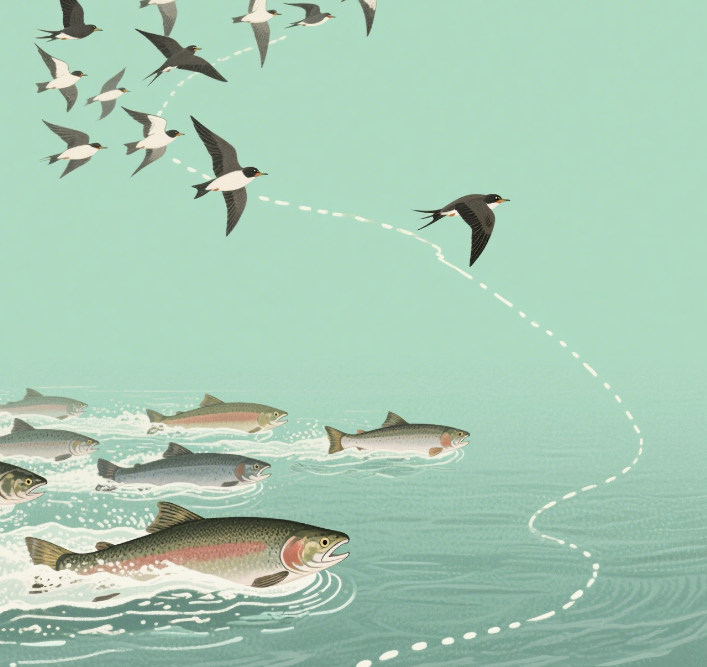
In terms of survival strategies, both birds and fish exhibit large-scale migratory behavior. Every autumn, migratory birds follow fixed routes for long-distance migrations, crossing mountains and rivers to seek more suitable climates and food resources. For example, Arctic terns migrate between the Arctic and Antarctic regions annually, covering distances of tens of thousands of kilometers. Salmon, a type of fish, also migrate from the ocean to their upstream birthplaces during the breeding season to fulfill their reproductive mission. Although the migration environments and methods of birds and fish differ, both are survival strategies evolved to adapt to environmental changes and ensure the survival of their populations.
These similarities profoundly reveal the essence of biological evolution. Convergent evolution causes different species to evolve similar characteristics and behaviors under similar environmental pressures to better adapt to their environments; while shared ancestral genetics have allowed different species to retain some common physiological structures and functions over the course of evolution. These similarities between birds and other species act like keys, helping us unlock the door to exploring the mysteries of life, enabling us to gain a deeper understanding of the kinship and evolutionary历程 between organisms, and revealing the remarkable wisdom and creativity life demonstrates in adapting to its environment.
The above points demonstrate the similarities between birds and other species from multiple perspectives. Are you interested in these similarities? If you wish to delve deeper into a specific aspect or have other suggestions for revisions, please feel free to let me know.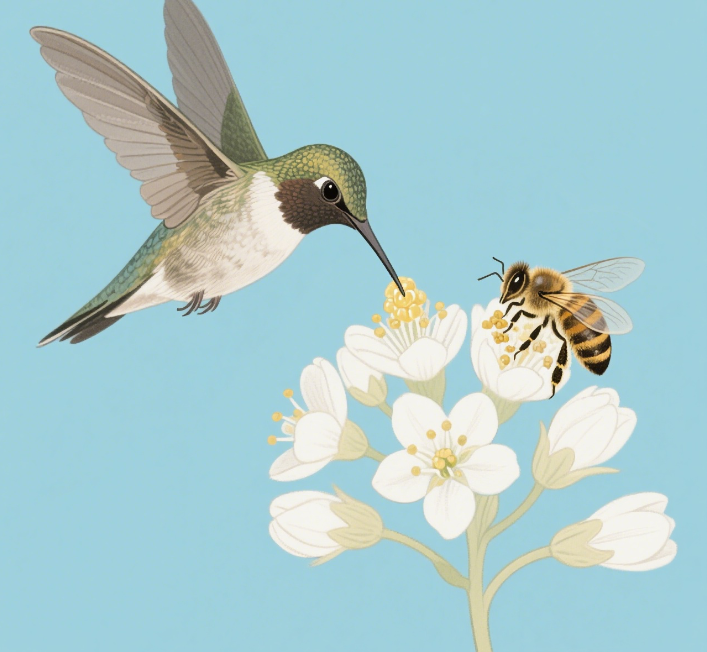
Similarities between birds and other species
Jun 25, 2025 Bird knowledge presenters