In the vast tapestry of biodiversity, birds are like vibrant brushstrokes, both outlining the similarities with other species and painting a unique picture of life. From cellular structure to ecological roles, birds share the ancient codes of life evolution with mammals, reptiles, fish, and other species, yet they have also developed distinct characteristics of their own. These similarities and differences form a fascinating chapter in the history of biological evolution.
(1) Similarities with other species
Basic biological characteristics
At the microscopic level, birds share basic cellular structures and genetic mechanisms with other species. Their cells all have cell membranes, cytoplasm, and cell nuclei, and their genetic material is also DNA, which transmits and expresses genetic information through the central dogma, following similar gene transcription and translation processes. During early embryonic development, birds, like mammals and reptiles, undergo stages such as cleavage, blastula, and gastrula. Early embryos even exhibit striking similarities, providing strong evidence for evolutionary theory.
In terms of macroscopic body structure, birds, along with mammals, reptiles, and amphibians within the vertebrate subphylum, possess a spine composed of vertebrae. Their bodies are composed of basic parts such as the head, neck, trunk, limbs (with the forelimbs of birds specialized into wings), and tail. Internally, they have similar arrangements of vital organs, including the heart, lungs, liver, and kidneys, which sustain fundamental life functions such as respiration, circulation, and digestion.
Ecological roles and behavioral patterns
Within ecosystems, birds play similar ecological roles to many other species. Like mammals and insects, many birds act as consumers within food chains and food webs. Insectivorous birds, along with frogs and spiders, help control pest populations and maintain ecological balance; herbivorous birds, like herbivorous mammals, influence plant distribution and reproduction through their feeding habits; and raptors, similar to large carnivorous mammals, occupy the top of the food chain and regulate prey populations.
In terms of behavioral patterns, birds also share many common traits with other animals. For example, both birds and mammals exhibit parental care behaviors, where parent birds, like mammalian parents, meticulously care for their young, providing food, protection, and teaching survival skills. Additionally, bird migration, like fish migration and seasonal migration in some mammals, is driven by the need to find more suitable habitats, food resources, or breeding sites.
(2) Significant differences from other species
Unique morphological structure
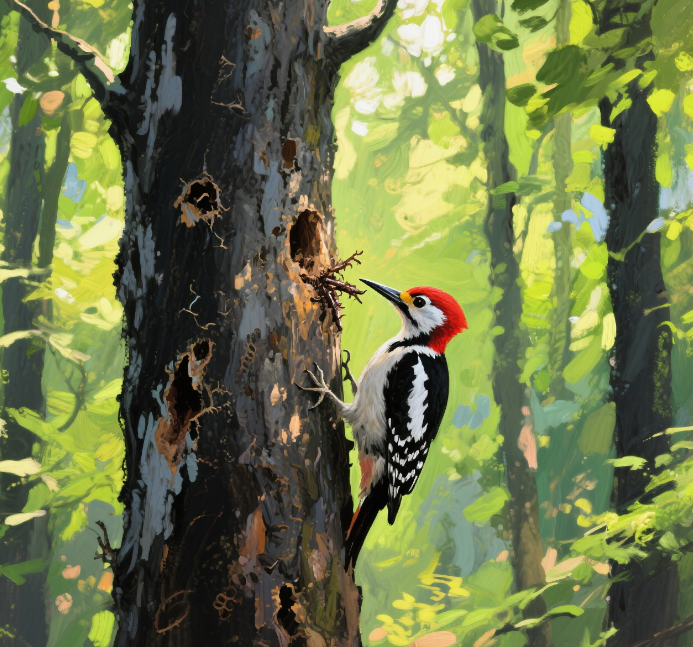
The most distinctive morphological feature of birds is their forelimbs, which have evolved into wings covered with feathers of various shapes. Feathers are not only a hallmark structure that distinguishes birds from other species but also serve multiple functions, including flight, insulation, and display. Unlike the fur of mammals, the scales of reptiles, or the scales and mucus of fish, feathers are composed of keratin, characterized by their lightness, durability, and ability to be replaced. Additionally, birds possess toothless beaks, which replace the teeth found in other vertebrates. Beaks of various shapes adapt to diverse feeding methods, such as the hooked beak of eagles for tearing prey, the chisel-shaped beak of woodpeckers for pecking through bark, and the slender beak of hummingbirds for sipping nectar.
The skeletal structure of birds is also highly specialized, with lightweight, hollow bones adapted for flight. Unlike the solid, heavy bones of mammals and reptiles, most of a bird's long bones are hollow and filled with air, reducing weight while maintaining strength. Additionally, birds' sternums have evolved to feature a prominent keel, providing attachment points for powerful pectoral muscles—a characteristic unique to birds.
Special physiological functions
In terms of the respiratory system, birds possess an efficient dual respiratory mechanism. Unlike mammals, which breathe through their lungs, or fish, which breathe through their gills, birds can exchange gases during both inhalation and exhalation. In addition to lungs, birds have multiple air sacs connected to the lungs, which store air and assist in respiration, enabling birds to obtain sufficient oxygen during flight to meet the high energy demands of flight.
The circulatory system of birds is also highly developed, featuring a fully separated four-chambered heart divided into the left atrium, left ventricle, right atrium, and right ventricle. This structure ensures that arterial and venous blood are completely separated, enhancing oxygen transport efficiency and maintaining birds' vigorous metabolism and constant body temperature. In contrast, reptiles have incompletely separated hearts, amphibians have three-chambered hearts, and fish have two-chambered hearts. These structural differences result in significantly lower circulatory efficiency compared to birds.
Unique behaviors and reproductive methods
Birds primarily reproduce by laying eggs, producing amniotic eggs with hard shells, similar to reptiles. However, bird eggs require incubation by the parent birds to provide suitable temperature and humidity during the hatching process. Additionally, birds exhibit a wide variety of reproductive behaviors, with particularly elaborate courtship displays. Many male birds attract females through vibrant plumage, melodious calls, and complex dances, a highly visually appealing courtship behavior that is relatively rare in other species.
In terms of behavior, birds exhibit high intelligence and complex social behaviors. Some birds can use tools, such as crows using branches to make tools to obtain food; parrots have excellent learning and imitation abilities, capable of learning a large number of words and actions. Additionally, some bird species have formed complex social groups with clear divisions of labor and social hierarchies, a phenomenon also uncommon among non-primate mammals.
While sharing fundamental life characteristics with other species, birds occupy an irreplaceable position in the long history of biological evolution due to their unique morphological structures, physiological functions, and behavioral patterns. Research into the similarities and differences between birds and other species not only helps us gain a deeper understanding of the mysteries of biological evolution but also provides important theoretical foundations for protecting biodiversity and maintaining ecological balance.
Similarities and Differences Between Birds and Other Species
Jun 23, 2025 Bird knowledge presenters