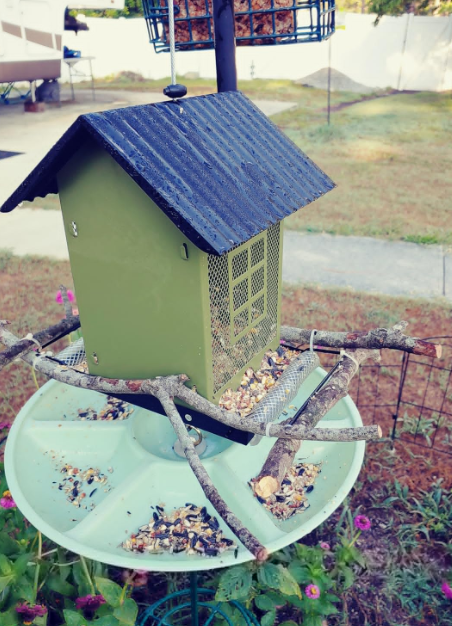
In the gardens of the American continent, the crisp sound of red-bellied woodpeckers pecking nuts and the vibrant sight of cardinal finches carrying sunflower seeds paint a vivid picture of human-nature symbiosis. When humans intervene as observers in birds' feeding scenes, maintaining boundaries is not only a matter of respecting birds' right to survive but also a core principle for preserving ecological balance and upholding birdwatching ethics. Humans must establish clear observation boundaries, satisfying their curiosity about nature while safeguarding birds' instinctive behaviors and survival security. This prevents unconscious ecological interference under the guise of “love” or “research.”
From the perspective of birds' physiology and instincts, unchecked observation directly disrupts their sense of security and energy balance during feeding. Common backyard birds like the American Robin and Blue Jay require constant vigilance against predators during feeding. Human over-approach, frequent disturbance, or flash photography triggers stress responses—frequent flight to evade threats consumes significant energy, while interrupted feeding may cause them to miss critical nutritional opportunities. Research indicates that when observers approach within 5 meters of feeding sites, North American goldfinches reduce their feeding duration by 40% and exhibit significantly increased group vigilance. Such interference not only impacts individual survival but, over time, may alter birds' perception of “safe foraging zones.” This forces them to abandon suitable backyard feeding spots, compelling them to seek food in higher-risk areas.
From an ecological balance perspective, boundary-less observation often leads to inappropriate intervention, disrupting the natural cycles of backyard ecosystems. Some observers deliberately offer foods unnatural to birds' diets (such as overly salty bread or sugary drinks) or excessively increase feeding quantities to achieve clearer viewing. While seemingly “well-intentioned,” such practices trigger chain reactions: On one hand, birds dependent on artificial feeding may gradually lose their foraging abilities. For instance, American robins reliant on human-provided berries reduce their hunting of earthworms in soil, diminishing organic matter decomposition efficiency in gardens. On the other hand, excessive food debris attracts invasive species like rodents and cockroaches, crowding out birds' habitats and potentially spreading diseases such as salmonella. In 2023, California experienced mass bird deaths in gardens, ultimately traced to cross-contamination from human overfeeding.
Establishing observation boundaries does not mean isolating human-bird interactions, but rather balancing scientific observation with ecological conservation under the principle of “minimal intervention.” Spatially, maintain at least 8-10 meters of distance, avoid using flash photography or loud noises, and utilize tools like binoculars for remote observation. Regarding food provision, if feeders are used, select items from birds' natural diet (e.g., black sunflower seeds, unsalted peanuts). Clean feeders regularly to prevent pathogen growth, and control feeding quantities to avoid creating dependency. Respect birds' natural feeding rhythms. For instance, avoid frequent observation near nests during breeding seasons to prevent startled parent birds from abandoning their young. Furthermore, communities can establish “Backyard Birding Guidelines” to standardize observation practices. For instance, Seattle's “Neighborhood Birding Alliance” distributes observation manuals and hosts online sharing sessions, fulfilling residents' birdwatching interests while safeguarding local backyard bird habitats.
Human observation of nature is fundamentally a tribute to life. In the morning light of an American backyard, when we set aside excessive “control” and gently watch birds feeding from a respectful distance, that sense of unobtrusive boundaries becomes the most eloquent testament to harmonious coexistence between humans and all living things. Only by upholding this boundary can the crisp songs of birds in our gardens endure, and the dialogue between humanity and nature continue indefinitely. This is not merely about protecting birds; it is a sobering recognition of our own place as members of the ecological community.
We recommend our Flowafoli bird feeder!
https://www.amazon.com/Outdoors-Capacity-Birdfeeders-Weatherproof-Attracting/dp/B0C9Q6VZ83?ref_=ast_sto_dp&th=1