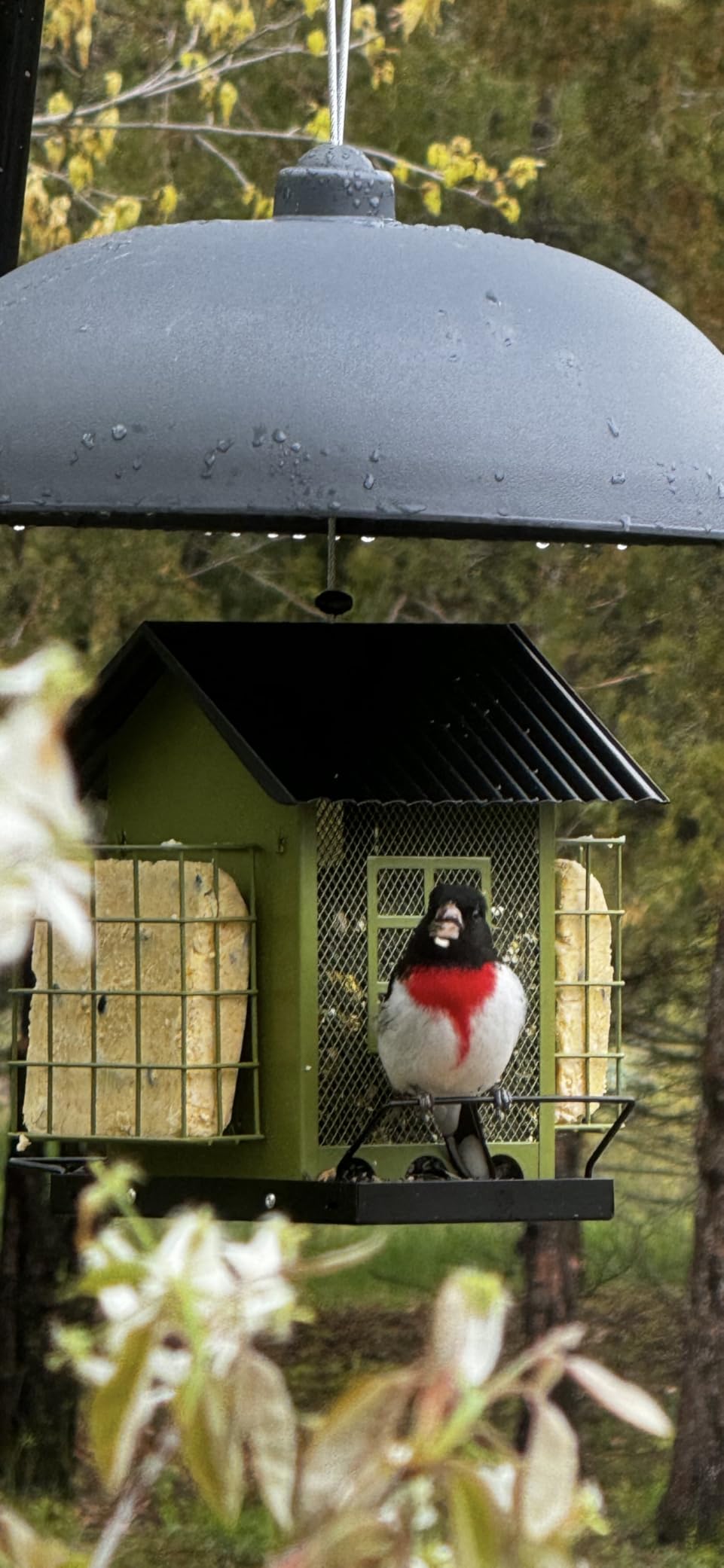
Human insights drawn from the feeding behavior of courtyard birds in the Americas
The American courtyard is home to numerous bird species, ranging from lively main cardinals to agile hummingbirds. The scenes of these birds foraging in the courtyard not only bring natural beauty to people, but also contain many wisdom that are worth learning from. By observing their feeding habits, food choices, and interactions with peers, we can gain profound insights into resource utilization, teamwork, and adaptation to change.
Reasonable planning and efficient utilization of resources
Birds in American courtyards demonstrate precise planning and efficient utilization of resources while feeding, providing valuable examples for human resource management.
Taking the main Cardinals as an example, this bird commonly found in American courtyards prefers seed based foods such as sunflower seeds and millet. When they feed, they do not randomly peck and waste. Instead, they carefully select plump seeds, use their beaks to peck open the outer shell of the seeds, and then feed on the kernels inside. They decisively discard empty shells or seeds that are not full, avoiding wasting time and energy on useless food. This screening behavior of food quality inspires humans to pay attention to "precise screening" in resource utilization. When faced with massive information, materials or opportunities, we should learn to distinguish their value, prioritize the use of high-quality and high-value resources, and avoid waste caused by blind investment.
Looking at the American goldfinch again, they often feed on thistle seeds and sunflower seeds in their yards. During the season of abundant food, the American goldfinch will feed while hiding excess seeds in hidden places such as bark cracks and grass. These stored seeds become an important source of food for them during the winter when food is scarce. This kind of proactive food storage behavior, reflected in human life, is to plan and reserve resources well. Whether it is savings behavior in personal financial planning, to reserve funds for unexpected situations such as unemployment and illness; Enterprises should reserve key raw materials and technical talents in advance in production and operation to cope with market fluctuations and supply chain risks; Alternatively, energy and food reserves at the societal level can be inspired by the feeding behavior of the American goldfinch to ensure stable social operation.
Teamwork for mutual benefit
The teamwork spirit exhibited by many courtyard birds in the Americas during their feeding process breaks people's inherent understanding of "birds foraging alone" and provides new ideas for human team management and cooperation models.
The Cedar Peacock is a typical social bird that often appears in groups in American gardens to forage for berries. When they discover a berry forest, they will not fight or compete for food on their own, but will divide their work and cooperate. Some Taiping birds will stay on lower branches to feed on easily accessible berries, while others will fly to higher branches to alert for natural enemies (such as eagles, cats, etc.) around them. At the same time, they will peck mature berries from higher places to the ground for their companions to feed on. If natural enemies are found, the vigilant Taiping bird will make sharp calls to remind the entire group to evacuate quickly. This clear division of labor and coordinated foraging mode enables the entire group to efficiently obtain food under safe conditions.
This team collaboration model has important reference significance for humanity. In an enterprise project team, members are like a group of cedars and birds, requiring clear division of responsibilities. Some are responsible for core technology research and development, some are responsible for market research and promotion, and some are responsible for project schedule management and risk prevention. Only when each member leverages their own strengths, cooperates and supports each other, can the efficiency of project promotion be improved, the smooth completion of the project be ensured, and the overall goals of the team be achieved. In social welfare activities, volunteer teams also need similar collaboration. Some are responsible for raising materials, some are responsible for distributing materials, and some are responsible for organizing and promoting activities. Through collective cooperation, public welfare activities can cover a wider audience and exert greater social value.
Adapt to the environment and adapt flexibly
The environment of American courtyards is not static, and factors such as seasonal changes, changes in food resources, and human activity disturbances can all affect the feeding conditions of birds. The flexible adaptability exhibited by birds in the face of these changes provides inspiration for humans to cope with complex and ever-changing environments.
Hummingbirds are distinctive birds in American gardens that feed on nectar. In spring and summer, the courtyard is filled with blooming flowers and abundant nectar resources. Hummingbirds mainly shuttle between various flowers, feeding on nectar with their slender beaks. But in autumn and winter, the flowers in the courtyard wither in large numbers, and the nectar resources sharply decrease. At this time, hummingbirds will flexibly adjust their food sources, start to feed on the mature fruit juice in the courtyard, and even actively approach the feeding device set by humans to suck on the sugar water provided by humans. This ability to adjust food choices in a timely manner based on environmental changes allows hummingbirds to maintain their survival needs in different seasons.
Human society also faces various uncertainties, such as changes in market demand, technological innovations, natural disasters, and so on. From the adaptive behavior of hummingbirds, humans can learn the importance of "flexibility and adaptability". In the business field, companies need to adjust their product structure and business strategies in a timely manner according to changes in market demand, just like hummingbirds adjust their food sources. For example, with the increasing demand for healthy food among consumers, traditional food companies have adjusted their product lines and launched low sugar, low-fat, and organic healthy foods; In the technology industry, with the rapid development of artificial intelligence and big data technology, software companies need to constantly update their technological architecture and develop products that adapt to new technological trends in order to stand undefeated in market competition. In personal life, people also need to have adaptability. When facing changes in work or living environment, they should adjust their mentality and lifestyle in a timely manner, actively learn new skills and knowledge, in order to better adapt to the new living conditions.
Respect nature and promote harmonious coexistence
The feeding behavior of birds in American courtyards may seem simple, but it contains rich survival wisdom. From rational resource planning to team collaboration, from flexible adaptation to the environment to harmonious coexistence with nature, these inspirations from nature provide valuable references for human beings in various fields such as personal life, enterprise management, social development, and ecological protection. As long as we observe and learn from nature with care, we can draw more wisdom from it, better cope with various challenges in life and society, and achieve sustainable development of individuals, society, and nature.