The American garden, with its abundant vegetation, water sources, and food resources, has become an ideal habitat for numerous bird species. Different bird species exhibit distinct nesting behaviors in this area, skillfully utilizing the garden environment to build their homes and reproduce.
The mockingbird is one of the most common bird species in the American Garden, and its nesting habits are particularly distinctive. Mockingbirds typically choose dense shrubbery or low-lying branches within the garden as nesting sites. Such locations provide excellent concealment to evade predators while also allowing them to monitor their surroundings, promptly detecting both food sources and potential threats. Their nests are intricately constructed, primarily made from small branches, grass leaves, and moss, with soft feathers and down lining the interior to create a warm and comfortable environment for the chicks. Mockingbirds are omnivorous birds. In gardens, they forage on the ground or among low vegetation, seeking insects, berries, and other foods, with a relatively wide range of activity.
Hummingbirds are renowned for their small, delicate bodies and unique flight patterns, and they can often be seen in American gardens. Hummingbirds have specific habitat requirements, preferring areas with abundant flowers, as nectar is their primary food source. Their nests are very small, typically built on thin branches at a height of 3–10 meters above the ground. The materials used for the nests include plant fibers, spider webs, and moss, with lichen attached to the outer layer to blend seamlessly with the surrounding environment, providing excellent camouflage. Hummingbirds have exceptional flying abilities, capable of hovering and flying backward in mid-air, enabling them to effortlessly navigate through flower clusters to feed on nectar.
The blue jay is a vibrantly colored bird with unique nesting habits in American gardens. They prefer to build nests in large trees within gardens, particularly those with thick trunks and dense foliage. Their nests are relatively large, constructed from branches, bark, and grass, with a loose structure but sturdy enough to withstand wind and rain. Blue jays are omnivorous birds, feeding on nuts, seeds, insects, and bird eggs. They have a strong habit of storing food, collecting large quantities of nuts in the fall and burying them underground or in tree hollows in gardens as winter food reserves.
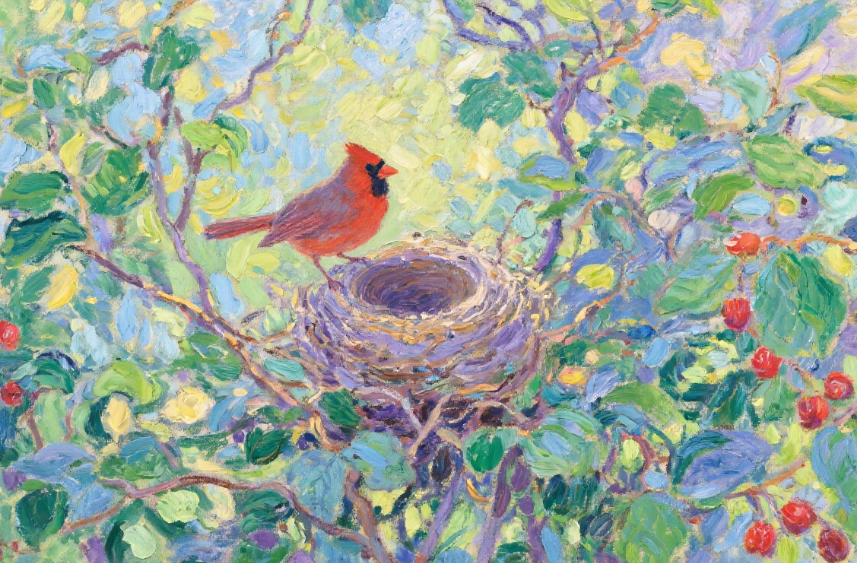
The Northern Cardinal is another common bird in American gardens, with the male's bright red feathers being particularly striking. They typically build their nests in dense shrubs or vine-like plants. The nests are cup-shaped, woven from small branches, grass stems, and leaves, with the interior lined with soft grass and feathers. Northern cardinals primarily feed on plant seeds and fruits, though they also consume some insects. When active in gardens, they often hop around on the ground in search of food or dart between branches.
These birds in American gardens adapt to their environment through different nesting behaviors, and their presence adds vitality and vibrancy to the gardens. 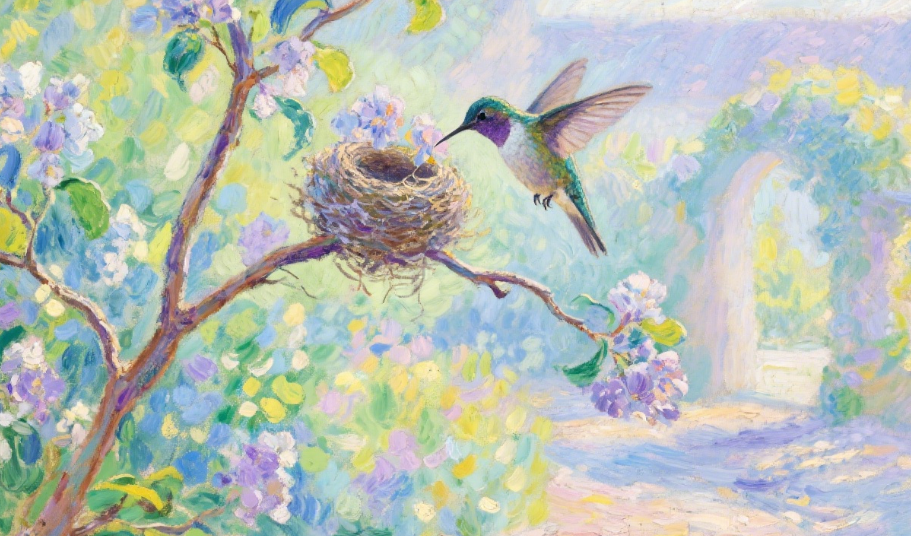
Introduction to the various bird habitats in the American Garden
Aug 6, 2025 Bird knowledge presenters