More than 1,800 species of birds live in the vast expanses of the Americas, from the dense Amazon rainforests to the vast North American prairies, from the cold Alaskan glaciers to the hot and humid swamps of Central America. However, these dynamic beings are constantly under threat from all aspects of nature. The natural enemies of birds in the Americas include mammals, raptors, reptiles, amphibians, and the potential dangers posed by human activity, which together form a complex chain of organisms that maintain the balance of the ecosystem.
Terrestrial Predators
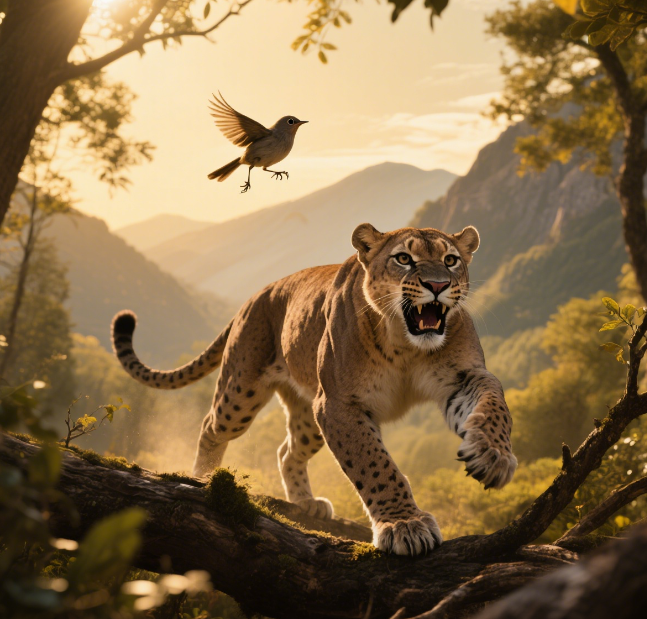
Among terrestrial predators, felines are a deadly threat to many birds. The puma, one of the largest cats in the Americas, is able to easily capture birds that are moving on the ground or on low branches, thanks to its strong body and excellent jumping ability.
birds that are active on the ground or roosting on low branches. In the mountainous and forested areas of the Americas, pumas can often be found attacking bird nests and preying on young birds. After the introduction of domestic cats to the Americas, they have become “invisible killers” of birds because of their strong reproductive ability and high hunting desire. According to statistics, only in the United States, domestic cats will kill hundreds of millions of birds every year, whether in urban parks or rural fields, small birds are difficult to escape the pursuit of domestic cats.
Canines are also not to be underestimated. Wolves and coyotes, while feeding primarily on mammals, will also attack ground-nesting birds when food is scarce. In North American grasslands, for example, burrowing owls dig burrows in the ground to nest, making them easy prey for wolves and coyotes. Additionally, raccoons, with their nimble paws and cleverness in climbing trees, often steal eggs and young from nests while their parents are out foraging for food, which has had a major impact on bird reproduction in forest and wetland ecosystems in the Americas.
Sky Threats
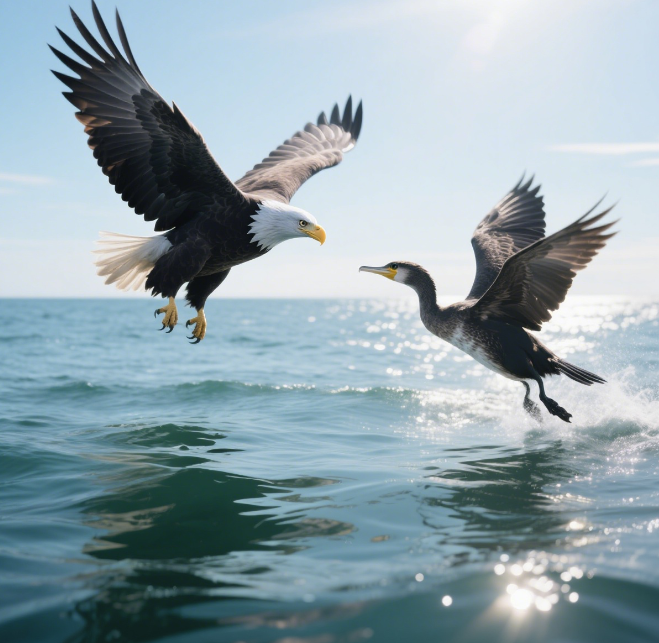
Raptors in the sky are formidable adversaries for birds. White-headed sea eagles, the national bird of the United States, dominate the skies with their sharp eyes, powerful talons, and excellent flight. They mainly prey on fish, but also attack other waterfowl. In the coastal and large lake areas of North America, white-headed sea eagles can often be seen chasing and snatching food caught by cormorants, autumn sand ducks, and other birds, and even directly hunting these birds. Golden eagles, on the other hand, are top predators in the alpine and grassland regions, with a wide range of prey, including grouse, thunderbirds, and other medium-sized birds. With the impact of a high-speed dive, golden eagles are able to instantly subdue their prey.
In addition, peregrine falcons are one of the fastest birds in the world. When hunting, they will swoop down from a high altitude at super high speed and hit their prey with their sharp beaks and claws, often knocking pigeons, terns, and other birds directly to unconsciousness or death. Peregrine falcons have also adapted to a new life in the city's high-rise environment, utilizing tall buildings as lookouts to prey on birds that travel over the city.
Water hunters
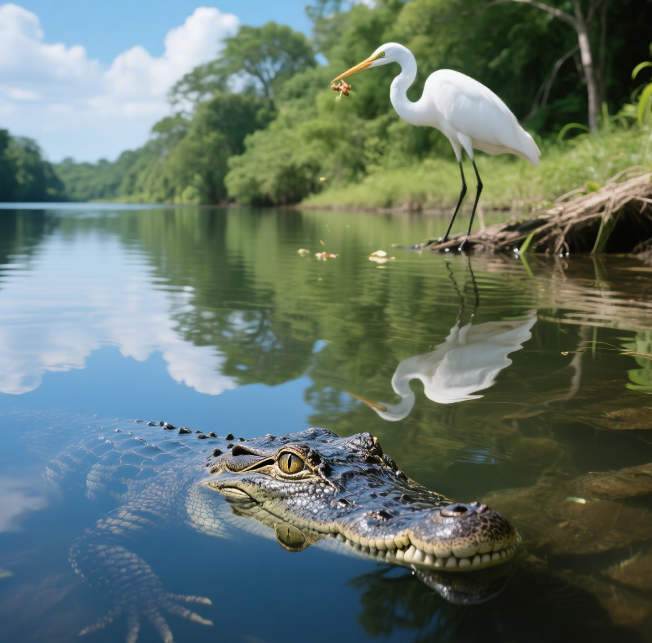
In aquatic environments, crocodiles and otters are a major threat to birds. American crocodiles are found in rivers, lakes and swamps in Central and South America. They are good at lurking under the water's surface, exposing only their eyes and nostrils, and once wading birds such as egrets and herons approach the water's edge to forage for food, the crocodile will suddenly launch an attack, and its powerful bite can instantly drag the bird into the water and drown it. The caiman is relatively small but equally ferocious, and in the rivers of the Amazon rainforest, it poses a threat to birds such as musk pheasants in shallow water.
Otters, on the other hand, are agile hunters in the water, feeding not only on fish, but also on waterfowl and bird eggs. The North American river otter and the South American giant otter have excellent swimming ability and keen sense, often dive into the water to sneak up on birds resting or foraging on the surface of the water, so that the birds can not be defended.
Other Threats
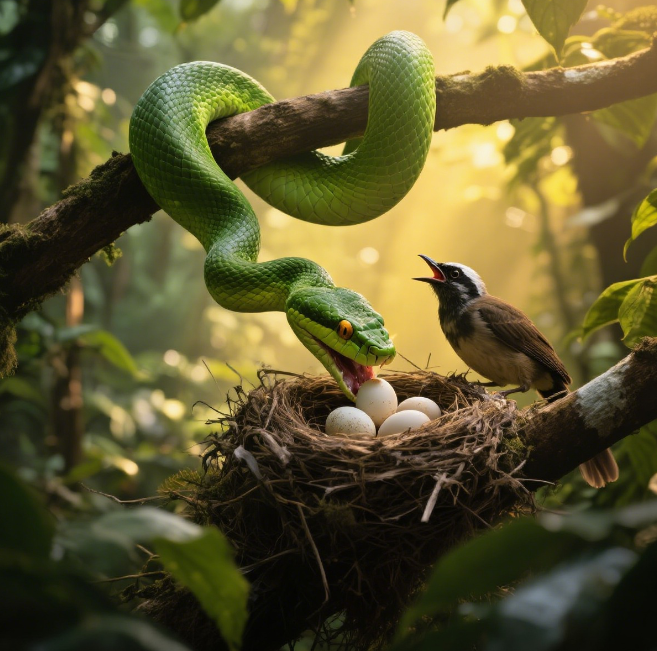
In addition to these common predators, reptilian snakes also pose a threat to birds. Arboreal snakes such as green tree pythons and king snakes are able to silently climb trees and sneak into nests to devour eggs and young. In the tropical rainforests of Central and South America, some snakes can even mimic the odor of bird eggs to attract their parents to hunt them. Bullfrogs, an invasive species of amphibians, have a prodigious appetite and prey on a variety of small birds and chicks, posing a threat to the survival of local birds.
The impact of human activities should not be ignored. Habitat destruction, environmental pollution, illegal hunting and other behaviors have caused many birds to lose their homes and face serious challenges to their survival. For example, deforestation has led to a reduction in the habitats of birds such as woodpeckers and parrots; and the use of pesticides has contaminated the food sources of birds, affecting their health and reproduction.
Birds in the Americas have a wide variety of natural enemies, and these predatory relationships are the result of natural selection in the ecosystem, maintaining biodiversity and ecological balance. At the same time, the impact of human activities on the environment in which birds live is becoming increasingly significant, and the protection of birds and their habitats and the reduction of anthropogenic disturbances are essential to maintaining the stability and sustainability of the ecosystems of the Americas.
The above descriptions cover a wide range of natural enemies common to birds in the Americas. If you would like to learn more about a particular type of natural enemy, or the natural enemies of birds in a particular region, please feel free to talk to me.