The following are some common and practical bird feeders found in American gardens:
Tube-shaped bird feeder
Structural features: Typically consists of a long cylindrical body that can be hung on hooks or branches. Materials are often heavy-duty transparent plastic, though metal versions also exist. The lids and bases at both ends are usually made of plastic or metal, making them easy to remove for filling and cleaning. Features multiple small openings and perching bars, allowing birds to access food through the openings.
Advantages: Simple design, durable, and blends well into the garden environment. The transparent cylinder allows easy observation of seed levels for timely refills. The small openings and perching bars prevent animals like squirrels from stealing seeds while allowing small birds such as sparrows, chickadees, and finches to perch and feed easily.
Disadvantages: Relatively small capacity; frequent refilling may be required for larger birds or larger flocks.
Funnel-shaped bird feeder
Structural features: Also known as a house-shaped bird feeder, it features a conical container for storing large quantities of birdseed. Seeds fall through the bottom opening into the tray below for birds to eat. Often designed in the shape of a small house with a pointed roof to provide shelter from wind and rain.
Advantages: Can hold a larger quantity of seeds, reducing the need for frequent refills. Attracts a variety of bird species, including larger birds. Aesthetically pleasing design adds charm to gardens. Some funnel-style bird feeders are equipped with weight-sensing perches; when heavier animals like squirrels stand on them, the feeding opening closes to prevent squirrels from accessing the seeds.
Disadvantages: Compared to tube-shaped bird feeders, they may be more difficult to clean, but some products feature removable roofs for easier internal cleaning.
Platform-style bird feeder
Structural features: A relatively simple bird feeder, typically a flat platform with a low rim around the edges to prevent seeds from falling out. It can be hung from a tree, placed on the ground, or mounted on a pole. Materials include wood, plastic, or metal.
Advantages: Attracts a variety of bird species and sizes, including pigeons, sparrows, and jays. The open platform provides ample space for birds to perch and feed. Cleaning is straightforward—simply remove the platform and rinse or wipe it clean.
Disadvantages: There is no shelter, so seeds are easily wet by rain or blown away by wind. Drainage holes should be installed on the platform, and it should be placed in a sheltered area or paired with a simple roof to address this issue.
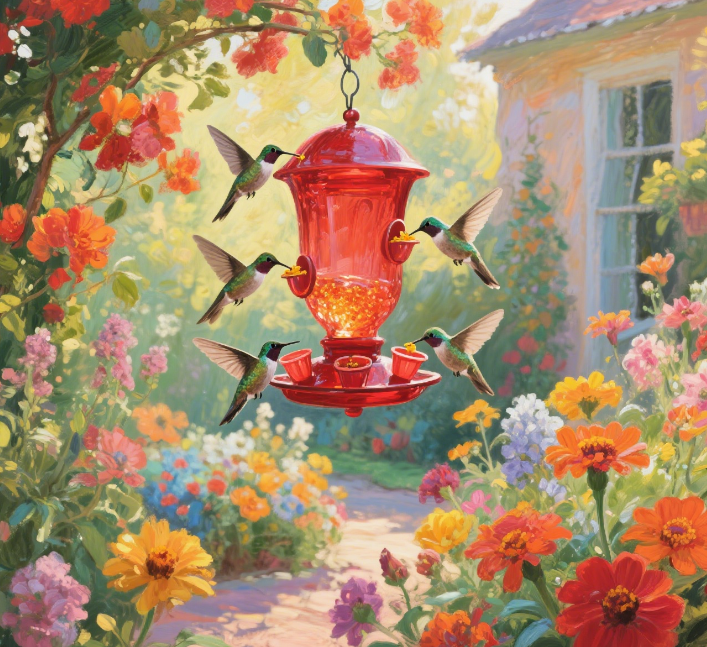
Hummingbird feeder
Structural features: Specifically designed to attract hummingbirds, typically using brightly colored glass or plastic containers in red, orange, or yellow to catch their attention. The container features multiple small feeding ports suitable for hummingbirds' slender beaks to sip nectar.
Advantages: The unique design and colors effectively attract hummingbirds, adding a touch of vitality and liveliness to the garden. It allows people to observe the beauty and unique flight patterns of hummingbirds up close.
Disadvantages: Nectar can spoil easily and attract ants and other insects, requiring regular replacement of the nectar and cleaning of the feeder. Additionally, during cold seasons, the feeder should be brought indoors to prevent the nectar from freezing and damaging the feeder.
Tallow feeder
Structural features: Typically made of a metal wire cage or frame, with high-fat tallow blocks or similar foods such as nut, seed, and oil mixtures placed inside.
Advantages: In cold winters, high-fat foods like tallow provide birds with abundant energy, helping them maintain body temperature and survive periods of food scarcity. The metal wire structure prevents animals like squirrels from directly stealing the food while allowing birds to easily peck at it. It can attract various bird species such as woodpeckers, chickadees, and titmice.
Disadvantages: Beef fat melts easily in high temperatures, potentially staining the feeder and surrounding environment. Therefore, it is not suitable for use during summer heatwaves or requires the use of heat-resistant beef fat products.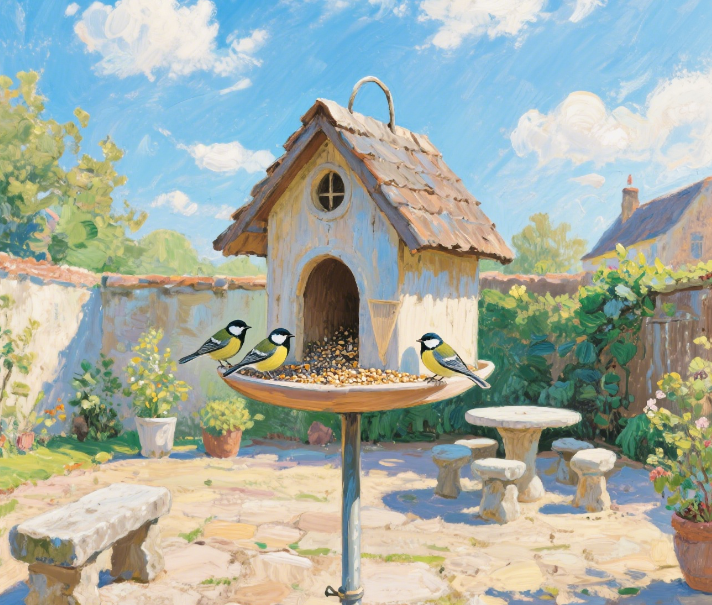
Introduction to the most common and practical bird feeders in American gardens
Jul 10, 2025 Bird knowledge presenters