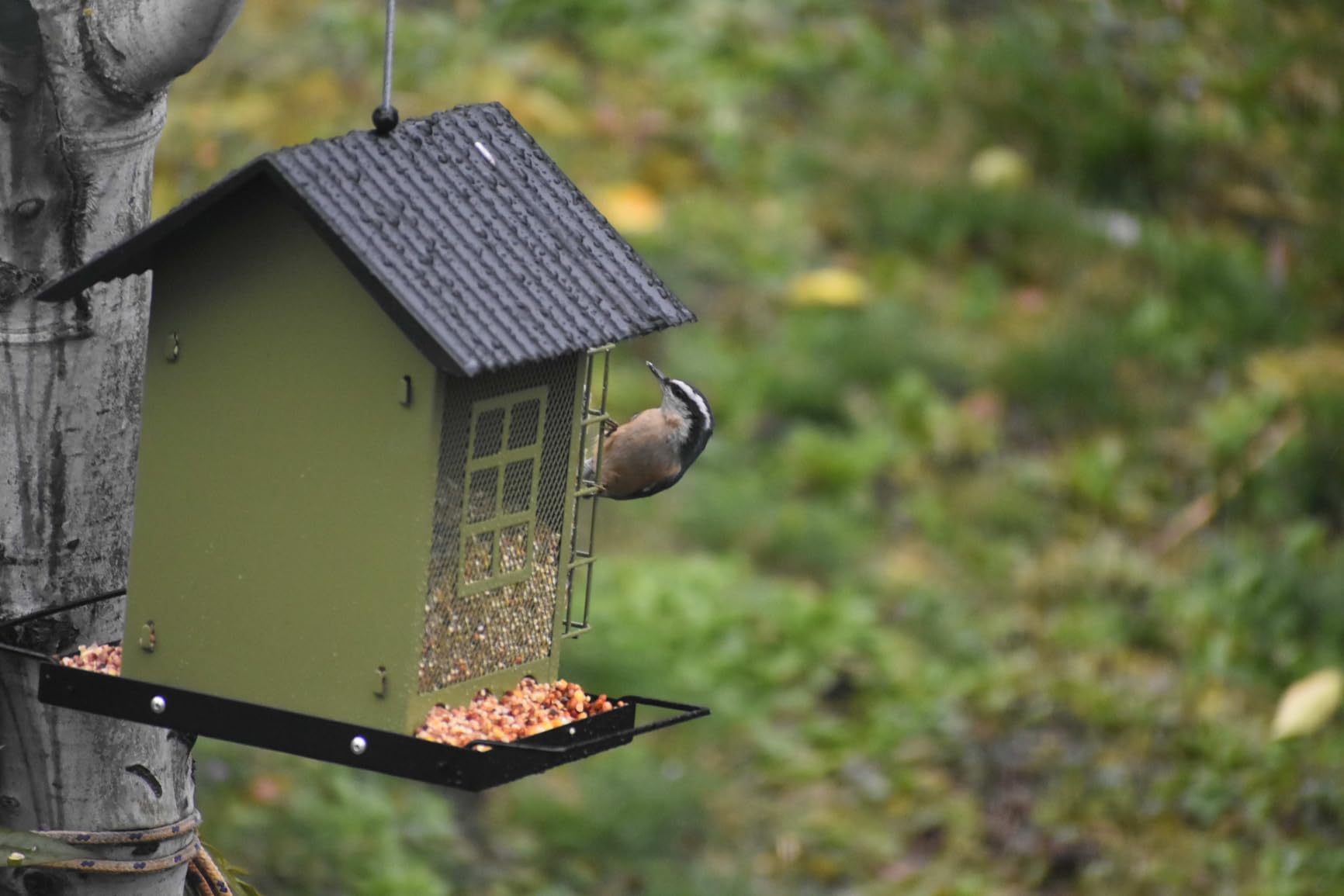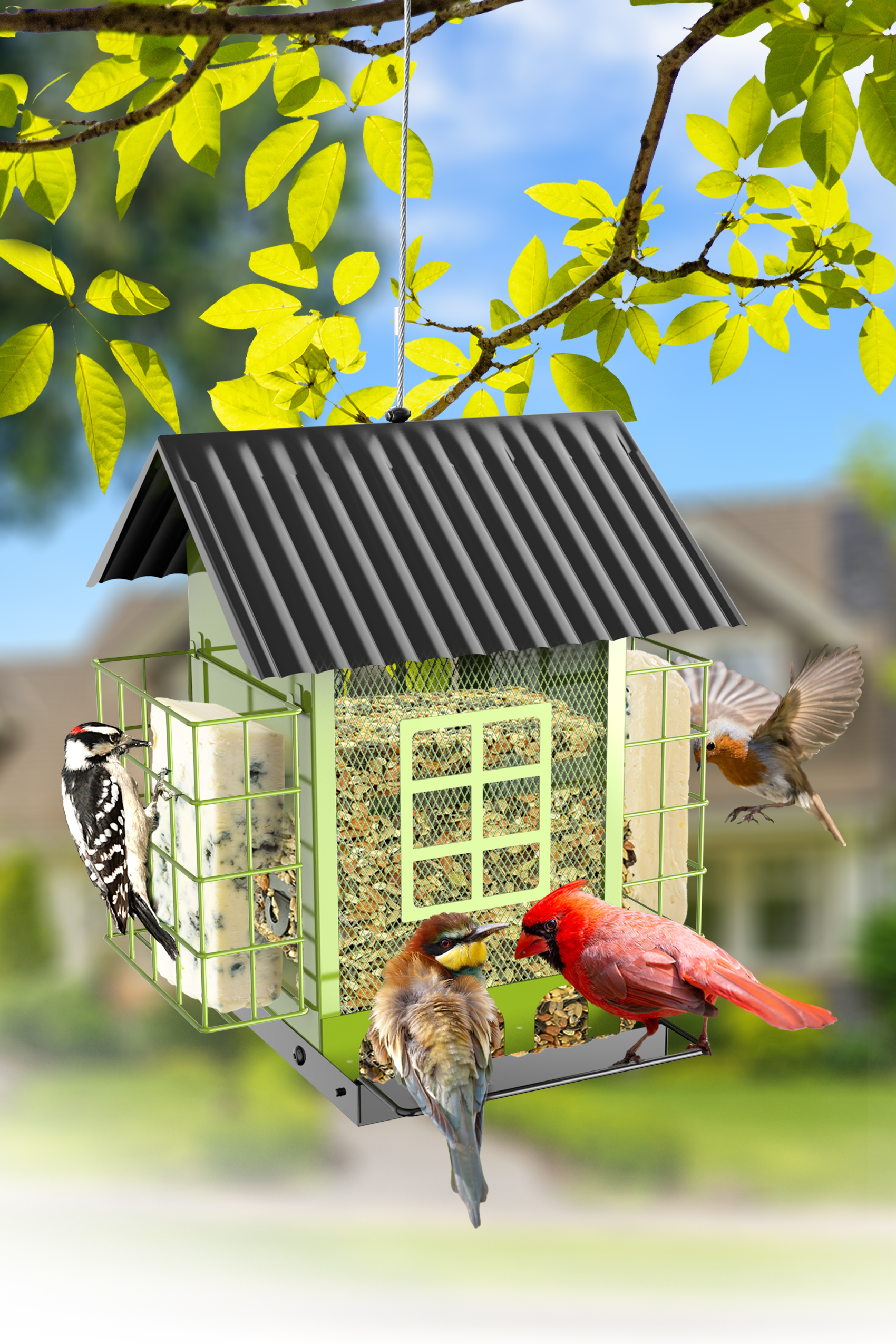
Comparison of the Advantages and Disadvantages of Metal and Non-Metal Bird Feeders
When bird enthusiasts choose bird feeders for their gardens or balconies, material is a key consideration. Metal and non-metal bird feeders (such as plastic, wood, and ceramic) each have their own characteristics. The following analysis examines their advantages and disadvantages from multiple perspectives.
I. Comparison of Advantages
(1) Advantages of Metal Bird Feeders
Exceptional Durability: Metal materials (such as stainless steel and aluminum alloy) are hard, wear-resistant, and can withstand weather erosion and UV exposure without deforming or cracking. Even with prolonged use in harsh weather conditions, they maintain structural integrity and have a lifespan of 5–10 years, far exceeding most non-metal products.
Strong resistance to damage: The sturdy nature of metal effectively resists chewing and impact from small animals like squirrels. Squirrels often attempt to damage bird feeders to access food, but metal feeders significantly reduce the risk of damage, protecting bird food resources.
High safety: Metal is non-toxic and odorless, and does not release harmful chemicals that could contaminate bird food or water sources. Even in high-temperature environments, they do not deform or release toxic substances like some plastic materials, providing birds with a healthy and safe feeding environment.
Easy to clean: The smooth metal surface does not easily retain food residues or dirt. Cleaning only requires wiping with a damp cloth or rinsing with water to easily remove stains and bacteria, effectively reducing bacterial growth and ensuring bird health.
Aesthetic appeal: Metal bird feeders often feature modern minimalist designs, with surfaces treated through polishing and painting processes, resulting in a sleek appearance that adds a touch of sophistication and elegance to gardens or balconies, harmonizing with various environmental styles.
(2) Advantages of non-metal bird feeders
Lightweight and Easy to Install: Non-metal materials like plastic and resin have low density and are lightweight, making installation simple and convenient. No complex tools or professional skills are required, allowing even women and the elderly to easily complete the process. This also makes it convenient to move and adjust the feeder's position.
Affordable Pricing: Non-metal materials have relatively low production costs, with inexpensive raw materials and simple manufacturing processes, resulting in generally lower market prices for non-metal bird feeders. This makes them suitable for bird enthusiasts with limited budgets.
Diverse Colors and Designs: Non-metallic materials are easy to shape and dye, allowing for the creation of bird feeders with unique designs and vibrant colors, such as cartoon animal shapes or flower designs. These attract birds' attention and cater to consumers' personalized aesthetic preferences.
Gentle Material: Non-metallic materials like wood have a gentle texture and do not overheat or freeze like metal in extreme temperatures, preventing birds from getting burned or frostbitten when they touch them, and providing a comfortable feeding experience.
Low Noise: Non-metallic materials produce minimal noise when colliding, and do not make loud sounds when blown by the wind or pecked by birds, disturbing them and creating a quiet feeding environment.
II. Comparison of Shortcomings
(1) Shortcomings of metal bird feeders
Heavy weight: Metal has a high density, making bird feeders heavier overall. Installation requires a more robust support structure, increasing installation difficulty and cost. Moving and cleaning them is also more labor-intensive.
Higher cost: Metal raw materials are expensive, and the manufacturing process is complex, involving multiple steps such as cutting, welding, and surface treatment. As a result, metal bird feeders are generally more expensive than non-metal products, increasing the cost for consumers.
High thermal conductivity: Metal has strong thermal conductivity. In high-temperature environments, the surface temperature of the feeder can rise rapidly, potentially causing burns to birds and accelerating food spoilage. In low-temperature environments, the metal surface becomes cold, which may cause discomfort to birds when they come into contact with it.
Limited design options: Metal processing is more challenging, and compared to non-metal materials, there are certain limitations in design flexibility. It is difficult to achieve overly complex or personalized designs, resulting in a narrower range of options.
Prone to rust: Some metals (such as iron) are prone to rusting in humid environments, which not only affects their appearance but may also cause structural damage, shortening their service life, and requiring regular maintenance and upkeep.
(2) Disadvantages of non-metal bird feeders
Poor durability: Non-metallic materials like plastic have weak resistance to aging. When exposed to sunlight and weather for extended periods, they may fade, deform, or crack, resulting in a short service life of typically 1–3 years, requiring frequent replacement.
Weak resistance to damage: Non-metallic materials have low hardness and are easily damaged by small animals like squirrels chewing on them. They may also be damaged by birds frequently pecking at them or accidental impacts, failing to effectively protect food resources.
Difficult to clean: Some non-metallic materials have rough surfaces that easily absorb food residues and dirt. During cleaning, it is difficult to thoroughly remove these, leading to the growth of bacteria and mold, which can affect bird health.
Safety hazards: Some low-quality plastic bird feeders may contain harmful chemicals, such as bisphenol A, which can be released during high-temperature or prolonged use, contaminating bird food and water sources and harming bird health.
Poor texture: Non-metal materials have a lower overall texture than metal. After prolonged use, they may show signs of wear and tear, affecting aesthetics and reducing decorative appeal.
The above points highlight the characteristics of both types of bird feeders from multiple perspectives. You can choose the appropriate bird feeder based on your actual needs, such as budget and usage environment. If you have any further questions, feel free to reach out to me at any time.
We recommend you use our FlowaFoli bird feeder.