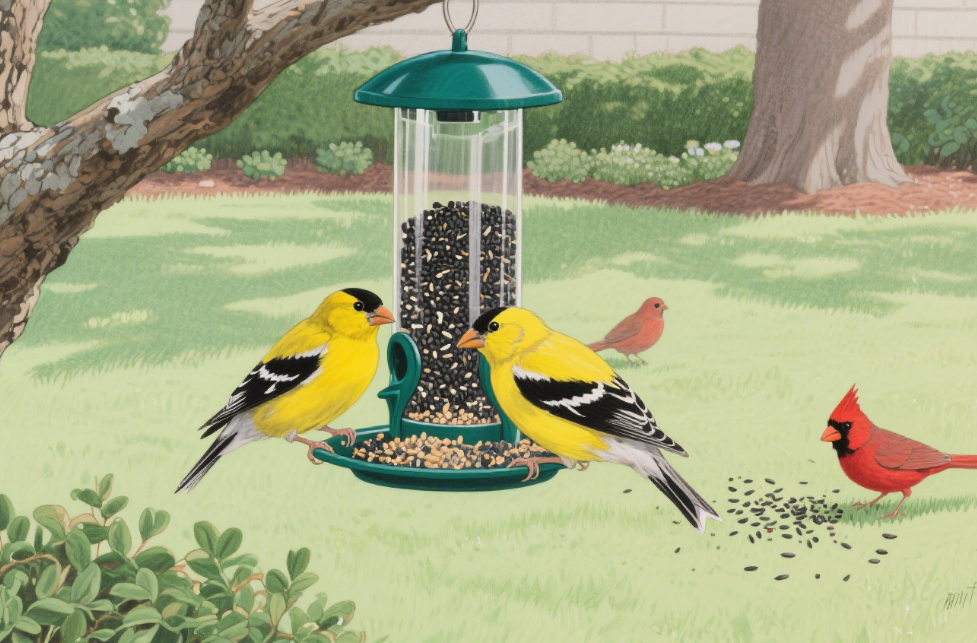
In the gardens of the Americas, using bird feeders to feed various bird species is both an enjoyable and meaningful activity. It not only allows people to observe the behavioral habits of birds up close but also provides essential food supplies for birds during different seasons. The following is a detailed introduction to this feeding method:
When it comes to choosing the type of bird feeder, different bird species have different preferences. The tube feeder is a common type, typically made of transparent plastic with multiple feeding ports inside. It is ideal for holding Nyjer seeds and small mixed seeds, and is particularly popular among small birds like goldfinches and cardinals. These birds are small in size and can easily perch on the feeding ports to peck at the seeds. Hopper feeders resemble small houses, with seeds automatically dispensed through a funnel into a tray. They are suitable for larger seeds like sunflower seeds and attract birds like blue jays and chickadees. They prefer to eat on a relatively spacious tray, and this type of feeder has a large capacity, so it doesn't need to be refilled frequently. Suet feeders are typically made of metal mesh or plastic and contain suet blocks, which are highly attractive to birds like woodpeckers and nuthatches that prefer high-fat foods, especially during cold winters when they need ample energy. A platform feeder is a simple platform suitable for various bird species to forage, accommodating both small songbirds and larger birds like pigeons and jays. However, it is important to promptly remove any leftover food from the platform to maintain hygiene.
The selection of food is also crucial and should be tailored to the dietary preferences of different bird species. For seed-eating birds like sparrows and goldfinches, provide plenty of Nyjer seeds, sunflower seeds, and millet. For insect-eating birds like wrens and warblers, although they primarily feed on insects, during seasons of food scarcity, you can also place some chopped fruits or insect-mixed feed in the feeder to attract them. Additionally, some birds enjoy eating fruits. For example, robins are particularly interested in berries and apple slices, which can be placed on platform-style feeders. It is important to avoid providing foods high in salt, sugar, or mold, as these can harm the birds' health.
The placement of bird feeders also requires consideration. First, place the feeder in a relatively quiet and safe location, away from areas with heavy foot traffic, allowing birds to feed undisturbed. Second, it is best to place the feeder near trees, shrubs, or other vegetation, so that birds can quickly hide in the vegetation if startled, while the vegetation also provides a resting place for the birds. Additionally, avoid placing bird feeders near windows to prevent birds from accidentally colliding with them while flying. If possible, place different types of bird feeders in various locations within the yard to reduce competition among birds and attract a wider variety of species.
During feeding, it is also important to regularly clean and maintain the bird feeder. Residual food and bird droppings can harbor bacteria and mold, leading to illness in birds. Bird feeders can be cleaned with hot water and soap, then thoroughly dried before refilling with food. Additionally, food should be replenished promptly based on the birds' feeding habits to avoid shortages, especially during winter and early spring when food resources are relatively scarce.
In summary, when using bird feeders to feed various bird species in American gardens, it is important to select appropriate feeders and food based on the birds' habits, place the feeders in suitable locations, and maintain them properly. This will provide birds with a good foraging environment while also allowing people to better enjoy the pleasure of interacting with birds.
Introduction to feeding methods for various bird species using bird feeders in the American courtyard
Jul 18, 2025 Bird knowledge presenters