The following is an introduction to common bird species suitable for feeding in American gardens and their corresponding bird feeders:
Titmice
Species and characteristics: Examples include the American Blue Tit, commonly found in the eastern United States. They are highly adaptable and often seen in the backyards of urban and suburban residents. They are small in size, with a body length of approximately 15–18 centimeters. Their upper body is blue-gray, their abdomen is white, and there is a small black patch above their beak. They feed on insects, seeds, and nuts, and are bold in their foraging habits, unafraid to approach humans.
Suitable Bird Feeders
Seed Feeders: Tube-shaped, funnel-shaped, or platform-style seed feeders are appropriate, as they help prevent squirrels from stealing food. Designs such as adding a roof or installing a grille-style feeding opening can be effective. Since chickadees are small in size, feeders with smaller feeding openings are recommended to facilitate seed consumption.
Hummingbirds
Species and characteristics: Hummingbirds are tiny, vibrantly colored birds with unique flying abilities, capable of hovering and flying backward in mid-air. They primarily feed on nectar but also consume small insects.
Corresponding Bird Feeders
Hummingbird Feeders: Typically red in color, these feeders contain a red liquid mixture made by combining water and sugar in a 3:1 ratio to attract hummingbirds. To prevent ants from climbing onto the feeder, apply a small amount of Vaseline to the surface.
Woodpecker species
Types and characteristics: Examples include the red-bellied woodpecker and the downy woodpecker. Woodpeckers are renowned for their distinctive woodpecking behavior, using their sharp beaks to tap on tree trunks in search of insects, while also consuming seeds and fruits. Their heads feature specialized shock-absorbing structures to protect their brains from the impact of woodpecking.
Corresponding bird feeders
** Suet feeder **: A suet feeder is typically made of metal and filled with high-fat foods such as suet or peanut butter, providing woodpeckers with abundant energy to maintain body temperature during cold winters.
Platform feeder: This feeder can hold nuts, seeds, and other foods, providing stable support for woodpeckers as they peck at the food.
Goldfinches
Types and characteristics: Goldfinches have a unique beak structure, vibrant plumage, and a melodious song. They primarily feed on fruits and insects.
Corresponding bird feeder
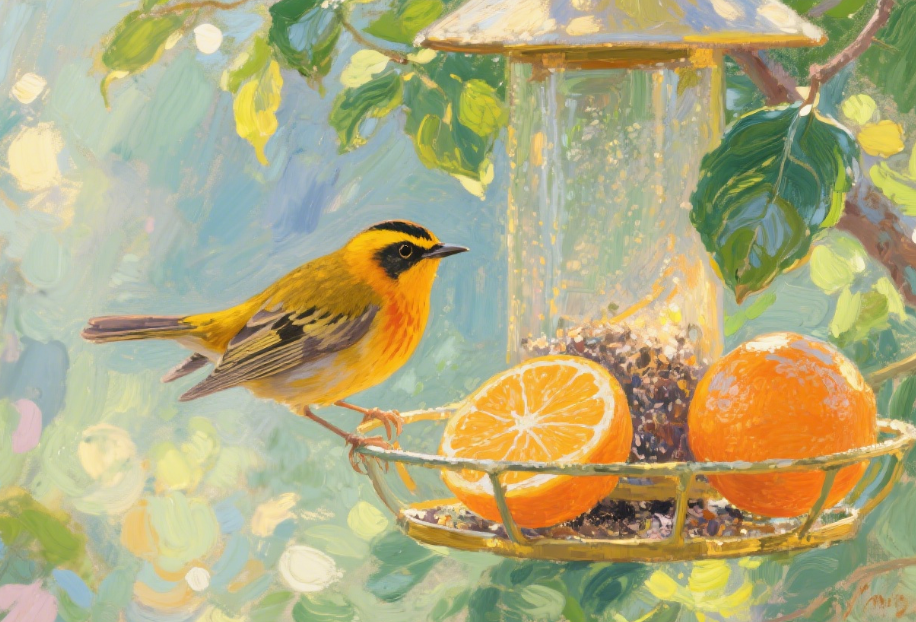
Goldfinch feeder: This feeder has a different structural design from other feeders and is suitable for holding fruit-based foods such as oranges and grapes to attract goldfinches to feed.
Cardinal Species
Species and Characteristics: Examples include the Northern Cardinal, where male Northern Cardinals have vibrant red feathers, while females are pale reddish-brown. They prefer habitats such as forests, gardens, and suburban areas, feeding on seeds, fruits, and insects.
Corresponding Bird Feeders
Seed Feeders: Cardinals enjoy eating sunflower seeds and other seeds. Tube-shaped or funnel-shaped seed feeders with squirrel-proof mechanisms are more suitable, allowing cardinals to feed safely.
American robin
Species and characteristics: The American robin is a common bird in the Americas, with a black head and back, and a deep red or orange chest. They prefer to forage for earthworms and insects on lawns and also eat some berries. They are most commonly seen in spring and summer.
Suitable Bird Feeders
Platform Feeders: These allow you to place earthworms, dried insects, or berries on the platform for American robins to peck at. The platform should be large enough to accommodate their size and foraging habits.
Bluebirds
Species and characteristics: Bluebirds typically refer to species such as the Eastern Bluebird and Western Bluebird. They have vibrant plumage, usually blue or bluish-gray, and prefer open grasslands, forest edges, and similar environments. Their diet primarily consists of insects and fruits.
Corresponding Bird Feeders
Insect and Berry Feeders: Specially designed feeders for insects and berries can be chosen, such as those with small compartments or grooves, allowing different types of food to be placed separately to meet the dietary needs of bluebirds.
Jays
Species and characteristics: Examples include the blue jay, which has primarily blue feathers with black and white markings, a lively and bold personality, and a loud call. Their diet is diverse, including seeds, nuts, insects, and small vertebrates.
Corresponding bird feeders
Multi-functional bird feeders: You can choose multi-functional bird feeders that can hold seeds and nuts while also providing space for insects or meat-based foods. Some feeders with multiple feeding ports and different storage areas can meet the diverse dietary needs of jays.
Sparrows
Species and Characteristics: For example, house sparrows are highly adaptable, widely distributed in urban and rural areas, and one of the most common birds in gardens. They primarily feed on grains and seeds but also consume some insects.
Suitable bird feeders
Simple platforms or tubular feeders: Sparrows are small in size and do not require much space. Simple platform feeders or small tubular feeders are sufficient. Placing millet, grains, and other foods inside will attract them to feed.
Pigeons
Species and characteristics: For example, the rock pigeon is of medium size, with a gray-brown body and a slightly pinkish chest. It is commonly found in open fields, grasslands, and urban parks. It primarily feeds on seeds but also consumes some fruits and insects.
Suitable Bird Feeders
Large platform or funnel-shaped feeders: Due to their larger size, pigeons require ample feeding space. Large platform feeders allow them to stand and eat comfortably, while funnel-shaped feeders prevent food from spilling, making them suitable for larger seeds like corn or wheat.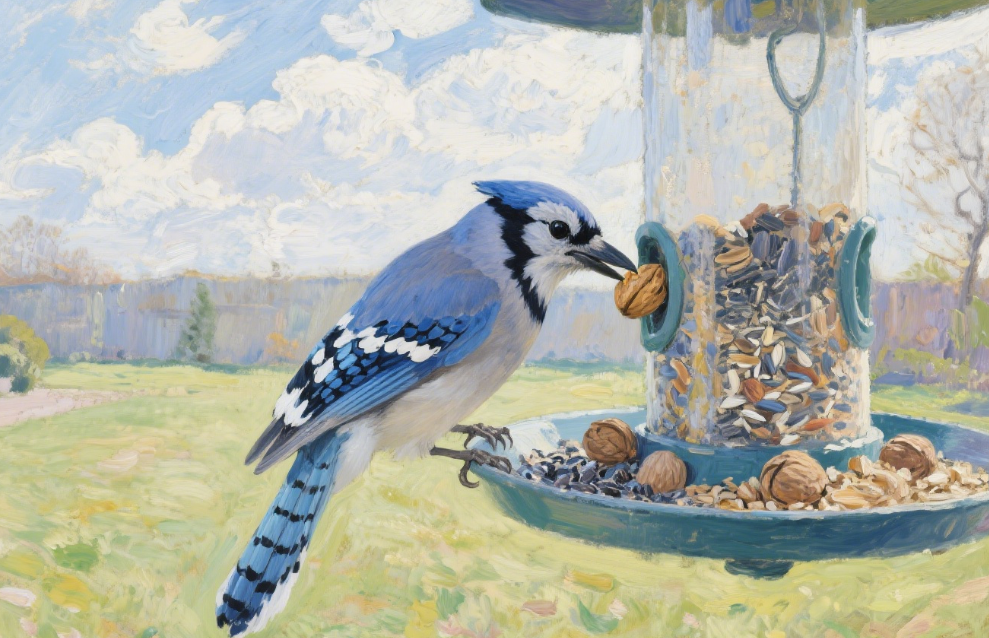
Introduction to common birds suitable for feeding in American gardens and corresponding bird feeders
Jul 16, 2025 Bird knowledge presenters