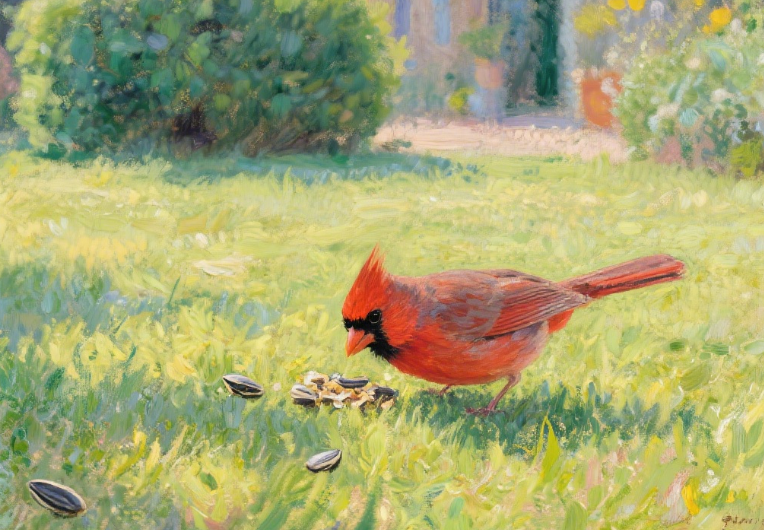
Insights and Lessons for Humans from the Feeding Behaviors of Birds in American Gardens
American gardens are home to numerous bird species, which have developed diverse and efficient feeding behaviors through long-term evolutionary adaptation. By closely observing and analyzing these behaviors, we can gain valuable insights applicable to human life, encompassing areas such as dietary health, resource utilization, and social order.
1. Precise and Efficient Food Selection: Insights for Scientific Dietary Pairing
In American gardens, different bird species exhibit precise food selection, which is not random but based on their physiological needs and nutritional balance. For example, the American redstart primarily feeds on plant seeds, such as sunflower seeds and millet. However, during the breeding season, to provide sufficient protein for their chicks, they actively hunt large quantities of insects, such as aphids and beetle larvae. The American redstart adjusts its diet structure according to changes in its life cycle to ensure it obtains the necessary nutrients at different stages.
Hummingbirds have extremely high energy requirements, so they primarily feed on nectar, which provides them with rapid energy. Additionally, hummingbirds also consume small insects and spiders to supplement their diets with protein, vitamins, and other essential nutrients. This precise selection and combination of food sources serves as a reminder to humans to prioritize nutritional balance in their daily diets. Humans can reasonably combine various foods such as grains, vegetables, fruits, meats, eggs, and dairy products based on factors like age, physical condition, and activity level to avoid nutritional imbalances caused by a monotonous diet. For example, adolescents in their growth and development stage need to increase their intake of protein and calcium; the elderly, with weakened digestive functions, should choose easily digestible, nutrient-rich foods such as fish, tofu products, and fresh fruits and vegetables.
II. Efficiently Utilizing Resources: Advocating for Food Conservation and Rational Use of Ingredients
Birds in American gardens demonstrate highly efficient utilization of food resources during feeding, with minimal waste. Take the blue jay as an example: when they discover a large amount of food, they do not consume it all at once but instead store the excess. Blue jays use their beaks to bury nuts (such as acorns) in the soil of the garden, in grassy areas, or in tree hollows, and they can remember these storage locations, retrieving the food when it becomes scarce. This behavior of storing food not only improves the utilization rate of food resources but also ensures the survival of the birds.
In contrast, food waste is a significant issue in human society. According to relevant data, approximately 1.3 billion tons of food are wasted globally each year, which is enough to address the food security needs of hundreds of millions of people. The efficient resource utilization of birds serves as a reminder for humans to cultivate a consciousness of food conservation. In daily life, we can purchase ingredients based on actual needs to avoid over-purchasing; when cooking, we can reasonably control ingredient quantities to reduce food waste; For prepared food, we should strive to finish it, and if there are leftovers, store them properly and consume them within the expiration date. Additionally, humans can draw inspiration from birds' diverse utilization of food to explore more uses for ingredients and enhance resource efficiency. For example, the scraps from vegetables and fruits can be used to make sauces, enzymes, and other products, maximizing resource utilization.
III. Orderly feeding behavior promotes harmony and collaboration in human society
In American gardens, birds often follow a certain order when feeding, avoiding chaotic scrambles for food. Different bird species form a relatively stable feeding sequence based on their size, strength, and habits. For example, larger, stronger birds like eagles and falcons typically feed in higher positions or open areas and do not actively compete with smaller birds for food; smaller birds, such as sparrows and warblers, feed on the ground or on low branches. They also coordinate their feeding positions through simple behavioral signals, such as chirping or tail-wagging, to avoid conflicts.
This orderly feeding arrangement promotes harmonious coexistence among birds and enhances feeding efficiency. In human society, harmony and collaboration are vital forces driving social progress. The orderly feeding behavior of birds inspires humans to adhere to rules, respect others, and establish a sound social order in their daily lives. In the workplace, employees should follow established workflows and regulations, collaborate with one another, and collectively complete tasks to avoid efficiency losses caused by resource disputes or shifting responsibility; In public settings, people should follow public order, such as queuing for tickets or waiting for transportation, respecting others' rights, and creating a harmonious public environment. Additionally, in team collaboration, we can draw inspiration from birds' cooperative models, allocate tasks based on team members' strengths and characteristics, fully leverage everyone's abilities, enhance the team's overall collaborative efficiency, and achieve common goals.
4. Adapting to environmental changes and adjusting feeding strategies to help humans cope with life's challenges
The environment of American gardens changes with factors such as seasons and climate. Birds adjust their feeding strategies in a timely manner to survive. For example, in winter, food resources in gardens are relatively scarce, so many birds change their previous eating habits and look for new food sources. The Eurasian tree sparrow primarily feeds on insects and berries in summer, but as insect populations decline in winter, it shifts to consuming tree fruits, seeds, and human food scraps. Other birds, such as the snow goose, migrate to warmer regions with more abundant food supplies during winter to ensure sufficient food availability.
The ability of birds to adapt to environmental changes and adjust their feeding strategies holds significant implications for humans in addressing life challenges. In today's society, with accelerated lifestyles and intensifying competition, people face various challenges such as career transitions, economic pressures, and environmental changes. When confronted with these challenges, we should not cling to outdated methods but, like birds, promptly adjust our thinking patterns and behavioral strategies to actively seek solutions. For example, in career development, if the industry one is in faces decline or transformation, one can proactively learn new knowledge and skills, adjust one's career direction, and seek new development opportunities; when facing economic pressures, one can reasonably adjust one's consumption structure, reduce unnecessary expenses, and simultaneously seek avenues to increase income. By adapting to environmental changes and adjusting one's strategies, humans can better cope with various challenges in life and achieve sustainable development.