As a unique semi-natural ecological environment, the American courtyard attracts numerous bird species to nest, forage, and reproduce here. However, it also frequently faces invasions and disturbances from various external threats, such as raptors, snakes, mammals, and other bird species. Over the course of long-term evolution, the birds in the American Garden have developed a series of complex and effective adaptive behaviors. These behaviors not only ensure their own survival but also play a crucial role in maintaining the balance of the garden's ecological system.
I. Behavioral Responses and Significance in the Face of Raptor Invasions
Raptors are one of the primary natural enemies of birds in the American backyard. Species like peregrine falcons and red-tailed hawks frequently launch surprise attacks on smaller birds in the backyard. When backyard birds detect a raptor invasion, they exhibit a variety of coordinated and efficient defensive behaviors.
Many small birds adopt a “mob attack” strategy, known as “mobbing” behavior. For example, birds like the Northern Cardinal, House Finch, and Chickadee gather together, flying around the raptor, chirping, and even actively charging at the raptor to peck it. While this behavior may seem dangerous, it actually serves an important purpose. On one hand, through collective action, birds can divert the raptor's attention, reducing the success rate of attacks on individual targets. When faced with a large number of birds attacking, raptors often abandon their attacks due to difficulty in locking onto a target. On the other hand, this collective behavior also sends danger signals to other birds in the vicinity, alerting the entire bird population in the yard to be on high alert and prepare to evade, thereby protecting the lives of more companions.
Additionally, some birds utilize the environment within the courtyard for evasion. For example, sparrows swiftly fly into dense shrubbery or gaps in buildings, using complex terrain to hinder the predator's pursuit. This behavior of using the environment for evasion allows birds to reduce the risk of being preyed upon without engaging in direct conflict with the predator, representing a conservative yet highly effective survival strategy. From an ecological perspective, this behavior also prompts raptors to continuously adjust their hunting strategies, maintaining a dynamic balance between predators and prey. This prevents the overpopulation or extinction of any single species, ensuring the stability of the backyard ecosystem.
II. Behavior and Significance in Responding to Snake Disturbances
Snakes are also a common threat to birds in American gardens, especially for those that nest on the ground or in low shrubs, such as robins. Snakes can easily sneak up on their nests and prey on eggs and chicks. When birds detect a snake's intrusion, they exhibit unique defensive behaviors.
Robins will continuously fly back and forth around the snake while emitting sharp warning calls. These calls not only alert the chicks in the nest to remain quiet and avoid detection by the snake but also attract the attention of other nearby birds, encouraging them to join in the defensive action. Sometimes, birds of other species will also join in the “ambush” of the snake, pecking at its head, body, and other parts to disrupt its movements and force it to leave the nest area.
Additionally, some birds employ a “lure the tiger away from the mountain” strategy. For example, when a snake approaches the nest, one bird will intentionally fly within the snake's line of sight to attract its attention, gradually guiding the snake away from the nest, while another bird takes the opportunity to protect the chicks or eggs in the nest. This behavior fully demonstrates the intelligence of birds, which has evolved over long-term survival struggles. From an ecological perspective, birds' defensive behaviors against snakes help control snake populations in gardens, preventing excessive predation on birds and maintaining the stability of bird populations in gardens. This also indirectly protects plants in gardens, as birds aid in pollen and seed dispersal.
III. Behavior and Significance When Encountering Mammalian Disturbances
In American gardens, some mammals such as squirrels and raccoons can also disturb birds. Squirrels often steal birds' food, such as seeds from bird feeders, and sometimes destroy birds' nests; raccoons may raid birds' nests at night to prey on eggs and chicks. In response to such disturbances, birds adopt different coping strategies.
When squirrels approach bird feeders to steal seeds, some birds in the garden, such as blue jays, will actively confront them. Blue jays will fly near the squirrels, emit warning calls, and flap their wings at the squirrels, attempting to drive them away. If the squirrels do not leave, the blue jays will collaborate with other birds to “attack” the squirrels until they abandon their foraging behavior. This behavior protects the birds' food resources, ensuring they have enough food to survive and reproduce. For birds, adequate food is the foundation of their survival, especially during the breeding season when they need large amounts of food to feed their chicks, making the protection of food resources crucial.
When nocturnal mammals like raccoons raid nests, birds remain highly vigilant at night. Some birds, such as owls, as nocturnal raptors, actively prey on small mammals like raccoons to protect the safety of other birds. Owls possess keen vision and hearing, enabling them to accurately detect the presence of raccoons in the dark and launch swift attacks. This predatory behavior not only protects other birds in the yard but also maintains the balance of the mammal population in the yard, preventing any single mammal species from overpopulating and disrupting the yard's ecosystem. Additionally, the presence of owls deter raccoons and other mammals from freely roaming the yard, thereby creating a relatively safe environment for birds.
4. Behavior and significance when responding to invasions by other birds
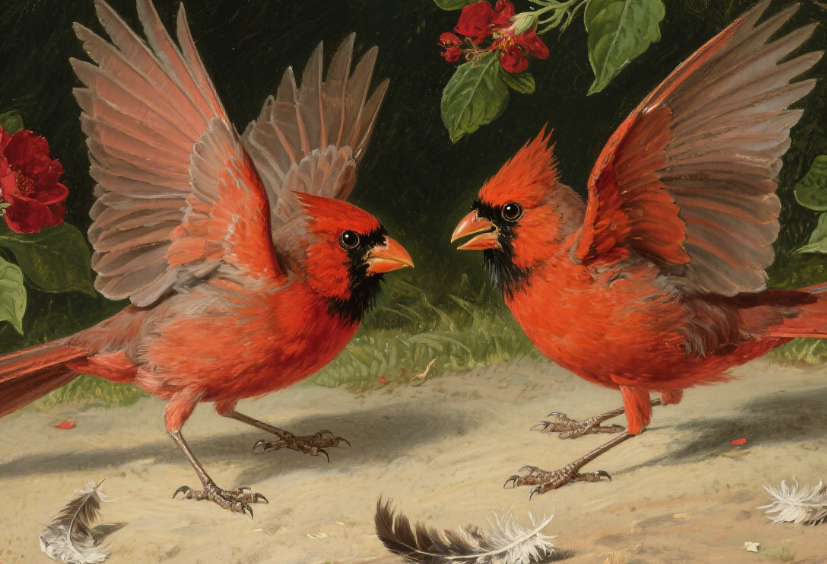
In addition to the aforementioned external threats, birds in American gardens also face invasions and disturbances from other birds of the same or different species, primarily in terms of competing for territory and reproductive resources. For example, during the breeding season, male Northern cardinals engage in fierce battles with other male Northern cardinals to compete for mates and territory.
Male Northern Cardinals first display their vibrant plumage and emit loud calls to assert their territory and attract mates. If another male Northern Cardinal invades their territory, the two birds will first engage in a standoff, erecting their feathers, spreading their wings, and trembling their bodies up and down while emitting threatening calls. If the standoff fails to resolve the issue, they will launch an attack, using their beaks to peck at the opponent's head, neck, and other areas until one of them is defeated and flees. Although this behavior of competing for territory and mates may seem cruel, it plays a significant role in the evolution and development of bird populations. Through combat, stronger male birds gain more reproductive opportunities, passing on superior genes to their offspring, thereby enhancing the survival and adaptability of the entire population. Additionally, this behavior helps regulate bird population density, preventing issues such as food shortages and disease spread caused by overcrowding, and maintaining the healthy development of bird populations in courtyards.
Furthermore, conflicts may arise between different bird species over food resources or nesting sites. For example, both swallows and goldfinches prefer to build nests on structures in courtyards. When both species target the same suitable nesting site, conflicts may ensue. Swallows will flap their wings at goldfinches, while goldfinches will peck at swallows with their beaks, neither side willing to back down. Ultimately, the stronger and more agile party typically secures the nesting site. This competitive behavior between different bird species also drives behavioral and physiological adaptation and evolution in birds, enabling them to better utilize resources in the courtyard while maintaining the diversity of the bird community. If one species becomes overly dominant and monopolizes most of the resources, it can lead to a decline or even disappearance of other bird populations, disrupting the diversity of the bird community and thereby affecting the balance and stability of the entire courtyard ecosystem.
In summary, birds in American courtyards exhibit a variety of adaptive behaviors when faced with different types of external threats and disturbances. These behaviors are not only instinctive reactions formed by birds for survival and reproduction but also hold significant ecological significance in maintaining the balance, stability, and diversity of the courtyard ecosystem. Through these behaviors, birds can effectively protect the safety of themselves, their companions, and their offspring, ensure the adequacy of food and reproductive resources, and also form mutually restraining and interdependent relationships with other organisms, collectively constituting a complex and harmonious courtyard ecosystem.
In the American courtyard, the behaviors exhibited by birds when faced with external threats and disturbances, along with their significance, are explained.
Aug 18, 2025 Bird knowledge presenters