In American gardens, bird feeders are not merely simple devices for birds to obtain food; they are more like miniature ecological observation stations, providing humans with an excellent window into the internal ecological structure and social organization of birds. By scientifically setting up bird feeders, carefully observing bird behavior, and combining this with relevant ecological knowledge, we can gradually uncover the mysteries within.
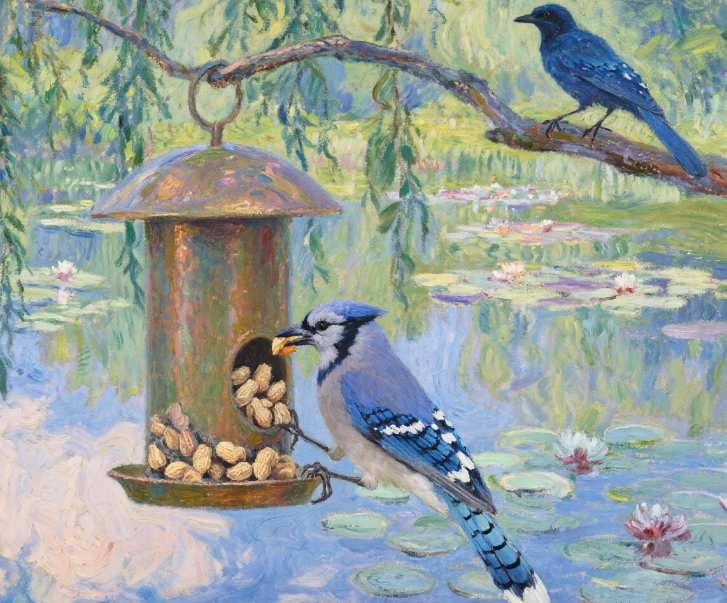
From an ecological structure perspective, the bird community structure formed around bird feeders is a key observation point. Different bird species have distinct food preferences, which directly influence their distribution around feeders. For example, American goldfinches prefer Niger seeds and often gather in groups near feeders containing such seeds; blue jays, on the other hand, particularly favor nut-based foods and are commonly found near feeders containing peanuts or walnuts. This distribution pattern, caused by dietary differences, reflects ecological niche differentiation among birds. Each species occupies a unique position in the backyard ecosystem to reduce interspecific competition, which is a crucial foundation for ecological stability.
Additionally, bird activity around feeders reflects food chain relationships. Some small songbirds, such as robins, feed on insects around feeders, while they themselves may become prey for raptors like hawks and falcons. When raptors appear near the garden, small birds around the feeder quickly scatter and flee. This shift in tension vividly illustrates the predator-prey relationship within the food chain, allowing us to directly perceive energy flow and material cycling within the ecosystem.
In terms of social organization, bird feeders are an ideal location for observing bird community behavior. Many bird species exhibit distinct social hierarchies, particularly evident in feeding order. For example, in sparrow flocks, larger individuals with vibrant plumage typically occupy the best positions on the bird feeder first, while others must wait or feed at the edges. This hierarchical structure helps reduce internal conflicts within the group and enhances feeding efficiency, serving as a means for the orderly operation of social organization.
Additionally, the gregarious behavior of birds is clearly visible around bird feeders. For example, red-winged blackbirds often forage in flocks during the non-breeding season. They may perch neatly on nearby branches or rush together to compete for food, demonstrating a high degree of coordination throughout the process. This gregarious behavior not only increases foraging success rates but also enhances vigilance against predators, representing an important evolutionary adaptation of bird social organization to their environment.
During the breeding season, bird behavior around feeders also reflects the social organization of family units. Male and female parent birds take turns foraging, then bring food back to the nest to feed the chicks. By observing their return frequency, the type of food they carry, and other factors, we can understand the parenting behavior of parent birds and the collaborative patterns of family units in resource acquisition and reproduction.
In summary, bird feeders in American gardens provide humans with a platform for close-up, continuous observation of birds. Through detailed observation and analysis of birds' foraging preferences, interspecific relationships, social hierarchies, group behavior, and family units around feeders, we can gain a deeper understanding of birds' complex ecological structures and diverse social organizations, thereby better appreciating these creatures that share our garden spaces.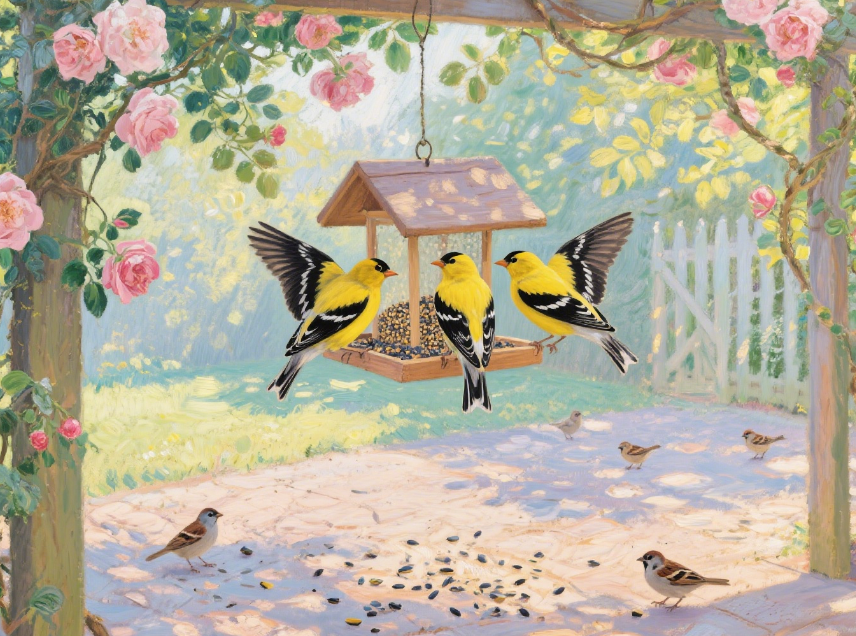
In the American courtyard, how should humans use bird feeders to understand the internal ecological structure and social organization of birds?
Jul 31, 2025 Bird knowledge presenters