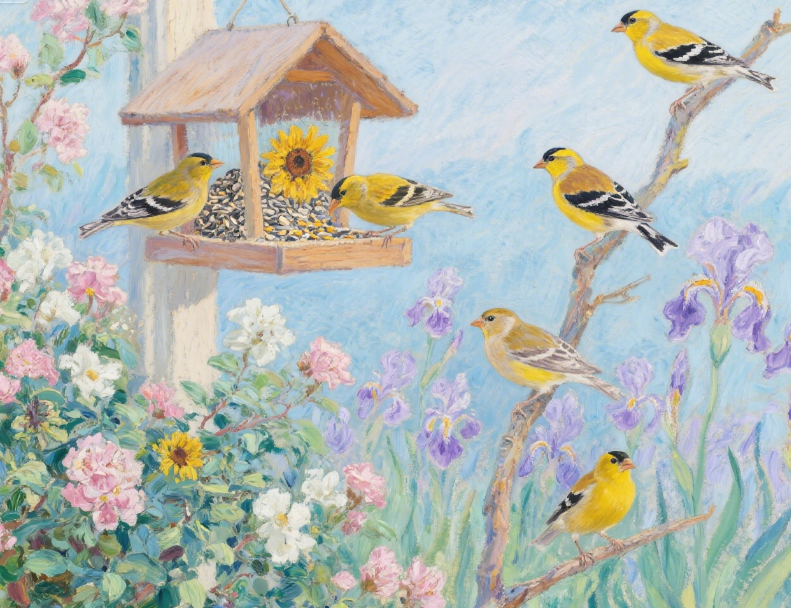
In an American garden, if you want to observe birds feeding at a bird feeder up close, it is essential to do so in a scientific and reasonable manner that does not disrupt their natural behavior. This approach ensures the birds' sense of security while also enhancing the bird-watching experience.
First, the placement of the bird feeder is crucial. It should be positioned in an area of the garden that offers some cover (such as shrubs or low trees) while still allowing observers to see clearly. The cover provides birds with a safe area to hide from predators, allowing them to feed more relaxed, while an open view facilitates observation. Additionally, maintaining a distance of 3–5 meters between the feeder and potential observation points (such as windows or balconies) is ideal. This distance allows observers to see the birds' details clearly without causing them to feel threatened by proximity.
Secondly, choose an appropriate observation location and tools. Indoor observation is a good option, such as near a window overlooking the courtyard, with semi-transparent curtains drawn to hide your presence without obstructing your view. If observing outdoors, choose a relatively secluded corner of the courtyard, such as a bench under a tree, to avoid being directly exposed to the birds' line of sight. Additionally, having a lightweight pair of binoculars can help you see the birds' feathers, movements, and other details, enhancing the observation experience without disturbing them by getting too close.
Furthermore, maintaining silence and stillness is crucial. Birds are highly sensitive to sounds and sudden movements, so avoid speaking, moving around, or making large gestures during observation. Wear clothing in muted colors to avoid startling birds with bright hues, allowing them to feed comfortably near the feeder. Additionally, establish a consistent observation schedule to help birds gradually adapt to human presence during that time, fostering a sense of familiarity. Over time, they will become more relaxed.
Maintaining the cleanliness of the feeder and ensuring an adequate supply of food are also key factors in attracting birds and encouraging them to stay. Regularly clean the feeder to prevent food from spoiling and bacteria from forming, which could affect the birds' health. Provide food that the birds in your yard prefer, such as sunflower seeds for North American redpolls or thistle seeds for goldfinches. Sufficient and appealing food will encourage the birds to visit more frequently, increasing your observation opportunities.
Finally, respect the birds' natural rhythms. If birds exhibit signs of distress during observation, such as frequent glances upward, ceasing to eat, or preparing to fly away, step back or temporarily leave to give them sufficient space. The essence of birdwatching lies in appreciating birds in their natural state, not forcing them to remain within sight. Only by maintaining this respect can one sustainably enjoy the pleasure of coexisting with birds in the garden.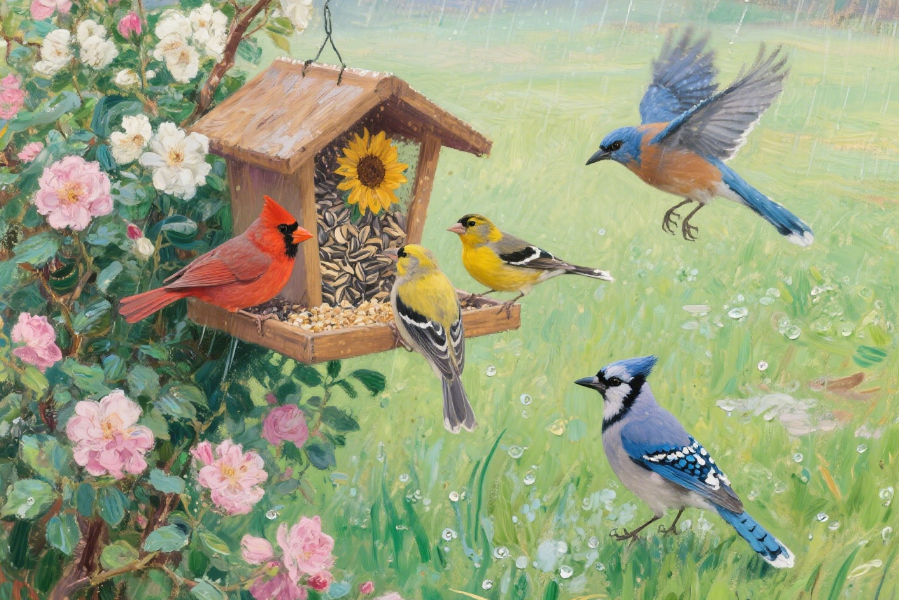
In the American courtyard, how should humans observe birds feeding from bird feeders at close range in an appropriate manner?
Aug 7, 2025 Bird knowledge presenters