In the unique ecological space of the American courtyard, the feeding postures of birds observed by humans should harmoniously blend natural instinct and comfort, neither contradicting their wild nature nor preventing humans from experiencing the vitality of life at an appropriate distance.
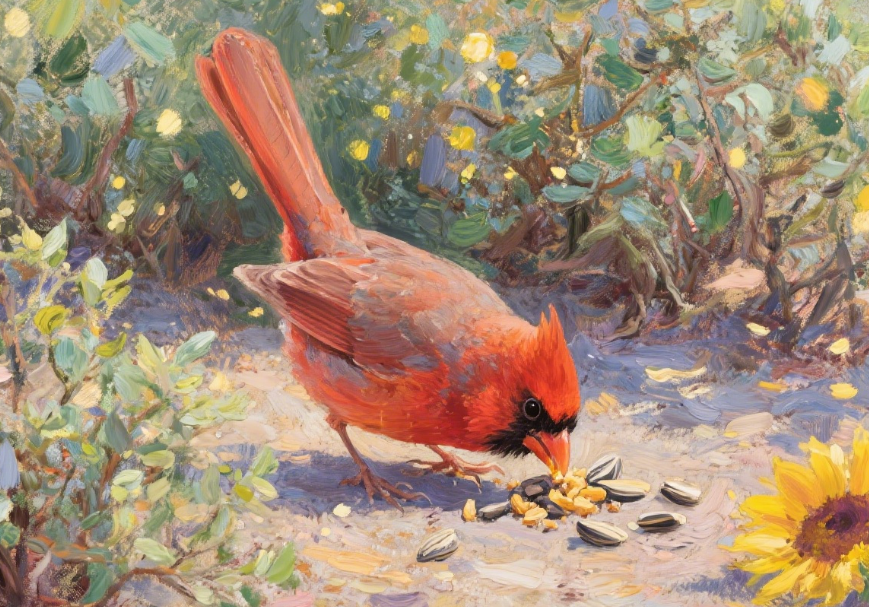
From the perspective of birds' behavioral nature, their feeding postures inherently reflect the wisdom of survival in the wild. For example, the North American redbird uses its hard beak to crack open sunflower seeds, tilting its head slightly downward while its tail feathers naturally curl upward to maintain balance. This focused and agile movement exudes primal vitality; Hummingbirds hover before feeders, their wings vibrating at a rate of dozens of times per second. The moment their slender beaks probe into flower stamens, they exhibit precise and graceful beauty. These postures should not be artificially interfered with; garden design should create an environment for birds that closely resembles their natural habitats — — dense shrubbery provides concealment, allowing them to feed without constant vigilance, thereby exhibiting a relaxed state. For example, blue jays stroll across the lawn in search of food, occasionally pausing to listen for the movements of insects underground. This composed posture is more visually appealing.
At the same time, the distance between humans and birds is crucial. Observing them too closely can trigger stress responses in birds, causing them to exhibit tense postures while feeding: feathers ruffled, hurried movements, or even abandoning their food and flying away. The ideal observation scenario is when birds freely move within a “safe zone,” such as briefly perching on a branch near a feeder, preening their feathers before lowering their heads to eat, or several sparrows jumping around a feeding bowl, showcasing lively group interactions. This trust-based coexistence allows birds to exhibit authentic and lively feeding postures, enabling humans to observe details such as using their claws to hold food or their beaks to clean up debris without disturbing them, thereby appreciating the ingenuity of nature's creations.
Additionally, seasonal changes in posture add depth to the viewing experience. In spring, male birds may accompany feeding with brief calls or feather displays to attract mates, exuding vibrant energy; In winter, when food is scarce, they focus more on efficient feeding, increasing the frequency of lowering their heads to peck, demonstrating their determination to survive. These postures that align with natural rhythms allow observers not only to see the act of feeding itself but also to feel the deep connection between birds and their environment.
In summary, the feeding postures of birds in American gardens, which are meant for human observation, fundamentally respect their natural behavioral logic. When birds exhibit their most authentic feeding states in a safe and comfortable environment—whether hovering, pecking, pacing, or engaging in group interactions—they offer the most captivating expression of life, while also teaching humans to harmoniously coexist with nature through observation.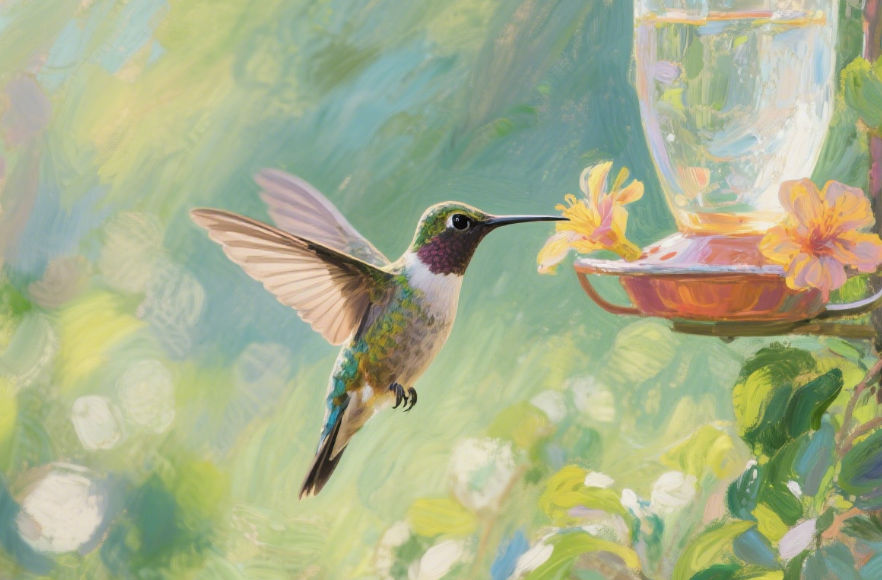
In the American courtyard, how should birds behave so that humans can observe their feeding behavior?
Aug 11, 2025 Bird knowledge presenters