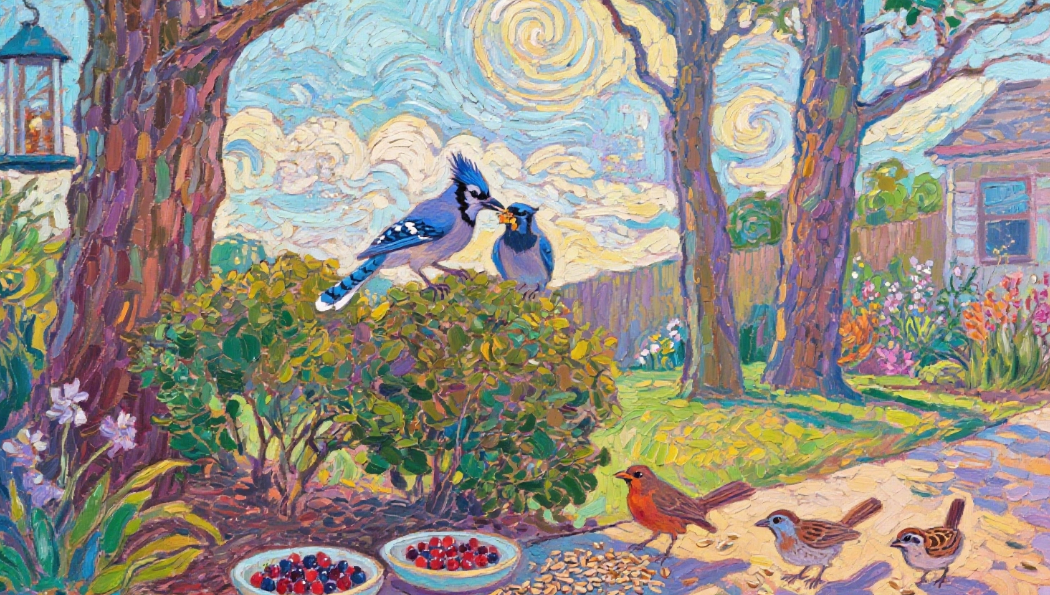
To achieve the best results when observing birds feeding in an American-style garden, it is important to balance respect for bird behavior with optimizing the viewing experience. Here are some specific methods:
Creating a suitable foraging environment is the foundation. Based on the common bird species in the garden's location, set up diverse feeding stations. For example, hang nut feeders on tree branches to attract blue jays and crows; place shallow dishes filled with berries near low shrubs to cater to the preferences of robins and thrushes; and scatter grains on the ground to attract sparrows and quails that feed on the ground. Additionally, keep the feeding area clean by regularly removing leftover food and droppings to prevent bacterial growth that could harm bird health, allowing birds to feed more comfortably. Furthermore, maintaining natural vegetation in the yard, such as native flowers, shrubs, and trees, not only provides birds with natural food sources but also creates a more natural habitat environment, encouraging birds to stay longer.
A scientific feeding strategy can enhance the viewing experience. Feeding times should align with the birds' activity patterns, as most birds are more active in the early morning and evening, making it easier to observe them gathering to feed during these times. The variety of food should be diverse, including not only common seeds and nuts but also appropriate amounts of fruit slices and dried insects to meet the dietary needs of different bird species. However, it is important to note that human foods containing salt, sugar, or additives should not be fed, as they can harm birds. Additionally, controlling the feeding quantity is crucial; it is best to provide an amount that birds can consume in a day, thereby avoiding food waste and spoilage while maintaining birds' dependence on the feeding site and increasing viewing opportunities.
Mastering appropriate observation methods is equally important. When observing, maintain quietness and avoid loud noises or sudden movements to prevent startling the birds. Choose a location at a certain distance from the feeding site, such as through a window, under tree shade, or at a concealed bird-watching spot, to clearly observe the birds' feeding behavior without disturbing them. When using tools like binoculars, avoid direct sunlight on the birds to prevent discomfort. Additionally, do not touch the birds or their food during observation, respecting their living space.
By following these guidelines, humans can better observe birds feeding in American gardens while protecting their natural habits and health, achieving harmonious interaction between humans and nature.
In American gardens, what is the best way for humans to observe the feeding behavior of birds?
Aug 13, 2025 Bird knowledge presenters