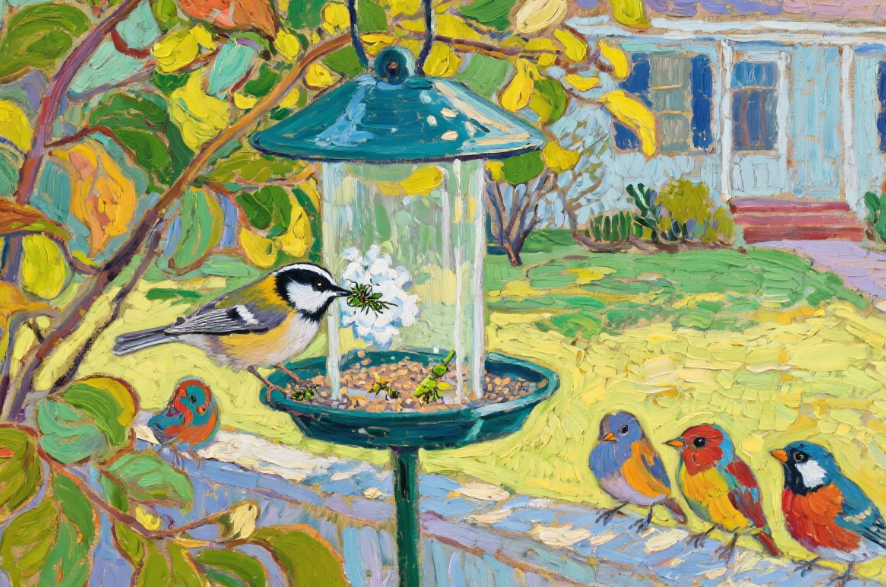
In American gardens, bird feeders serve as an important link between humans and nature. Regularly cleaning bird feeders not only provides birds with a safe foraging environment but also helps maintain the ecological balance of the garden. The following sections will provide detailed explanations from two aspects: cleaning precautions and the benefits of feeding.
1. Cleaning Precautions for Bird Feeders in American Gardens
(1) Controlling Cleaning Frequency
Cleaning frequency should be adjusted flexibly based on the season, feeding volume, and bird activity levels. During the warm and humid spring and summer, due to the rapid spoilage of food and bacterial growth, it is recommended to clean the bird feeder every 1–2 weeks. In the cold and dry autumn and winter, food spoilage slows down, so the cleaning cycle can be extended to every 3–4 weeks. If moldy or clumped food remains are found inside the feeder, or if bird droppings accumulate, immediate cleaning is necessary to prevent health risks to the birds.
(2) Selection of Cleaning Tools and Detergents
Cleaning tools: Use soft tools such as soft-bristle brushes (specialized bottle brushes or pipe brushes are recommended for cleaning the gaps and small holes in the bird feeder), sponges, and clean cloths. Avoid using hard tools like steel wool or stiff-bristle brushes, as they may scratch the surface of the bird feeder, leaving food residue and bacteria behind. Additionally, cleaning tools should be dedicated for this purpose and not mixed with household cleaning tools to prevent cross-contamination.
Cleaning agents: Prioritize mild, non-irritating cleaning agents that are safe for birds. We recommend using diluted white vinegar (a ratio of 1 part white vinegar to 9 parts water). White vinegar has excellent antibacterial properties and evaporates quickly, leaving no harmful residues on the feeder surface. Alternatively, use cleaning agents specifically designed for bird feeding equipment. These products have undergone professional testing to effectively remove dirt and bacteria while ensuring bird safety. Avoid using cleaners containing bleach, dish soap, disinfectants, or other chemical components. These substances may leave harmful residues even after rinsing, potentially causing poisoning if ingested by birds.
(3) Cleaning procedure guidelines
Disassemble the bird feeder: First, remove the bird feeder from its hanging location in the yard. Disassemble it according to its structure, such as removing the food tray, tray, lid, and other components, to ensure each part can be thoroughly cleaned. Handle components gently during disassembly to avoid damage.
Initial residue cleanup: Use a clean brush or cloth to remove any remaining food residues, bird droppings, etc., from the bird feeder. Dispose of the residues in a trash bin to avoid littering the yard, which could attract pests or pollute the environment.
Soak and wash: Place the disassembled bird feeder components in a diluted white vinegar solution or specialized cleaning solution and soak for 15–20 minutes to dissolve stubborn stains and bacteria. After soaking, use a soft-bristle brush to thoroughly scrub the inner and outer surfaces of each component, especially the edges, corners, and small holes of the feeder tray where dirt is prone to accumulate, ensuring complete cleanliness.
Rinse thoroughly: Rinse the cleaned bird feeder components repeatedly with running water to ensure no detergent residue remains. When rinsing, avoid using excessive water pressure to prevent damage to the components.
Dry and reassemble: Place the rinsed components in a well-ventilated, sunny area to dry completely before reassembling. Assemble the components in the correct order to ensure they are securely installed and prevent them from coming loose during use.
(4) Handling special situations
If signs of illness are observed in birds: If, during cleaning, birds exhibit symptoms such as lethargy, ruffled feathers, or diarrhea, in addition to promptly cleaning the bird feeder, it must be thoroughly disinfected. Use a diluted sodium hypochlorite solution (10% concentration) to soak and disinfect the bird feeder for 30 minutes, then rinse thoroughly with running water and air-dry. Additionally, contact the local wildlife protection agency promptly to report the situation, so that professionals can assist the sick birds.
Bird feeder materials are special: For wooden bird feeders, avoid prolonged soaking in water during cleaning to prevent warping or rotting of the wood. First, wipe off surface residues with a dry cloth, then gently wipe with a diluted white vinegar solution for disinfection, and finally dry with a dry cloth and air-dry. For metal bird feeders, prevent rusting by applying a thin layer of edible oil to the surface after cleaning for rust protection.
II. Benefits of cleaning bird feeders and feeding birds
(1) Ensuring the healthy survival of birds
Preventing disease transmission: Cleaning bird feeders effectively removes bacteria, viruses, and parasites that thrive in food residues and bird droppings, such as Salmonella and avian influenza viruses. If these pathogens remain on the feeder for an extended period, they can enter birds' bodies through feeding, causing illness and spreading within the population. Regularly cleaning bird feeders can interrupt disease transmission pathways, reduce the risk of illness in birds, and ensure their healthy survival.
Prevent food poisoning: Spoiled food can produce harmful substances, such as mycotoxins, which may cause food poisoning symptoms in birds if ingested, and in severe cases, even death. Cleaning bird feeders can promptly remove spoiled food, providing birds with fresh and hygienic food and preventing food poisoning incidents.
(2) Maintain bird population stability
Supplementing food resources: In the Americas, food resources are relatively scarce during certain seasons (such as winter), especially for insect-eating birds and seed-eating birds, making it difficult to find sufficient food. Regularly providing food in clean bird feeders can supplement birds' energy and nutrition, helping them survive periods of food scarcity, reduce deaths caused by starvation, and maintain the stability of bird populations.
Providing for Chicks: During the breeding season, parent birds require large amounts of food to feed their chicks. Clean bird feeders and ample food supplies provide parent birds with convenient foraging channels, reducing the time and energy they spend foraging, allowing them to devote more energy to caring for their chicks, thereby increasing chick survival rates and promoting the reproduction of bird populations.
(3) Promoting ecological balance in courtyards
Controlling pest populations: Many birds feed on pests, such as sparrows and titmice, which prey on aphids, beetles, and caterpillars in courtyards. By feeding birds, more birds are attracted to stay and nest in the courtyard. These birds will prey on pests in the courtyard, reducing pest damage to courtyard plants, lowering pesticide usage, and achieving the goal of ecological pest control, thereby maintaining ecological balance in the courtyard.
Assisting plant propagation: Some birds consume plant seeds while feeding. These seeds pass through the birds' digestive tracts and are expelled with their droppings, spreading to various corners of the garden. Under suitable environmental conditions, these seeds will take root and sprout, promoting the reproduction and diversity of plants in the garden and enriching the composition of the garden's ecological system.
(4) Enriching human life and promoting environmental awareness
Adding joy to life: By setting up bird feeders in the garden, people can observe birds' forms, behaviors, and living habits up close, such as their feeding methods, courtship behaviors, and chick-rearing processes. This not only adds joy to people's lives but also allows them to gain a deeper understanding of nature and feel its charm.
Enhancing Environmental Awareness: Through the process of cleaning bird feeders and feeding birds, people can directly experience how their actions impact bird survival and the ecological environment. This firsthand experience helps enhance environmental awareness, encouraging people to pay more attention to wildlife conservation and ecological environment construction, and to take more environmentally friendly actions in daily life, such as reducing the use of single-use plastic products and conserving resources.
Important Notes on Cleaning Bird Feeders in American Gardens and the Benefits of Feeding Birds
Aug 22, 2025 Bird knowledge presenters