I. How to Use a Hummingbird Feeder
(1) Installation Preparation
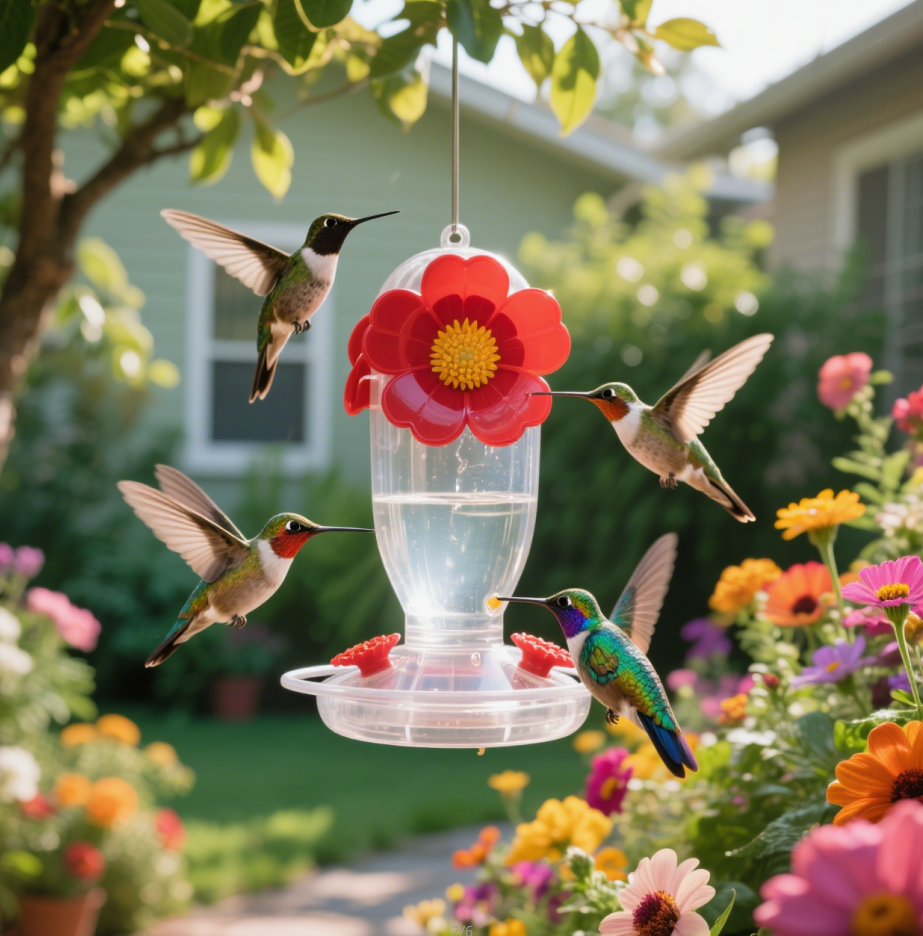
Before installing a hummingbird feeder, you need to choose a suitable location. Hummingbirds prefer sunny, open areas with good visibility, while avoiding direct exposure to harsh weather conditions such as strong winds or heavy rain. For example, the feeder can be installed on a branch in the garden away from windy areas, or in a corner of the balcony, ensuring the height is approximately 1.5–2 meters above ground level. This height allows hummingbirds to perch and feed comfortably while preventing easy access by pets or other animals on the ground.
Prepare installation tools such as screwdrivers and hooks. Follow the instructions for the feeder type to securely hang it in the selected location. If hanging from a tree branch, ensure the hook is tightly secured to the branch to prevent the feeder from swaying or falling. If installing on a balcony railing, use the provided mounting hardware to ensure stability.
(2) Adding Food
Hummingbirds primarily feed on nectar. When preparing homemade hummingbird food, mix 4 parts water with 1 part white sugar. Boil the water, add the sugar, and stir until completely dissolved, then let it cool before use. Note that honey, brown sugar, or artificial sweeteners must never be used, as these ingredients may be harmful to hummingbird health. If purchasing specialized hummingbird feed, strictly follow the product instructions for preparation.
Carefully pour the prepared food into the feeder's reservoir, ensuring it does not exceed the maximum capacity mark to prevent spills and waste. After adding food, promptly cover the feeder to prevent dust and debris from entering and to slow down the evaporation of the sugar water.
(3) Daily Maintenance and Cleaning
Hummingbirds have high requirements for food freshness. In summer, when temperatures are high, food spoils easily, so it should be replaced daily; in spring and autumn, it can be replaced every 2–3 days; in winter, when temperatures are low, food spoils more slowly, so it can be replaced every 3–5 days. Each time you replace the food, inspect the feeder for damage, such as cracks in the reservoir or blockages in the feeding opening.
Clean the feeder regularly, at least once a week. First, rinse the feeder with warm water to remove any leftover food and dirt. Then, soak it in a mild cleaner (such as diluted white vinegar solution) for 15–20 minutes. Use a soft-bristled brush to gently scrub all corners, especially the edges of the feeding opening and liquid reservoir, as these areas are prone to food residue and bacterial growth. Finally, rinse thoroughly with clean water, let it air dry in a well-ventilated area, and then reuse it.
II. Hummingbird Feeder Usage Scenarios
(1) Residential Gardens
Placing a hummingbird feeder in a home garden adds vitality and vibrancy to the space. Imagine sitting in a rocking chair on a warm afternoon, watching colorful hummingbirds flutter and hover around the feeder, sipping nectar. This not only helps relax the mind and body but also allows family members, especially children, to observe hummingbird behavior up close, fostering a love for nature and a desire to explore. Additionally, hummingbirds flitting through the garden help pollinate flowers, promoting their growth and reproduction.
(2) Parks and Botanical Gardens
Parks and botanical gardens are ideal places for people to relax, enjoy nature, and engage in recreational activities. Installing hummingbird feeders in these areas attracts more hummingbirds, enriching the biodiversity of the park. While enjoying the flowers, plants, and trees, visitors can also admire the graceful movements of hummingbirds, enhancing the fun and visual appeal of the park. For school-organized outdoor educational activities, hummingbird feeders serve as a vivid teaching tool, allowing students to learn about hummingbird ecology and cultivate awareness of wildlife conservation.
(3) Ecotourism Scenic Areas
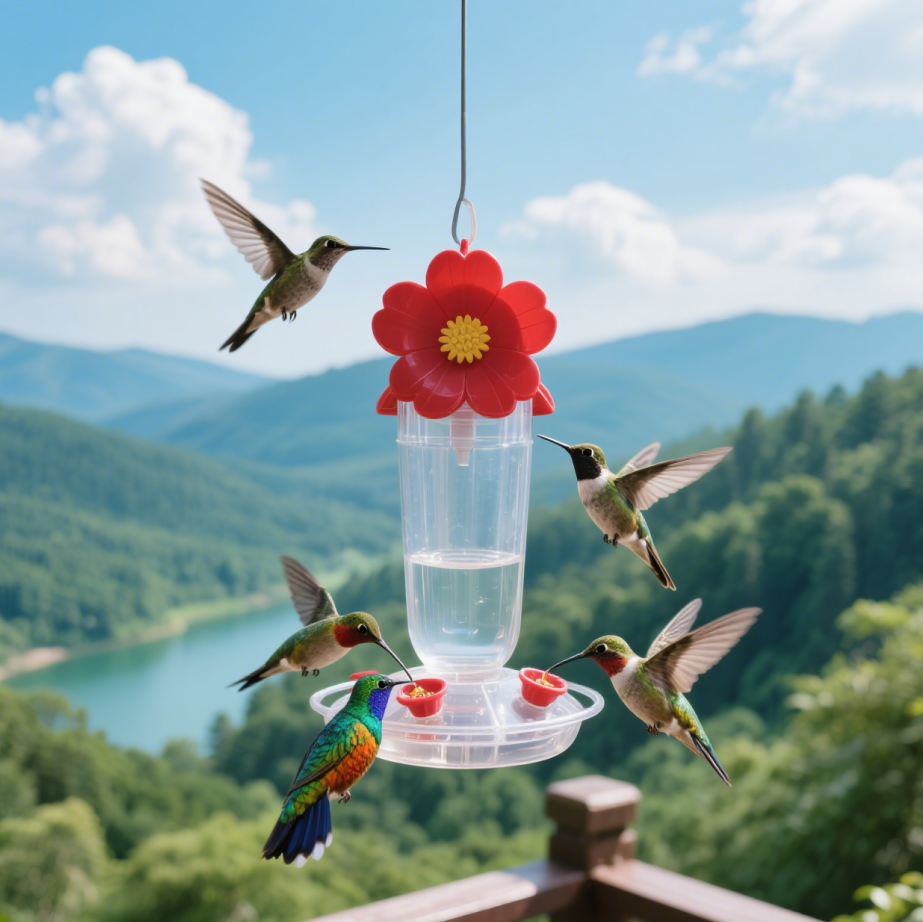
Installing hummingbird feeders in ecological tourism areas can create a unique tourist attraction. As a marvelous creature in nature, the hummingbird holds strong appeal for visitors, who can gain a deeper understanding of the local ecological environment and biological resources through hummingbird observation, thereby enhancing their tourist experience. The area can also combine hummingbird observation with related science popularization lectures, photography competitions, and other activities to enrich the cultural content of the area and increase visitor participation, thereby promoting the sustainable development of ecological tourism.
(4) Balconies and Windowsills
Even for those living in high-rise buildings, installing hummingbird feeders on balconies or windowsills can bring nature into living spaces. Working professionals can relieve work stress by glimpsing the graceful figures of hummingbirds through windows during breaks; retired seniors can find joy in feeding hummingbirds to enrich their daily lives. Additionally, the presence of hummingbirds can add a touch of natural color to small balconies or windowsills, making the living environment more warm and comfortable.
The above has introduced the usage methods and scenarios of hummingbird feeders. Are you ready to install a feeder? If you wish to learn about the key points of using specific types of feeders or have other related questions, feel free to reach out to me at any time.
We recommend our FlowaFoli bird feeder!
1 comments