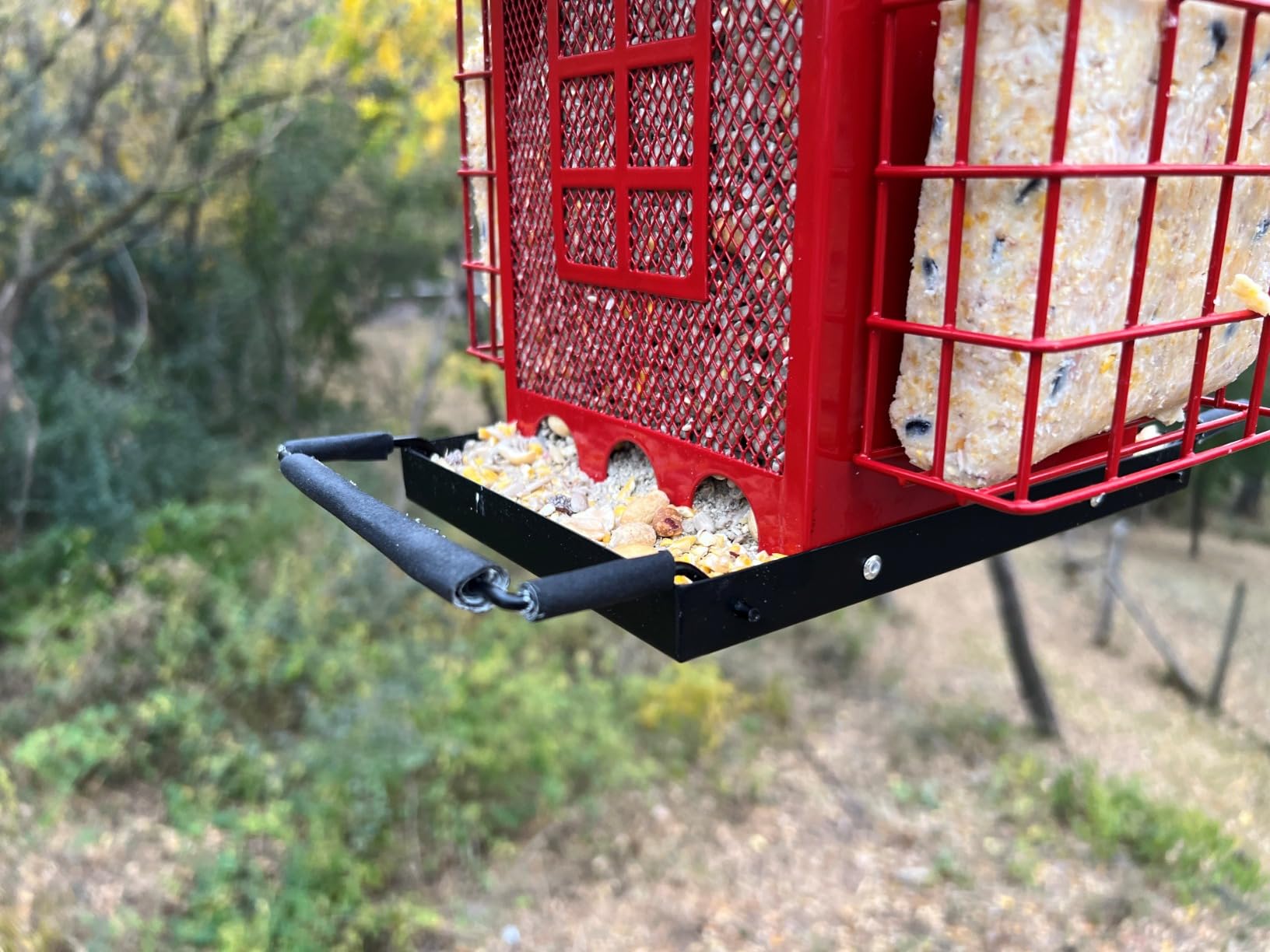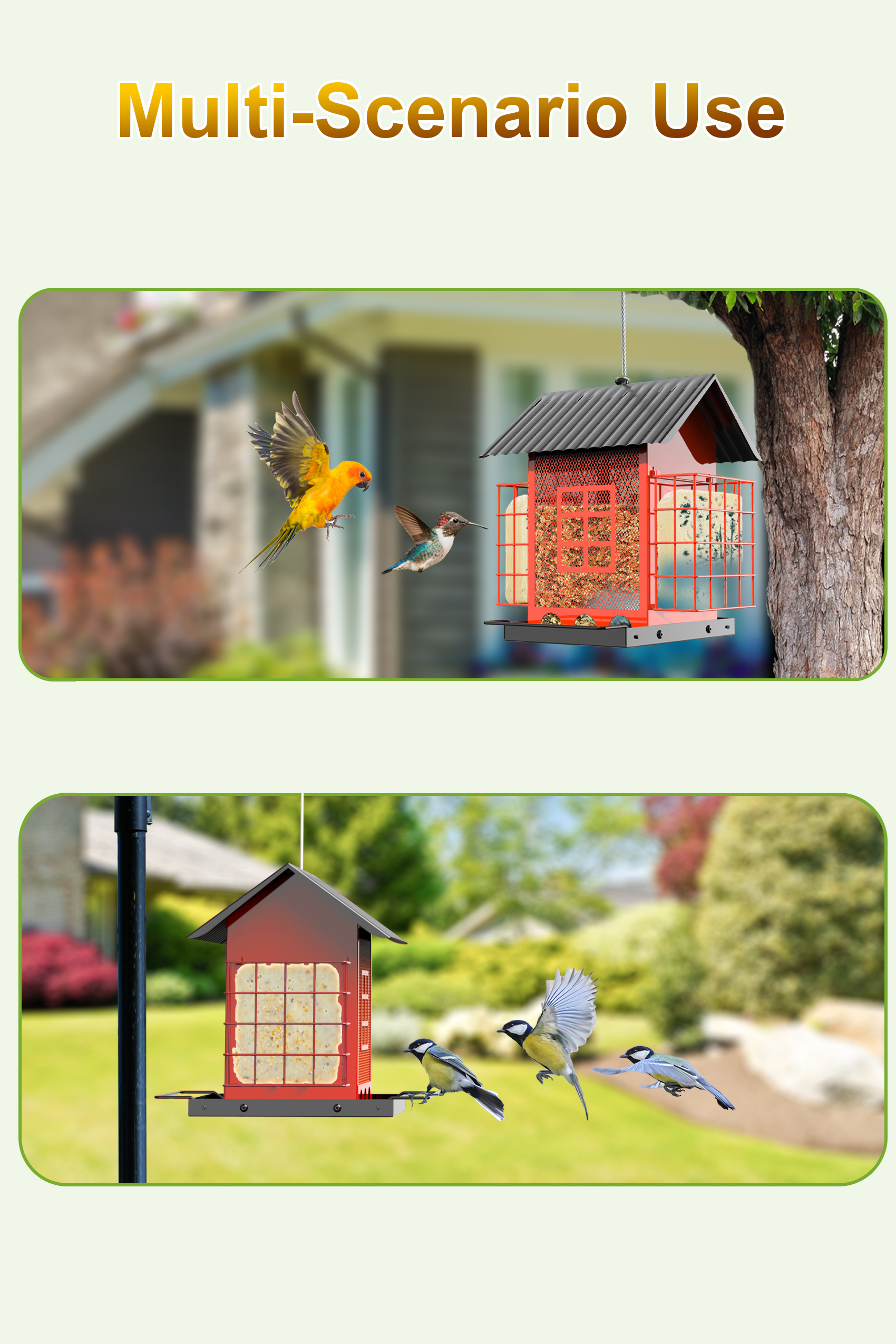
Birdfeeding is a fun and meaningful activity that not only provides food for the birds, but also allows you to observe them up close and feel the vibrancy and beauty of nature. However, choosing the right bird feeder is crucial to attracting more birds to feed. The following provides you with a practical guide to selecting bird feeders from a number of aspects.
Ⅰ.Understand the habits of target birds
The eating habits and feeding methods of different birds vary greatly. Understanding the habits of your target birds is the basis for choosing a bird feeder.
(1) Differentiation of feeding habits
Seed eaters: common birds like sparrows, goldfinches and swallows favour various kinds of seeds, such as sunflower seeds, millet and sorghum. For these types of birds, you can choose a tubular bird feeder. This type of bird feeder usually has multiple small holes into which birds can stick their beaks to feed on the seeds, which can effectively prevent seeds from spilling and reduce wastage, as well as preventing other animals from stealing them easily.
Nut lovers: birds such as jays and woodpeckers love nuts such as peanuts and walnuts. A platform bird feeder is a good choice, it has a large flat surface that can hold a variety of nuts and large pieces of food, making it easy for birds to stand and peck.
Nectar Suckers: Birds that feed on nectar, such as hummingbirds, need specialised nectar bird feeders. These bird feeders are usually designed with a flower-like structure and hold nectar substitutes such as sugar water inside to attract hummingbirds to suck on them.
(2) Consideration of feeding patterns
Some birds are accustomed to feeding from high places, while others prefer the ground. Hanging bird feeders are suitable for birds that like to feed at high places, such as some small songbirds, while floor feeders are more popular with birds that like to move around on the ground, such as turtledoves and magpies.
Ⅱ.Consider the environment
The placing environment of the bird feeder has an important impact on its use and life, you need to choose the right type according to the actual situation.
(1) Outdoor environment
If the bird feeder is placed in an open outdoor space such as a courtyard or garden, the impact of natural factors such as wind, rain and sunlight should be considered. Bird feeders made of metal or sturdy plastic are more durable and can withstand harsh weather. Also, choose bird feeders with weatherproof designs, such as platform bird feeders with canopies, to prevent rain from drenching your food and keep it dry and fresh. In addition, be careful to place bird feeders in suitable locations away from trees and buildings to provide birds with a sense of security and to prevent them from collision and injury due to sudden shock.
(2) Balcony or indoor
Placing bird feeders on balconies or indoors has relatively limited space and requires consideration of cleaning and anti-disturbance issues. You can choose small, easy-to-install and clean bird feeders, such as suction cup bird feeders, which are attached to the window glass by suction cups, making it easy to observe birds without taking up too much space. However, attention should be paid to regular cleaning to prevent food residues from breeding bacteria and affecting indoor hygiene.
Ⅲ.Focus on the functional design of bird feeders
(1) Squirrel-proof design
Squirrels often steal food from bird feeders, causing interference with bird feeding. Choosing bird feeders with anti-squirrel design can solve this problem. For example, some bird feeders use the weight-sensing principle, so that when a squirrel climbs onto the feeder, its weight will cause the feeding port to close, and only the light weight of the bird can open the feeding port normally; there are also some bird feeders equipped with anti-squirrel baffles or sliding poles, which make it difficult for squirrels to get close to the food.
(2) Capacity and ease of filling
Choose a bird feeder with the right capacity according to the frequency of feeding and the number of birds. If frequented by a large number of birds, a large-capacity bird feeder can reduce the number of times of filling food, saving time and energy. At the same time, bird feeders should be designed to be easy and quick to fill, such as bird feeders with large openings or removable tops that enable you to add food easily.
(3) Convenience of cleaning
To keep birds healthy and prevent the spread of diseases, bird feeders need to be cleaned regularly. It is important to choose bird feeders that are easy to remove and clean. Some bird feeders have a modular design, so that the various parts can be easily disassembled for thorough cleaning. Some bird feeders are made of smooth surface material, so that stains and food residues are less likely to stick to them, making it easier to clean them.
Ⅳ.Material and Safety
(1) Material selection
The material of the bird feeder is directly related to its service life and bird safety. Common materials include plastic, metal, wood and so on. Plastic bird feeders are relatively inexpensive, colourful, lightweight and durable, but choose food-grade plastics to ensure non-toxic and harmless; metal bird feeders are robust and durable, not easy to damage, especially suitable for harsh outdoor environments, but we should pay attention to avoiding sharp edges and corners, to prevent scratches to the birds; wooden bird feeders are naturally beautiful and have a high degree of integration with the environment, but need to do a good job of anticorrosion treatment, to prevent rotting and deformation.
(2) Safety Guarantee
Ensure that the bird feeder has no sharp edges, corners and burrs to avoid injury to birds in the process of taking food. At the same time, check whether the hanging device and fixed parts of the bird feeder are firm to prevent the bird feeder from falling and injuring birds or other animals. In addition, regularly check the structural integrity of the bird feeder and replace damaged parts in a timely manner.
Ⅴ.Fifth, the budget and brand
When choosing a bird feeder, make a reasonable choice based on your budget. The price range of bird feeders on the market is wide, ranging from tens of dollars to hundreds of dollars. Generally speaking, bird feeders with simpler functions and common materials are relatively low in price; while bird feeders with a variety of advanced functions and made of high-quality materials will be more expensive. If your budget allows, you can choose bird feeders from well-known brands, which are usually more guaranteed in terms of product quality, design and after-sales service.
Choosing the right bird feeder requires comprehensive consideration of various factors such as bird habits, placement environment, functional design, material safety and budget. Through careful selection, you can not only provide a comfortable place for birds to feed, but also enjoy the fun of bird feeding and build a closer relationship with nature.
The above explains the key points of selecting a bird feeder from various aspects. If you have a specific usage scenario or preference, such as wanting to attract a certain type of bird, feel free to share and I can give more precise advice.
We recommend our FlowaFoli bird feeders!