1. Materials and Craftsmanship
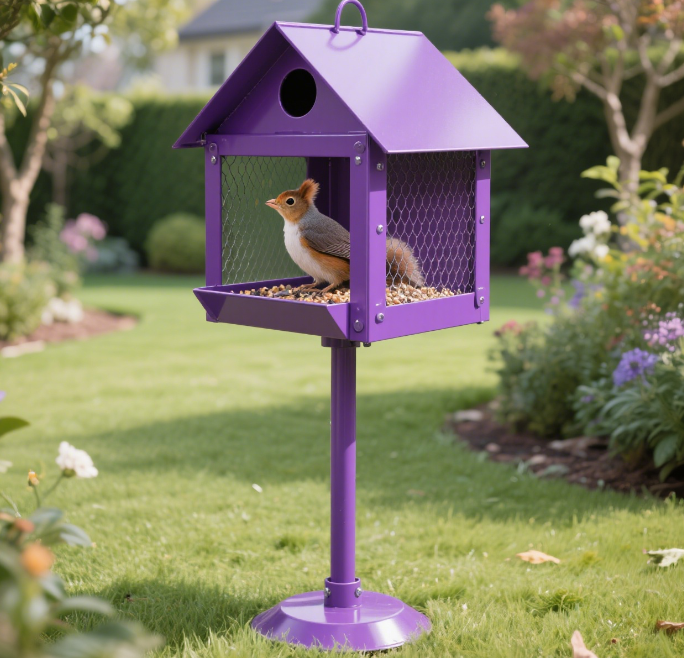
Material Thickness and Strength: Choose a bird feeder made of iron with a thickness between 0.8 and 1.2 millimeters. Materials that are too thin are prone to deformation and may quickly deteriorate when exposed to wind, sun, or bird pecking. Materials that are too thick increase weight and cost, making installation and transportation inconvenient. For example, a small bird feeder made from 0.8-millimeter-thick iron sheet ensures sufficient strength without being overly bulky. Additionally, the steel must meet strength standards; high-quality steel can withstand bird gripping and pecking, thereby extending the feeder's lifespan.
Rust Prevention: Bird feeders are exposed to outdoor conditions for extended periods, making rust prevention critical. Prioritize products treated with rust-proofing processes such as hot-dip galvanizing, electrophoresis, or baking paint. Hot-dip galvanizing involves immersing iron components in molten zinc to form a zinc layer on the surface, offering excellent rust resistance and durability; electrophoresis ensures a more uniform and dense rust-proof coating; high-quality baking paint provides good wear resistance and corrosion resistance, with a rich and attractive color palette. Avoid choosing bird feeders that have only undergone simple spray painting, as their rust prevention capabilities are poor, making them prone to rust. Rust stains not only affect aesthetics but rust particles may also mix into bird feed, posing a health risk to birds.
Welding and Connections: Inspect the welded joints and connection points of all components of the bird feeder to ensure that the welds are secure, smooth, and free of incomplete or missed welds. Bird feeders with weak welds may disassemble during use, posing safety hazards. Additionally, edges and joints must not have sharp burrs, as these can injure birds and also affect the safety of users.
2. Structural Design
Capacity and Size: Select a bird feeder with an appropriate capacity and size based on the number and types of birds that frequently visit the feeding area. If there are many birds or you wish to reduce the frequency of adding birdseed, opt for a larger capacity feeder, such as models with a capacity of 1-2 kilograms. Additionally, consider the overall dimensions of the feeder to ensure it fits appropriately in its intended location without being too large to disrupt the surrounding environment's aesthetics or too small to meet the birds' feeding needs. For example, a bird feeder hung on a balcony should be at an appropriate height to allow birds to perch and feed comfortably without obstructing human activities.
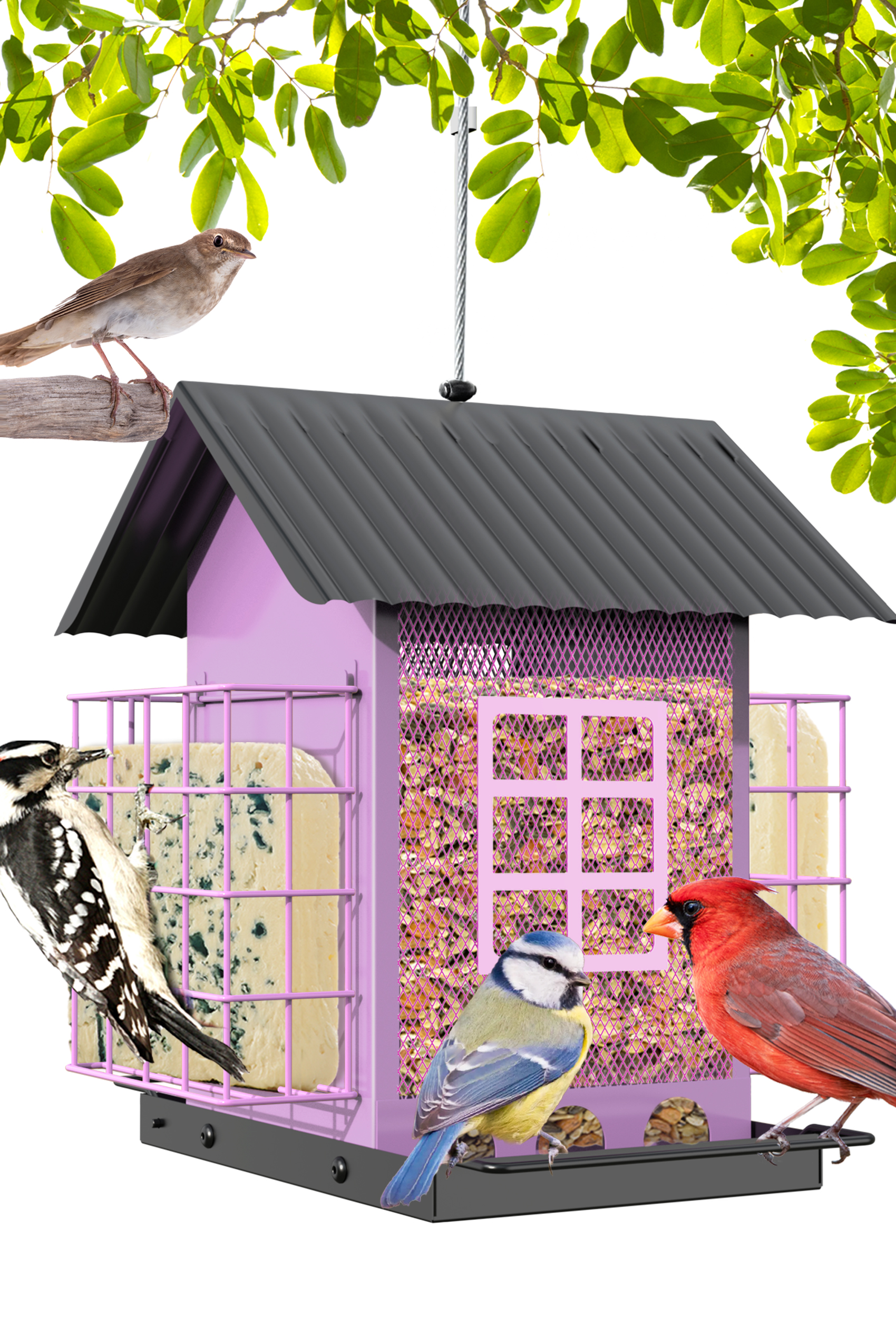
Weatherproofing and spill prevention: To prevent birdseed from becoming damp and spoiled by rain, the bird feeder should have a robust weatherproof design. The top can be designed with a slope or curve to prevent water accumulation; the feed inlet and storage compartment should have sealing measures to prevent water ingress. Additionally, a reasonable structural design can reduce spillage during feeding, such as using a spill-proof feeder design or installing guards along the edges of the feeder, which not only minimizes food waste but also keeps the surrounding environment clean.
Convenient for birds to feed: The size, shape, and spacing of the feeder's openings should be suitable for the birds' body size and feeding habits. If the openings are too large, food may spill easily; if they are too small, birds may have difficulty accessing the food. For example, for small birds, an opening width of 2-3 centimeters is appropriate; for large birds, the opening size should be appropriately increased. Additionally, the depth of the feeder should be moderate—too deep makes it difficult for birds to reach food at the bottom, while too shallow can cause bird food to be blown away by wind or easily accessed by other animals. Furthermore, perches or platforms can be installed on the feeder to provide birds with a place to stand and feed.
3. Usability
Refilling and cleaning: Choose feeders that are easy to refill, such as those with wide openings or removable lids, to facilitate quick addition of birdseed. Additionally, the feeder should be easy to disassemble and reassemble for regular cleaning. If leftover birdseed, bird droppings, etc., are not cleaned promptly, they can harbor bacteria and parasites, affecting bird health. For example, some bird feeders use a modular design, where components can be easily disassembled and cleaned quickly with water and a brush.
Installation Method: Choose a bird feeder with an appropriate installation method based on the installation location. Common installation methods include hanging, wall-mounted, and freestanding. Hanging-style feeders are suitable for installation on tree branches, balcony railings, etc., using hooks or ropes for suspension, offering flexible and convenient installation; wall-mounted feeders require fixation on walls or fences, providing better stability; floor-standing feeders are placed directly on the ground, suitable for open areas such as courtyards or gardens. Regardless of the installation method chosen, ensure secure installation to prevent the feeder from falling during use, which could injure birds or damage property.
Protective features: To prevent squirrels and other animals from stealing bird food, you can choose bird feeders with anti-squirrel designs. For example, some bird feeders use weight-sensing mechanisms that automatically close the feeder when heavier animals like squirrels climb onto them; or you can install protective nets or barriers around the feeder to prevent other animals from accessing the bird food. Additionally, you may consider bird feeders with ant-proof designs, such as ant-proof cups on the hanging ropes or ant-proof devices installed at the bottom of the feeder, to prevent ants from contaminating the birdseed.
4. Other Considerations
Brand and Reputation: Choose well-known brands and high-quality iron bird feeders with good reputations for better quality and after-sales service. You can check product reviews, consult bird enthusiasts, or research user experiences on relevant forums and social media to avoid purchasing low-quality or unsafe products.
Price Reasonableness: Price is not the sole criterion for evaluating bird feeder quality, but excessively low prices often indicate defects in materials, craftsmanship, or design. When selecting a feeder, consider the product's quality, functionality, and price comprehensively to choose a cost-effective option. Avoid purchasing low-quality products solely for cost savings, as this may result in frequent replacements and increased costs in the long run.
Selecting an iron bird feeder requires balancing multiple factors. If you have specific functional requirements for the feeder, such as a preference for a particular design, feel free to let me know at any time.
We recommend our FlowaFoli metal bird feeder!