1、Building mutual aid value through resource sharing and survival collaboration
Proactive supply and guidance of food resources
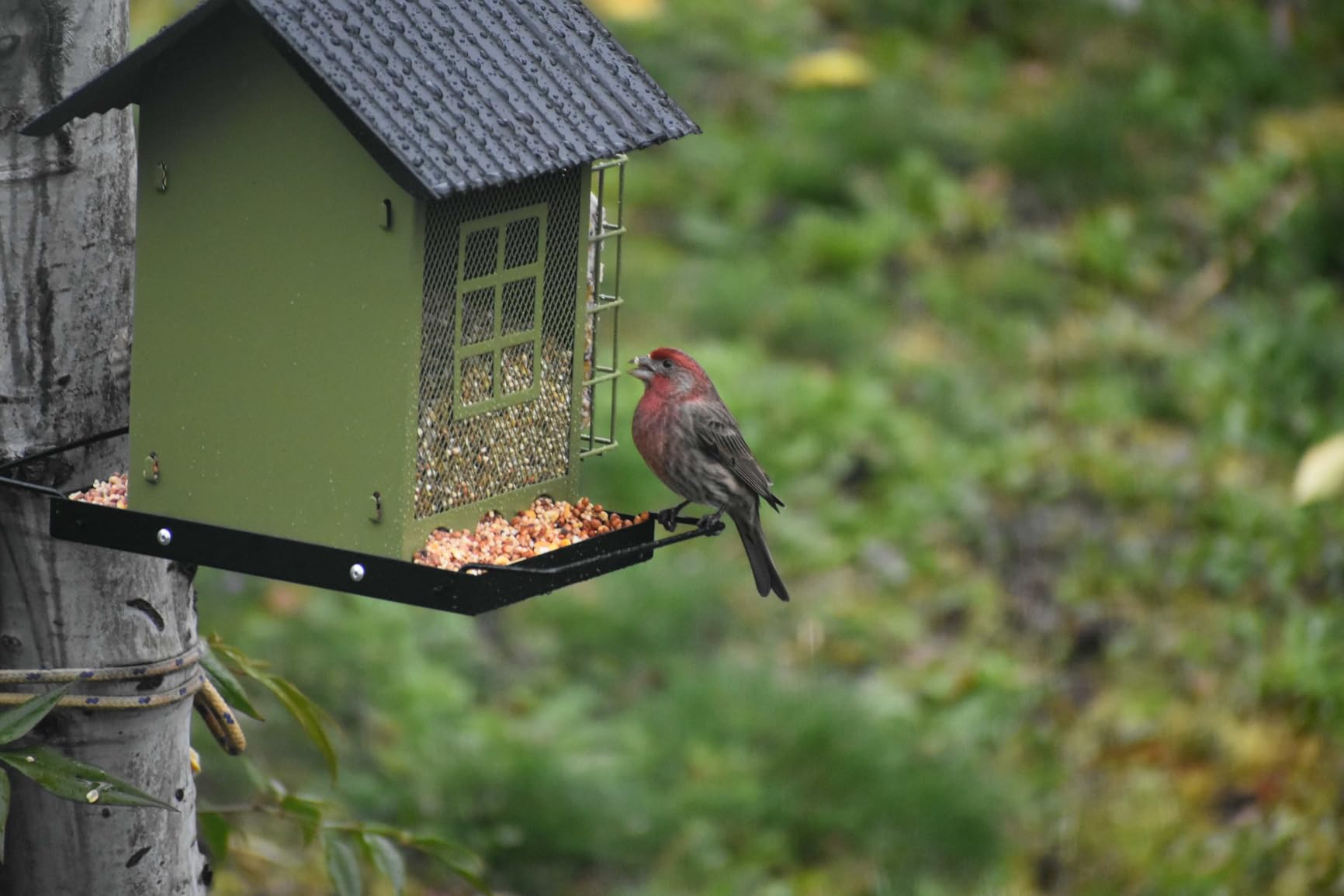
Utilize natural food sources (such as berry bushes, seed plants) or artificial feeding points in the courtyard to maintain a stable food reserve and attract nearby birds (especially young birds, elderly and weak individuals) who have difficulty foraging. By observing and recording the increased frequency of visits from specific bird species (such as the main Cardinals and Blue Jays), or scenes where young birds come to forage, it can be demonstrated that food supplementation provides survival support for local bird populations.
Actively explore new food sources (such as undiscovered fruit clusters around the courtyard), transmit information to peers through behaviors such as chirping and short distance flying, and guide the group to expand their foraging range. If the foraging area of the local bird population is observed to expand due to the guidance of the bird, it can directly reflect its information transmission value.
Safety warning and risk avoidance cooperation
Undertake the role of a "guard post": stay and observe at high places in the courtyard (such as tree branches and fences), and issue warnings through specific vocalizations (such as rapid and short calls) when natural enemies (such as eagles and cats) are discovered. The response of local bird populations after recording warnings, such as quickly hiding in shrubs and stopping foraging, proves their critical role in group risk avoidance.
Assist in nest building safety: Choose a highly concealed area within the courtyard (such as dense shrubs, under eaves) to build nests, attracting similar or other bird species (such as warblers) to build nests nearby, forming a "safe nest area". If the nest success rate of local bird populations (such as the number of young birds successfully leaving the nest) is significantly higher in this area than in other places, it can reflect the value of providing a safe breeding environment for the population.
2、 Participate in ecological cycles and highlight the value of environmental regulation
Plant propagation and habitat optimization
By consuming fruits and excreting seeds, plant seeds from inside and outside the courtyard are spread to the surrounding open space, promoting the growth of local plants such as oak and hawthorn trees. Regularly observing the number of seedlings in the seed dispersal area, if it is found that the local plant coverage has increased due to the activity of the bird, it can prove its contribution to the restoration of habitat vegetation - and the rich vegetation can provide more food and nesting materials for the entire local bird population.
Clean up the rotten fruits and insect corpses in the courtyard to reduce the growth of pathogens. If the local bird population experiences a decrease in the incidence of diseases (such as feather lice infection) due to the "cleaning behavior" of courtyard birds, it can indirectly reflect its value in safeguarding the health of the population.
3、 Assist in population continuation and enhance reproductive support value
Sharing and mutual assistance of nesting materials
Collect building materials such as twigs, feathers, cotton wool, etc. from the courtyard, not only for building your own nest, but also leave excess materials in prominent locations (such as branches) for other birds to use. Record cases of local bird populations (especially novice parent birds) using these materials to shorten nest building time and improve nest stability, demonstrating their effectiveness in improving reproductive efficiency. Repair assistance for damaged nests: If nearby bird nests are found to be damaged due to wind and rain, yard birds will bring materials to help repair them. By observing whether the repaired nest can hatch young birds normally, verify its support for reproductive success rate.
Collaborative support for the care of young birds
When nearby birds and their relatives go out to forage, courtyard birds can temporarily take on the responsibility of "guarding" by chirping to drive away natural enemies (such as squirrels) that are close to the young birds. Record the increase in survival rate of young birds under "collaborative care", reflecting their contribution to population continuity.
Teach foraging skills to young birds: Lead newly hatched young birds to recognize edible plants and insect habitats in the courtyard, helping them quickly master survival skills. If these young birds can forage independently faster and reduce the probability of dying from hunger, it can directly prove the value of courtyard birds in "population renewal" of local bird populations.
We recommend our bird feeder!