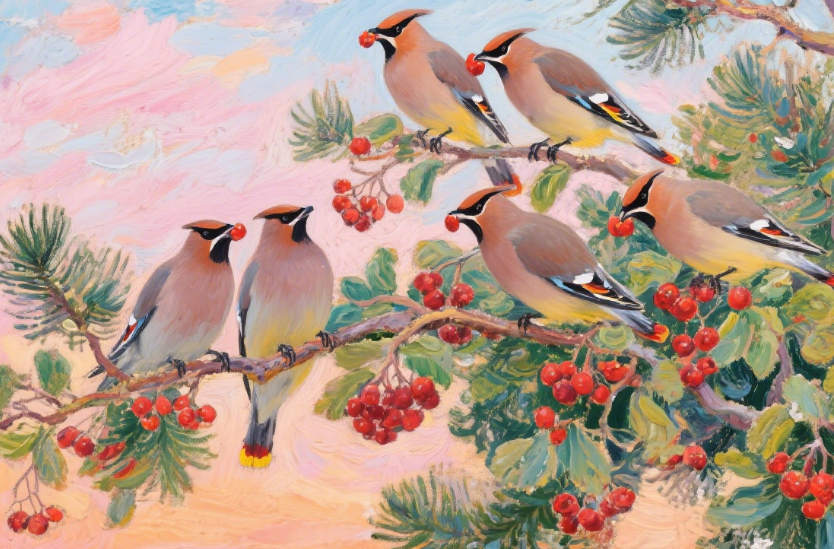
As a habitat for numerous bird species, the American courtyard has developed foraging techniques and self-protection strategies that are adapted to the environment over a long period of evolution, each showcasing the wisdom of natural selection.
In terms of foraging, birds with different diets have completely different methods. Carnivorous birds are "pest control experts" in the courtyard, such as the American mockingbird. They have sharp vision and hearing, and can pace on the lawn. Once they detect the activity of underground insects, they quickly use their beaks to peck open the soil and accurately capture prey such as earthworms and grubs. And warblers are better at shuttling between branches and leaves. Their flexible bodies can easily penetrate dense shrubs, pecking at small insects such as aphids and caterpillars from the back of leaves or flower buds with their slender beaks, and their movements are agile like elves in the forest.
Fruit eating birds are the "spreaders" of plant seeds in the courtyard, like cedar pygmy birds, which often appear in groups next to fruit trees and peck at berries with their hard beaks. They do not eat all the fruits at once, but fly them to other places. Some undigested seeds of the fruits fall to the ground with excrement, contributing to the reproduction of the plant. Mocking thrushes have a diverse diet, eating both fruits and insects. They use their beaks to flip through fallen leaves on the ground, searching for hidden food and occasionally looking up to observe their surroundings to ensure the safety of the foraging process.
Grain eating birds, such as sparrows, always move around the feeders or grain piles in the courtyard. Their beaks are short and thick, making them very suitable for pecking at grains. They usually forage in groups, which can improve the efficiency of discovering food and detect danger in a timely manner. When a sparrow discovers food, it will summon its companions through its call to share the delicious food together.
In terms of self-protection, birds have a wide variety of strategies. Protective color is a "invisibility technique" used by many birds. The feathers of wrens are similar in color to the bark and fallen leaves, making it difficult for natural enemies to detect them when they are still on the trunk. The feathers of the willow warbler are yellow green, blending with the color of the leaves in the courtyard. When moving between the branches and leaves, it seems to blend into the natural environment, making it difficult for predators to target.
Cluster behavior is also an effective way of self-protection. Starlings often gather into large flocks during foraging and migration, with numbers reaching thousands or even tens of thousands. When encountering predators such as raptors, the flock of birds quickly changes formation, creating a chaotic scene that makes it difficult for predators to capture individual targets. At the same time, birds in the cluster can alert each other, and once danger is detected, they can promptly send out signals to prompt the entire group to respond.
Some birds also use their environment for camouflage. For example, the sandpiper builds its nest on the ground, and the color of its feathers is very similar to the surrounding fallen leaves and soil. When faced with danger, sandpipers will lie motionless in their nests, blending their bodies with the surrounding environment to avoid the sight of predators. In addition, some birds choose to build their nests in hidden places, such as dense shrubs, tree holes, etc., to reduce the probability of being discovered by natural enemies.
Some birds also have special defense skills. When faced with danger, blue jays will make sharp calls, which not only warn their own kind but also scare off some small predators. They also mimic the calls of raptors, making other animals mistake them for raptors approaching and afraid to invade easily. Woodpeckers, on the other hand, can use their hard beaks to dig holes in tree trunks. When they encounter danger, they will quickly hide in the holes and use them as a natural protective barrier.
The birds in the American courtyard rely on these diverse foraging methods and self-protection strategies to survive and reproduce in complex environments, forming a vibrant ecological picture of the courtyard. 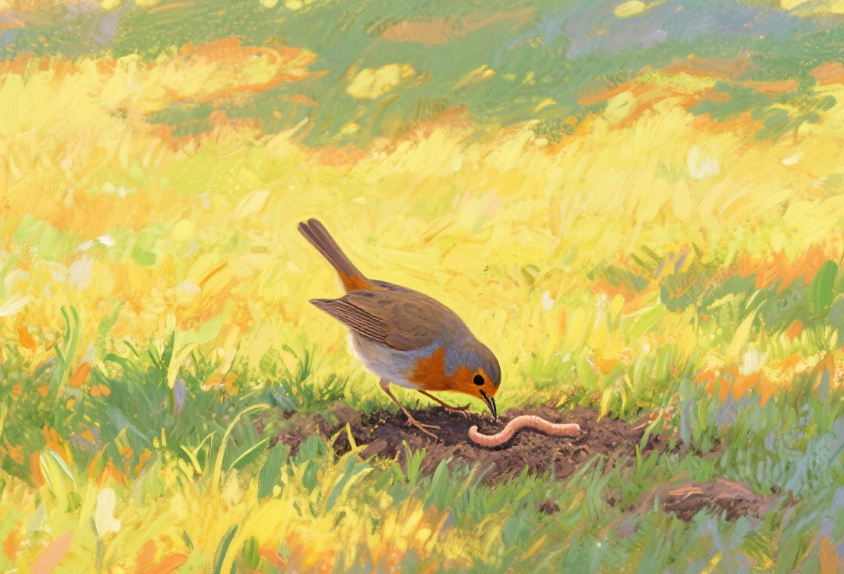
How do various birds in American courtyards forage and protect themselves
Aug 6, 2025 Bird knowledge presenters