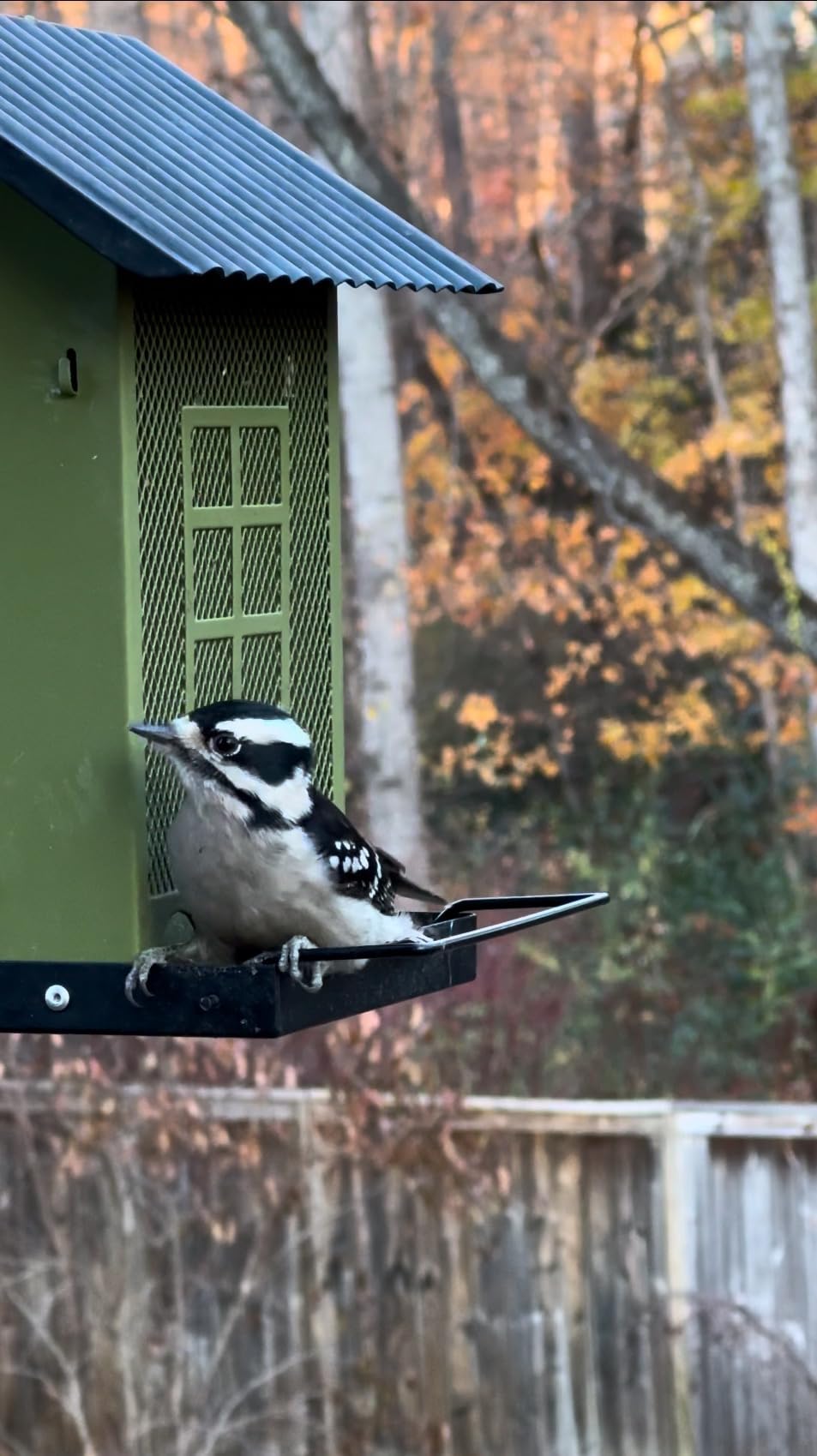
Birds in American gardens exhibit diverse and precise behavioral strategies when dealing with troublesome conspecifics and unwanted assistance, balancing competition and cooperation:
The most common “troubles” posed by conspecifics involve resource competition (such as food and nesting sites) and territorial conflicts. Take the Northern Cardinal as an example: males assert territory through vivid plumage displays and staccato songs. When intruders approach, they first engage in “threat displays”—standing erect and fanning their tails. If ineffective, they initiate brief pecking encounters, typically avoiding serious injury to conserve energy. In contrast, gregarious birds like the Eurasian Redstart forage in groups but maintain resource order by gently nudging with beaks or fluttering wings to drive away conspecifics attempting to seize prime food items (like seeds in garden feeders). Additionally, “brood parasitism” among conspecifics poses unique challenges. For instance, brown-headed cowbirds lay eggs in other passerine nests. In response, garden warblers (like yellow-breasted buntings) identify intruder eggs by size and pattern differences, either ejecting them or abandoning the nest entirely to minimize reproductive losses.
Regarding “unwanted assistance,” birds explicitly reject it through behavioral signals to avoid unnecessary energy expenditure or disruption. For instance, when a pair of Carolina Wrens is building a nest, if a young conspecific attempts to help carry twigs (possibly as learning behavior or misjudgment), the parents emit high-pitched “alarm calls” while physically blocking the approach to the nest site, clearly conveying the message “no assistance needed.” Similarly, during the rearing period, if a non-parent conspecific attempts to feed chicks of a Northern Bluebird, the parent swiftly flies in front of the chick and pecks at the intruder's beak to prevent feeding. This is because unnecessary feeding may cause digestive issues in the chicks or expose the nest location. However, this rejection is not absolute: if the helper is a offspring from the previous year's breeding (“helper bird”), the parent may accept its assistance. But if the helper is an unrelated conspecific, it will be firmly rejected, demonstrating a precise judgment of the “effectiveness of assistance.”
We recommend our bird feeder!