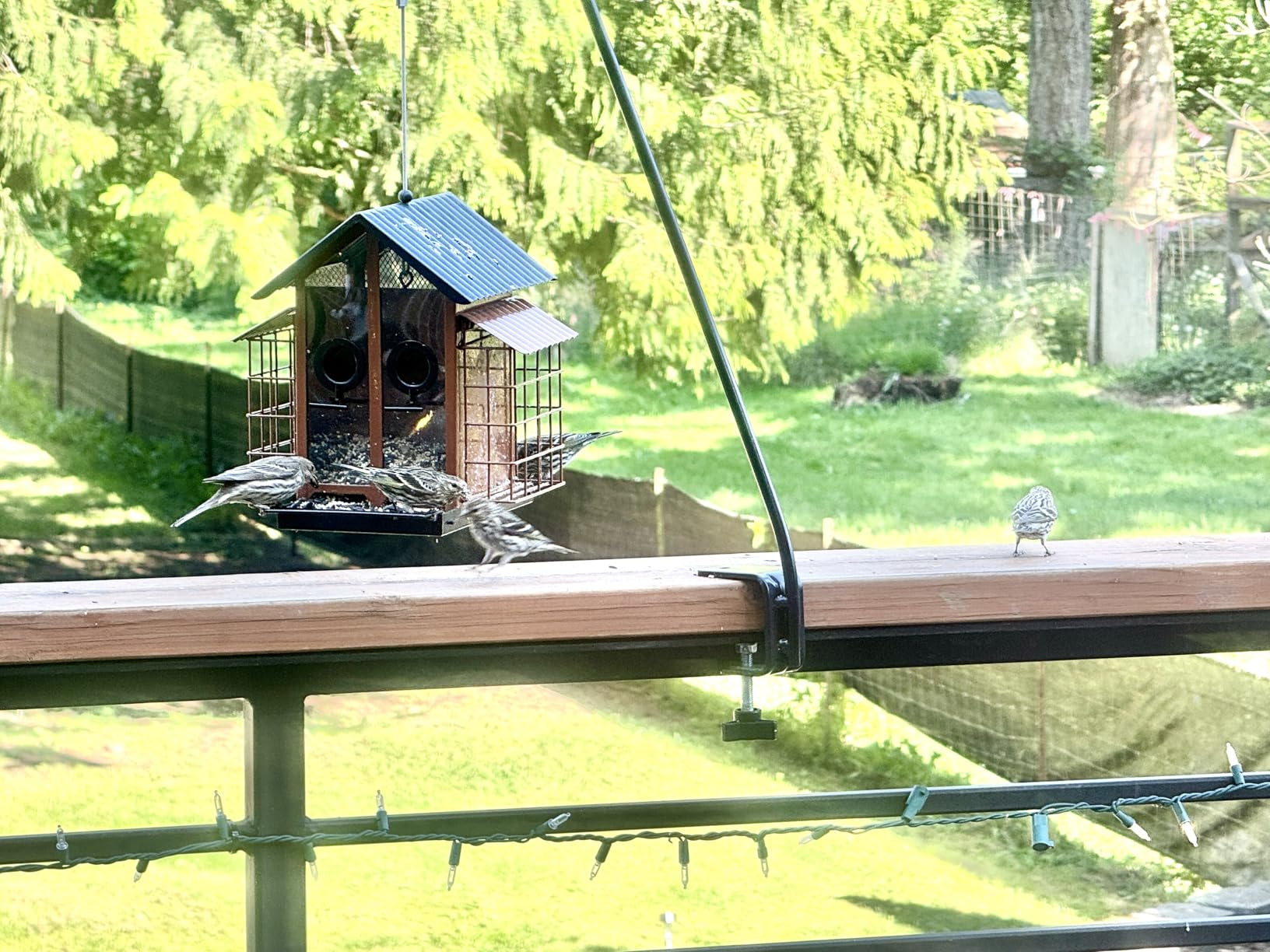
As a habitat where artificiality and naturalness blend, the survival status of birds within the American courtyard is closely linked to environmental changes. Among these changes, "temporal adjustments" (such as changes in photoperiod and alterations in human activity rhythms) and the resulting additional disturbances (such as shifts in foraging windows, mismatched predator activity periods, and intensified human interference) directly affect the survival efficiency of birds. Through long-term natural selection, birds have developed a coping system centered on physiological rhythm regulation, supplemented by flexible behavioral adaptation, to precisely handle various challenges brought about by temporal adjustments.
1. Core foundation: Using circadian rhythm as an anchor to cope with changes in time reference
The core of birds' time perception relies on the synergistic calibration of endogenous biological clocks and exogenous environmental signals, with light being the most crucial "time anchor". This mechanism serves as the core foundation for birds to adapt to natural time adjustments, such as changes in day length caused by seasonal transitions, and can also partially accommodate changes in time rhythms brought about by human activities.
For non-natural time adjustments caused by human activities (such as changes in the daily routine of the yard owner, alterations in the nighttime activation time of surrounding lights, etc.), the biological clocks of birds will adapt through "secondary calibration". For instance, if the nighttime lighting in the yard is extended, some nocturnal or crepuscular birds (such as barn owls and mourning doves) will perceive artificial light through their retinas, fine-tune their melatonin secretion rhythm, delay their resting time or advance their active time; while diurnal birds will use the composite signal of "natural light + artificial light" as a reference to adjust their activity start time, avoiding overlap with the peak period of human interference.
2. Behavioral Adaptation: Flexibly Adjusting Core Activity Strategies to Address New Challenges
Foraging is one of the core life activities of birds, and the most direct disturbance is the change in foraging windows brought about by time adjustments. In response, backyard birds mainly cope through two paths: "time-slot staggering" and "area expansion". For example, when human backyard activity time adjustments (such as the owner's morning feeding time being postponed and evening backyard gatherings increasing) lead to increased interference in traditional foraging periods , birds will actively adjust their foraging periods - either by advancing the peak activity to before humans wake up or postponing it to after human activities end , using the "time difference" to avoid interference. At the same time, they will expand their foraging areas, moving from the core activity zones of the backyard to less disturbed peripheral areas (such as beside the backyard fence or within bushes), or utilizing the "indirect food resources" generated by human activities (such as residual grains and pet food after gatherings) to compensate for the compression of traditional foraging windows.
We recommend our Flowafoli bird feeder!