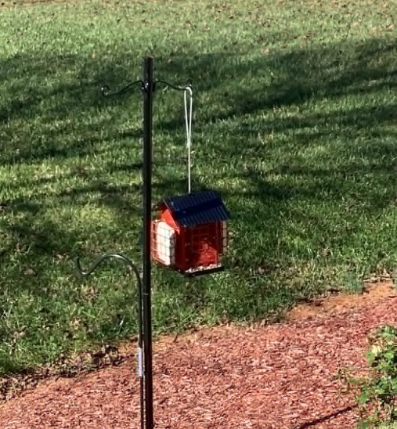
In the courtyard ecology of the Americas, common birds such as sparrows, mockingbirds, and hummingbirds have already formed a set of movement patterns and sleep patterns that are highly adapted to the environment. These behaviors do not occur randomly, but are survival strategies that have been selected through long-term natural selection, precisely maintaining the stability of their physiological systems such as digestive system, energy metabolism, and immune system, becoming the core guarantee for their reproduction in the intertwined courtyard environment of artificial and nature.
1、 Exercise: Dynamic Balance between Energy Metabolism and Functional Regulation
The movement behavior of birds always revolves around "energy acquisition consumption balance" and "physiological function activation", and different types of movements undertake different systemic regulatory functions.
(1) Foraging Movement: The Synergy of Precise Energy Consumption and Nutritional Supply
The foraging movement of courtyard birds is highly targeted, ensuring energy intake while avoiding ineffective consumption. Taking the American mockingbird as an example, they perform the iconic "short jump pause" movement on the lawn in the early morning: when jumping, their leg muscles quickly contract, driving their body forward by 5-10 centimeters. At the moment of pause, their head tilts, and they locate earthworms or beetle larvae underground through auditory perception. This exercise mode directly links each energy expenditure to food acquisition, with the energy consumption of a single foraging cycle accounting for only 12% -15% of the energy contained in the captured prey, achieving a "low energy, high return" nutritional supply.
For hummingbirds, foraging is the ultimate example of energy utilization. When hovering to feed on the nectar of trumpet flowers and geraniums in the courtyard, their wings vibrate 50-80 times per second, and their pectoral muscles are in a high-frequency contraction state. Although this high-intensity exercise can cause instantaneous energy consumption to soar, hummingbirds can reduce total energy consumption by precisely controlling the feeding time (each flower stays for no more than 2 seconds) and planning the optimal foraging route (avoiding repeated flights). At the same time, muscle movement during hovering can promote efficient operation of the cardiovascular system, with the heart beating up to 1200 times per minute, ensuring rapid delivery of oxygen and nutrients throughout the body and maintaining high-speed circulation of the metabolic system.
(2) Daily activities: the foundation of muscle maintenance and metabolic regulation
The exercise during non foraging periods mainly serves the daily maintenance of physiological functions. North American Cardinals often appear on branches in courtyards and perform a combination of "lateral movement flapping grooming" exercises: when moving along the branches, they exercise their claw grasping muscles to prevent muscle atrophy; Occasionally flapping one's wings and soaring 1-2 meters will activate the pectoral muscles and shoulder joints, avoiding functional degradation caused by prolonged habitation; The act of combing feathers with the beak not only cleanses the feathers, but the friction between the beak and feathers also stimulates the skin to secrete oil. At the same time, the repeated rotation of neck muscles can promote blood circulation in the neck, indirectly regulating the endocrine system.
The movement in group activities hides the wisdom of "coordinated regulation". When sparrows cluster and jump in the courtyard, the distance between individuals is always maintained at 10-15 centimeters. This intensive movement not only maintains body temperature stability through group heat (especially in winter), but also stimulates the skin tactile nerves through slight collisions between individuals, enhancing the sensitivity of the nervous system. Research shows that sparrows moving in clusters have a 30% reduction in temperature fluctuations during winter and a 20% increase in immune system response to pathogens compared to individuals moving alone.
(3) Avoidance Movement: The Linkage between Stress Regulation and Survival Instinct
Faced with cats, snakes, or raptors that may appear in the courtyard, bird avoidance movements become the key to activating the stress system and maintaining survival. When the blue raven discovers danger, it will instantly activate the escape process of "short flapping of wings vertical ascent diving concealment": adrenaline is rapidly secreted during flapping, and the heart rate rises sharply from 400 to 650 beats per minute, providing explosive energy to the muscles; Vertical climbing utilizes aerodynamic principles to quickly escape danger zones, while diving reduces air resistance by tightening the body. At the same time, eye muscles are highly tense, allowing for precise positioning of concealed areas such as bushes or under eaves.
This kind of stress exercise is not only an "escape skill", but also a "stress test" of the physiological system. Under short-term stress, the liver of birds accelerates the breakdown of glycogen to provide energy for the body; After the stress is over, through soothing exercises such as grooming feathers and slow pacing, adrenaline levels gradually decrease, heart rate returns to normal, and immune system suppression caused by long-term stress is avoided. This "stress activation rapid calming" regulatory mechanism is an important guarantee for adapting to complex courtyard environments.
2、 Daily routine: precise synchronization of physiological rhythms and environmental cycles
Birds strictly follow the "circadian rhythm" and "seasonal cycle" in their daily routine, regulating the physiological system's operating rhythm through fixed time nodes to achieve a dynamic balance of "consumption repair".
(1) Day and night schedule: system scheduling based on lighting as the anchor point
Light is the core "biological clock anchor" for the daily routine of courtyard birds, and the behavior at different times corresponds precisely to the functional switching of the physiological system.
Early morning (1-2 hours after sunrise) is the "start-up period": birds such as mockingbirds and sparrows are the first to be active, activating their respiratory system and vocal organs through short periods of low altitude flight and soft chirping, and then entering the peak of foraging. At this time, the digestive system awakens from its nighttime sleep state, and the rate of gastric acid secretion gradually increases. The frequency of intestinal peristalsis increases from once every 10 minutes to once every 2 minutes, ensuring that insects and seeds ingested for breakfast can be quickly digested and absorbed, storing energy for daytime activities.
At noon (11-14 pm), it enters the "rest period": During the high temperature at noon in summer, most birds choose to inhabit under the shade of trees, reducing their activity to lower energy consumption. At this point, the metabolic rate drops to the lowest value during the day, and the body temperature is maintained stable through gas exchange in the air sacs. The liver begins to process the nutrients ingested in the morning, converting excess energy into fat storage. Some birds, such as hummingbirds, enter a "semi dormant" state, with their heart rate dropping from 1000 to 300 beats per minute and their respiratory rate decreasing by 60% to cope with the energy pressure in high-temperature environments.
Evening (1-2 hours before sunset) is the "closing period": birds enter the peak of foraging again to replenish the energy needed at night, while preparing for rest by grooming their feathers, inspecting their nests, and other behaviors. The digestive system accelerates emptying at this time to prevent food from staying in the intestines at night and causing infections; The visual system gradually adapts to environments with darker light, as cone cells in the eye switch to rod cells, preparing for homing and nighttime vigilance.
Nighttime (after sunset to before sunrise) is the "repair period": most courtyard birds enter deep sleep, their metabolic rate drops to the lowest point of the day, and the immune system initiates a repair program - lymphocytes proliferate massively, clearing damaged cells and pathogens from the body; The skeletal system uses rest time to absorb the calcium intake during the day and strengthen bone density. For nocturnal barn owls (occasionally found around courtyards), the night is the active period, and their auditory system is highly sensitive in the dark, locating prey by capturing the sounds of rodents. During the day, they enter dormancy, completing a rhythmic cycle of "daytime ambush and nighttime retreat".
(2) Seasonal schedule: System adaptation to environmental fluctuations
Seasonal changes directly affect food resources and climate conditions, and birds adjust their schedules accordingly to maintain system stability.
Spring is a "breeding oriented" schedule: male birds start their morning calls 30 minutes before sunrise, and their call frequency increases (such as the North American Cardinals calling 15-20 times per minute). This behavior not only attracts female birds, but also promotes sex hormone secretion through the movement of their vocal organs; Female birds increase their foraging frequency and prioritize consuming high protein foods (such as insect larvae) to store nutrients for egg laying. At this time, the endocrine system and reproductive system of birds are highly coordinated, and the volume of ovaries or testicles increases by 2-3 times compared to winter, ensuring the success rate of reproduction.
In summer, it shifts to a "chick rearing adaptation" lifestyle: the foraging frequency of parent birds increases from 5-6 times a day to 10-12 times a day, and after each foraging, they need to quickly return to the nest to feed the chicks, forming a high-frequency cycle of "foraging returning feeding". To cope with high-intensity activities, their heart pumping efficiency is increased by 40%, and their kidneys' ability to reabsorb water is enhanced, avoiding dehydration caused by frequent flying; At the same time, the parent bird will adjust its rest time and use the gaps between the chicks' sleep to quickly restore their physical strength, achieving a balance between "chick rearing needs" and "self repair".
Entering the "energy storage preparation" routine in autumn: As the fruits and seeds in the courtyard mature, birds' foraging time is extended by 2-3 hours, and they prioritize high-energy foods (such as berries and sunflower seeds). The secretion of digestive enzymes in the digestive system increases, especially the activity of amylase and lipase, which increases by 50%, accelerating the conversion of energy into fat stored under the skin. At the same time, their range of activity expands, and they explore the surrounding environment through flight, preparing for winter foraging and winter shelter. At this time, the endurance training intensity of their muscle system also increases.
In winter, switch to an "energy-saving survival" lifestyle: birds reduce their activity time and focus on foraging for 2-3 hours during the high temperature of noon each day. The rest of the time, they inhabit the leeward eaves or dense branches, reducing heat loss by curling up their bodies. Some birds (such as sparrows) will cluster and inhabit, using the collective heat to maintain body temperature; Their metabolic rate decreases, their fat consumption rate slows down, and their immune system enhances resistance to low-temperature related pathogens such as avian influenza virus, ensuring winter survival.
3、 The synergy between exercise and daily routine: the core logic of system stability
The movement and sleep of birds do not exist in isolation, but form a closed-loop regulatory system of "behavior rhythm physiology" to jointly maintain the stability of the body. For example, the short-term cluster jumping (exercise) in the early morning of winter and the long-term resting (sleep) at noon work together: jumping activates muscles to avoid frostbite, while resting reduces energy consumption, and the combination of the two maintains a suitable temperature range of 38-40 ℃; The high-frequency chirping (movement) of male birds in spring is linked with early morning activity (sleep and rest), which promotes the secretion of sex hormones through behavioral stimulation and rhythm regulation, ensuring the function of the reproductive system.
The essence of this collaborative mechanism is that birds adjust their behavior to accurately match their physiological systems with the environmental cycles of the courtyard (light, temperature, food), meeting their survival needs such as energy acquisition, reproduction, and avoidance of enemies, while also avoiding excessive physiological system depletion through rhythmic repair. It is precisely this precise control of movement and sleep that enables courtyard birds in the Americas to achieve dynamic balance and long-term survival in the interweaving of artificial environment and natural laws.
We recommend our Flowafoli bird feeder!