1、 Prioritization of core requirements: Survival oriented behavioral logic
The behavior allocation of birds is essentially an instinctive choice to maximize survival and reproduction benefits, without active "planning", but forming a fixed priority sequence:
Foraging and drinking water: the cornerstone of survival
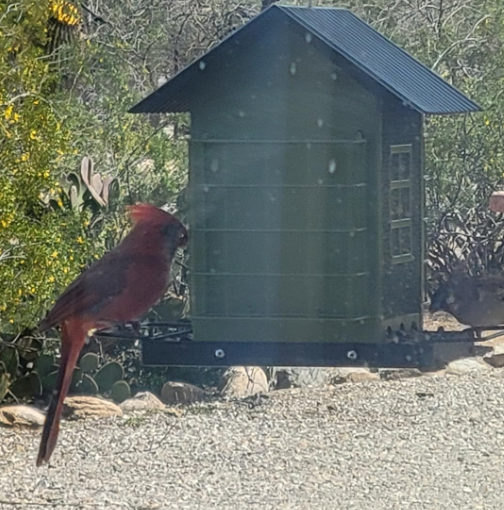
This is the core matter that occupies the longest daily time, with priority over rest. Common herbivorous birds in American courtyards, such as the Northern Cardinal and House Finch, spend 40% -60% of their daily time pecking at berries, grass seeds, or artificially fed grains; And carnivorous birds such as the Eastern Bluebird need to hunt frequently, with short foraging times but dense intervals, and only enter a resting state after being full.
Reproduction related behaviors: the key to population continuity
The behavioral allocation during the breeding season (spring and summer) will experience a significant tilt. Male birds need to spend a lot of time chirping in their territory (such as mockingbirds chirping for several hours a day) and driving away competitors; Female birds focus on building nests (such as swallows that need to make dozens of round trips to retrieve mud grass) and incubating eggs. At this time, their rest is compressed into fragmented "gap time", only briefly stopping when the temperature is suitable and there is no threat of predators.
Liyu and Cleanliness: Health Protection
As a 'maintenance matter', Liyu is usually interspersed between foraging breaks or before and after rest. The American Robin spends 10% -15% of its daily time grooming its feathers and smearing its tail fat gland secretions with its beak, which can maintain body temperature and reduce parasitic infections. This behavior is often combined with short periods of rest.
2、 Time allocation under circadian rhythm: a "biological clock" synchronized with the environment
Most courtyard birds in the Americas are diurnal, and their behavioral rhythm strictly follows the laws of light, temperature, and natural enemy activity, forming a stable "work rest" cycle:
3、 Environmental adaptation strategy: flexible adjustment of "balancing technique"
The artificial environment of the courtyard (such as feeders, vegetation, buildings) and natural variables (natural enemies, weather) jointly affect the behavioral allocation of birds, forming a flexible balance strategy:
The 'time saving effect' of human resources
If there are feeders in the courtyard, the foraging time of birds can be reduced by 30% -50%, and the saved time will be converted into rest or grooming time. For example, the Dark eyed Junco can extend its daily rest time from 2 hours to 3.5 hours in a courtyard with stable feeding, and its rest location is closer to the feeder for quick response to food resources.
Fragmented Rest under the Pressure of Natural Enemies
When natural enemies such as cats and eagles appear in the courtyard, birds will give up long-term rest and switch to a "short frequency multiple times" alert rest. When natural enemies appear, American Goldfinch will choose to perch on narrow branches with a wide field of vision. Every 1-2 minutes of rest, it will look up and observe, combining "rest" with "vigilance" to balance safety and energy recovery.
Dynamic adjustment of weather changes
On rainy days, foraging efficiency decreases (such as when insects hide or seeds become damp), and birds will reduce their foraging and increase their rest time inside the nest or under the eaves; In windy weather, priority should be given to resting in sheltered shrubs and gathering for food after the wind subsides.
4、 Essence: The natural balance between energy metabolism and environmental stress
The essence of bird behavior allocation is the balance equation between energy intake and consumption: rest is to reduce basal metabolism (daytime birds can reduce energy consumption by 40% during rest), while foraging, reproduction, and other "matters" are to supplement energy and ensure population continuity. The birds in American courtyards have internalized this balance as instinct through millions of years of evolution, and can accurately adapt to the environment without the need for "planning", achieving dynamic stability of survival and rest in the intertwined space of artificial and nature.
We recommend our bird feeder!