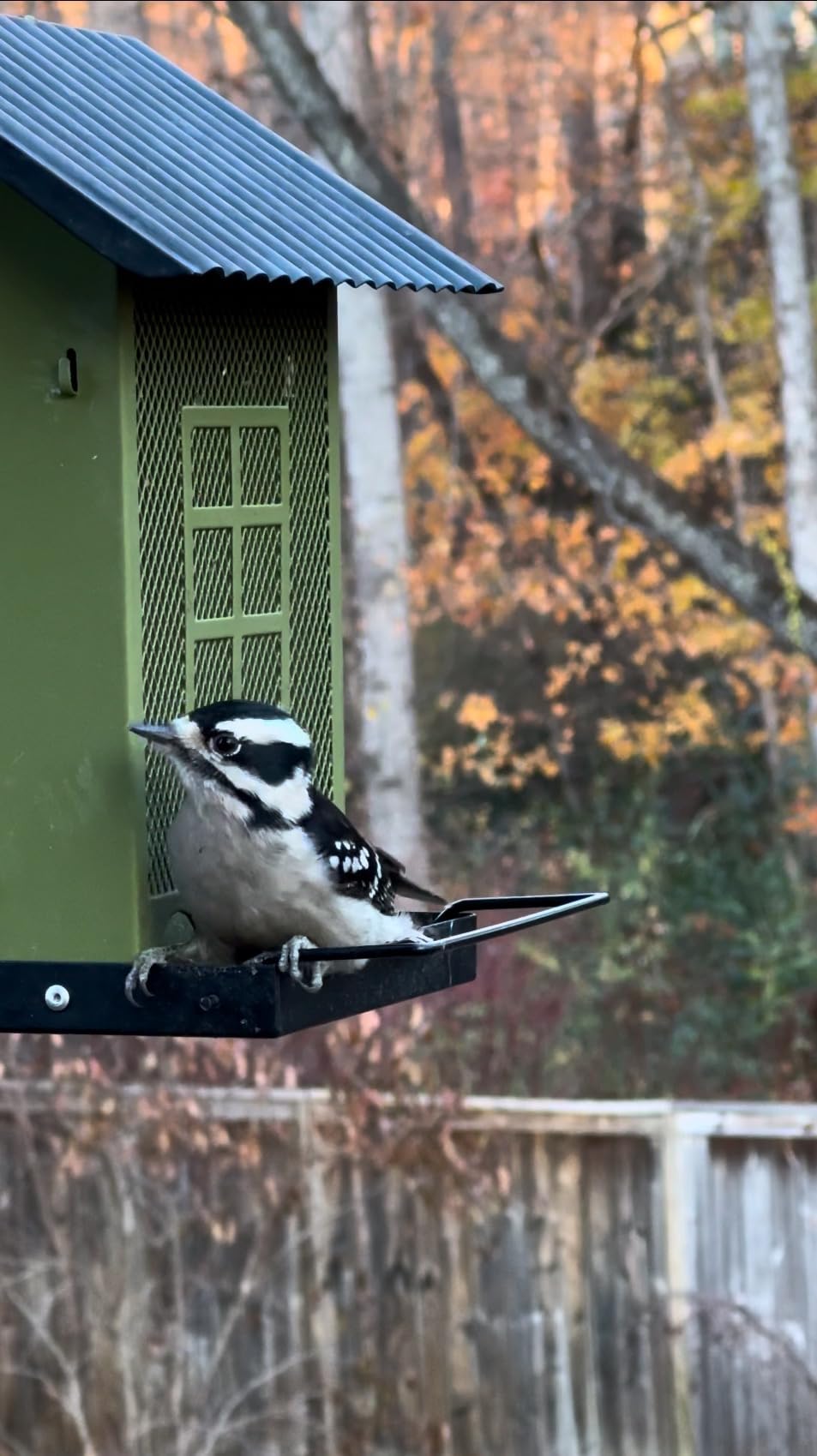
Three typical "multitasking" scenarios and processing mechanisms
(1) Foraging and vigilance dual tasks: the highest frequency "parallel" demand
In American courtyards, common birds such as the North American Cardinals and Blue Jays need to simultaneously search for food and avoid danger, relying on a "graded perception fast switching" system
Low priority task: foraging
Led by the basal ganglia of the brain, mechanical pecking is performed through visual recognition (such as identifying sunflower seeds and insect contours) and beak touch, with repetitive and automated movements that occupy less brain processing resources.
High priority task: Alert
Establish a "panoramic monitoring network" through the coordinated control of the midbrain visual lobe and thalamus:
The binocular vision overlap area (about 30%) focuses on food, while the peripheral field of view (monocular vision area) scans the sky (eagles, falcons) and ground (cats, snakes);
The auditory system maintains continuous monitoring, with a response time of less than 0.1 seconds to abnormal sounds such as human footsteps and raptor calls;
Once the alert signal is triggered, the foraging program is immediately interrupted and the "freeze judge escape" reflex chain is activated, which does not require deep involvement of the cerebral cortex.
(2) Social brooding multitasking: Resource allocation challenges during the breeding season
During the spring breeding season, birds such as North American mockingbirds and house swallows need to balance "peer interaction" and "nurturing offspring", relying on a "time slicing+behavioral modularization" strategy:
Time sharding management
Divide task windows according to circadian rhythms: Focus on foraging in the early morning (5:00-7:00) to reserve food for chicks, perform territorial vocalizations (social defense) in the morning (9:00-11:00), and concentrate on returning to the nest for feeding in the afternoon (brooding core) to reduce task conflicts through the biological clock.
Seize emergency tasks
If a chick emits a cry for help (high-frequency chirping) during chirping, the vocalization will be immediately terminated and priority will be given to flying back to the nest area. This priority setting of "brooding before socializing" is solidified by the hormone regulation mechanism of the hypothalamus.
(3) Multi objective integration during the migration preparation period
For migratory courtyard birds such as the thrush and yellow rumped warbler, in autumn, they need to complete three major tasks simultaneously: "energy reserve", "directional positioning", and "cluster socialization". The processing logic is reflected in "task collaboration rather than parallelism":
During the day, the main focus is on foraging (consuming fat, which accounts for over 30% of body weight), while also learning direction by observing the position of the sun and memorizing landmarks;
When the group inhabits in the evening, they communicate migration information through chirping, integrate "individual foraging" and "group socialization" through a timeline, and avoid resource consumption conflicts.
The physiological basis that supports multitasking ability
Rapid response of cerebellum and basal ganglia: responsible for motor coordination and habitual behavior (such as pecking), without the involvement of the cerebral cortex, releasing advanced cognitive resources for vigilance.
Dual modal perception system: Visual (wide-angle monitoring) and auditory (directional warning) operate independently, and information is aggregated through the thalamus to achieve perceptual synergy of "watching while listening".
Energy allocation optimization: In non emergency situations, only 10% of the brain is active, concentrating energy on core tasks to avoid cognitive overload.
We recommend our bird feeder!