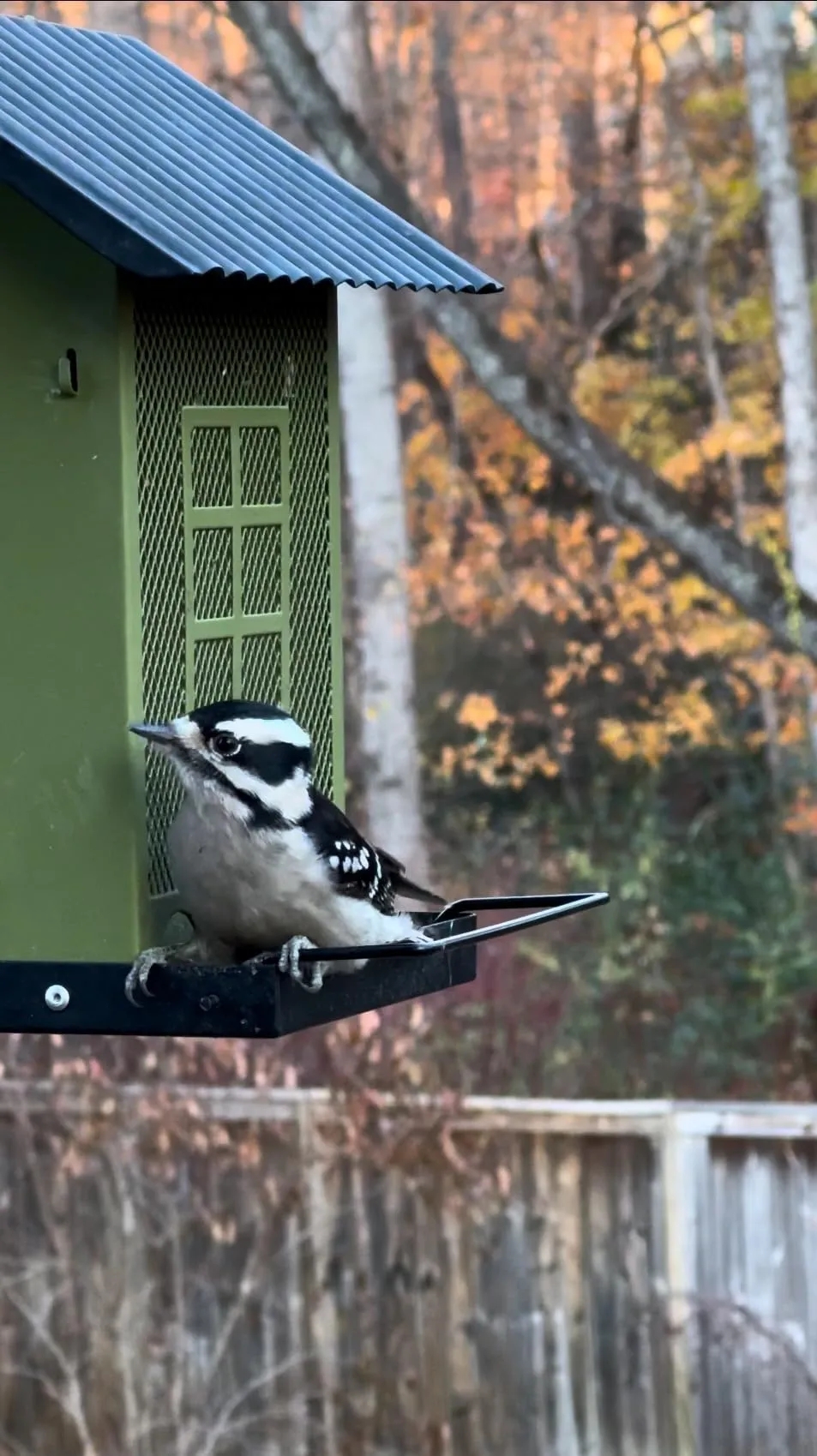
When humans erected wooden signs in American courtyards that read "No Feeding on Lawn" and "Limited Time Open Shrubs", these feathered "residents" were using their unique senses and community intelligence to engage in an adaptive game of rules. They do not have the ability to recognize words, but they can construct a unique understanding of "unconventional rules" through daily observation, trial and error, and group transmission, and use strategies far beyond human imagination to maintain their survival rhythm.
1、 Rule awareness: Capturing survival signals from subtle changes
The recognition of rules by courtyard birds begins with the "abnormal stability" in the environment. The North American Cardinals were the first to detect anomalies - the sunflower seed pile that used to be found on the lawn in the early morning disappeared, replaced by the frequent footsteps of humans. This "disconnection between food sources and human activities" becomes the first signal for them to judge the "feeding ban". They will stay on the branches for longer, slowing down their actions of grooming their feathers with their beaks, but in fact, they use sharp vision to record the temporal patterns of human activities: will there be a brief "safety window" on the lawn after the gardener wearing a blue coat leaves?
The smaller dark eyed bunting, on the other hand, captures the boundaries of rules through auditory perception. When the sound of the metal door opening and closing in the "shrub area with limited opening" becomes a fixed signal, they will bind the "creaking sound" with the "safe foraging time". When the door opens at 7 o'clock in the morning, they will first send an adult bird to fly low over the edge of the shrub area. If it is not driven away by humans, it will make a short "chirp" sound, summoning the group to enter - this "sound space safety" associative ability is the basic cognitive logic for them to deal with rules.
2、 Response strategy: Crowded survival game
Different bird species have evolved distinct response strategies based on their ecological niches. For mourning doves that mainly forage on the ground, "prohibiting lawn feeding" almost cuts off their main source of food. They did not rashly confront each other, but chose a "time misalignment" strategy: at noon, when human activities are most frequent, they will gather on the fence outside the courtyard to observe whether there are any missed seeds on the lawn; After humans return indoors at dusk, they land in batches on the lawn and use quick pecking movements to compensate for their daytime hunger - this "avoidance rather than confrontation" strategy allows them to maintain a stable population under the constraints of rules.
On the contrary, the purple winged starlings living in groups demonstrate a "community collaborative breakthrough". When there is a new regulation in the courtyard prohibiting the construction of nests on tree branches, and humans frequently clean up bird nests, they will take collective action: some individuals hover and chirp near humans to distract their attention; The remaining individuals quickly built temporary nests using dead branches and weeds in the undergrowth that was not covered by the rules. Even more cleverly, they intentionally leave a small amount of nesting material on the trees, guiding humans to focus on clearing ineffective areas and buying time for the real nest - this "diversionary" strategy reflects the advanced intelligence of community birds.
3、 Long term adaptation: rules shape new survival habits
Over time, unconventional rules gradually become internalized as new survival habits of birds. In a courtyard in California, after half a year of implementing the rule of "turning off feeders at night", the blackhead vulture, which was originally accustomed to foraging at dusk, has adjusted its activity time to 5 am in the morning - exactly one hour before humans turn on the feeders. They will queue up on the eucalyptus trees around the feeder, and even predict the exact time when the feeder will turn on by observing the lighting in the human bedroom.
The more significant changes occurred in the shrub belt at the edge of the courtyard. Due to the regulation prohibiting entry into the core lawn, the yellow breasted bunting, which originally migrated between the lawn and shrubs, gradually evolved a new habit of "vertical foraging in shrubs": they no longer rely on grass seeds on the ground, but learn to grab shrub branches with their claws and peck at berries and insects at high places. This change in habits not only allows them to avoid regulatory restrictions, but also expands their new ecological niche, and even attracts more of their kind to overwinter in winter.
When humans try to regulate courtyard spaces with rules, birds use perception, strategy, and adaptation to write another narrative of survival. They lack the ability to confront rules, but possess the wisdom to interpret and utilize them - this instinct to seek vitality within constraints is the most touching philosophy of survival for life in its game with the environment.
We recommend our Flowafoli bird feeder!