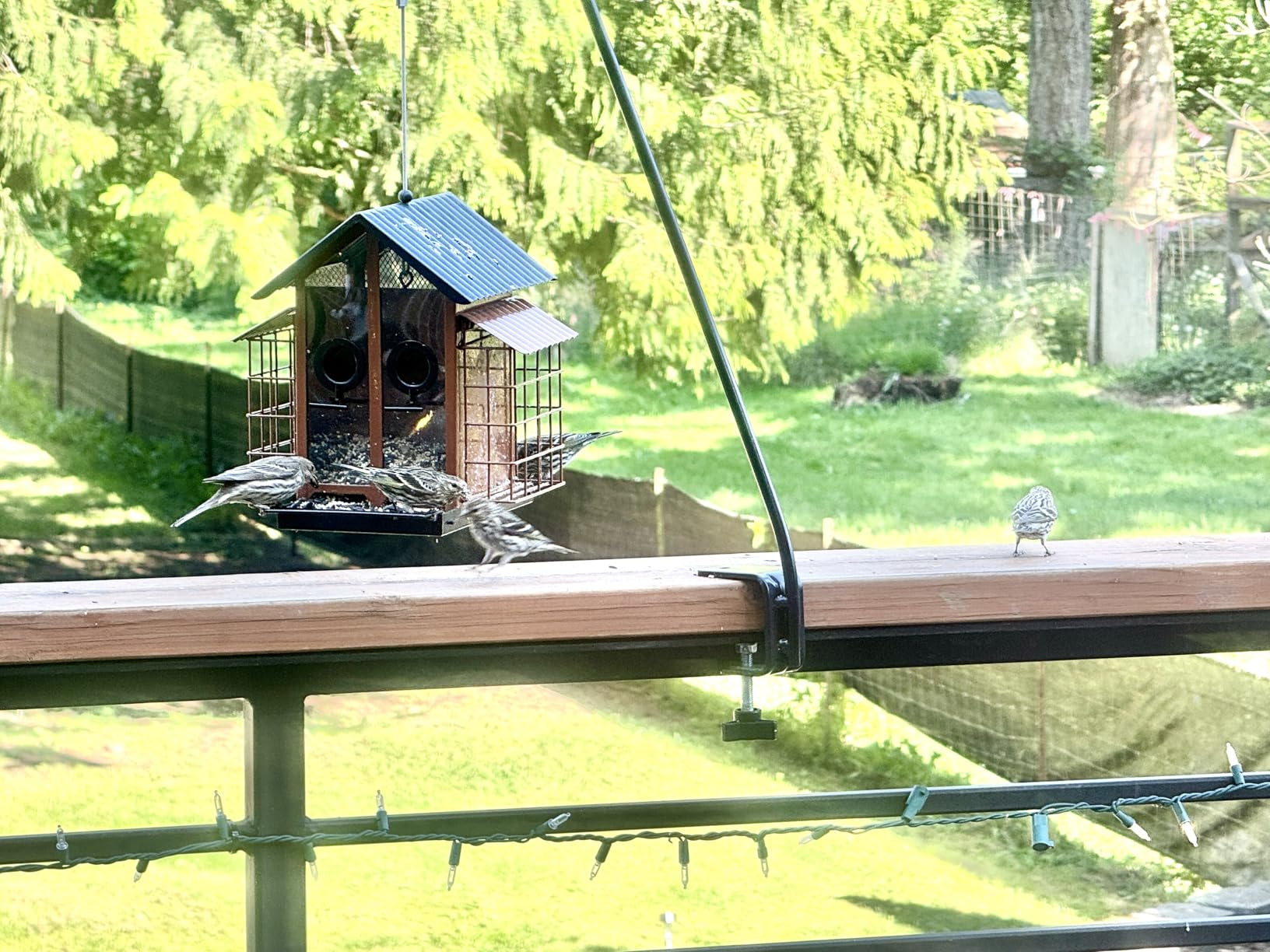
In the courtyard ecology of the Americas, although birds do not have the complex "planning thinking" of humans, they can implicitly "classify" various survival matters such as foraging, nesting, brooding, and defense through innate instincts and postnatal adaptation, and handle them in an orderly manner according to priority. Behind this seemingly disordered behavior is an efficient survival logic that has evolved over millions of years, and different birds will develop unique "task management" models based on their own habits.
1、 Priority classification of core matters: sorting based on survival needs as the core
The primary task ranking of courtyard birds in the Americas follows the underlying logic of "survival>reproduction>resource reserve", and all behaviors revolve around this core to avoid wasting energy on non essential matters.
First priority: foraging and defense
Whether it's a small dark eyed bunting or a medium-sized blue raven, the primary task every morning must be "foraging+environmental scanning". They will first move around the shrubs, lawns, or feeders in the courtyard, pecking at seeds and insects (their core foraging needs), while frequently looking up to observe the sky (to prevent predators such as eagles and falcons), synchronizing the two key tasks of "obtaining energy" and "avoiding danger", forming a fixed process of "foraging while guarding". For example, the American goldfinch will stay in sunflower beds for 10-15 minutes, glancing up once for every 3-5 seeds pecked, ensuring that it is not exposed to danger while satisfying hunger.
Second priority: matters related to reproduction
Entering the breeding season (usually from March to June in spring), birds will prioritize "building nests, mating, and raising chicks" second only to foraging, and progress in an orderly manner according to the timeline of "building nests → mating → laying eggs → raising chicks". The male of the North American Cardinals first demarcates their territory through vocalizations (a link between defense and reproduction), and then assists the female in collecting branches, grass leaves, and feathers to build a nest; After the nest is completed, the male bird completes courtship by feeding the female bird. After the female bird lays eggs, both parties divide the work into "hatching (female bird as the main)+foraging and feeding (male bird as the main)". The whole process is interrelated and there is no obvious waste of time.
Third priority: Resource reserve and environmental adaptation
During non breeding seasons or environmental changes (such as reduced winter food and yard plant pruning), birds will initiate "resource reserves" and "adaptation adjustments". For example, the behavior of grey squirrels (although not birds, they often coexist with yard birds) can be used as a reference, while blue jays collect acorns and bury them in the corners of the yard, while adjusting their foraging routes - if the feeders in the yard are removed, they will quickly turn to surrounding fruit trees or shrubs to avoid wasting time in ineffective areas.
2、 Refined organization of similar matters: classified and processed according to space, time, and resources
In addition to priority sorting, American courtyard birds also perform "implicit classification" on similar matters, improving processing efficiency through spatial division, time allocation, resource screening, and other methods.
(1) Space dimension: "Functional zoning" reduces round-trip consumption
A courtyard is a "functional space" for birds, which divides the courtyard into "foraging area, nesting area, caution area, and resting area" according to the needs of different matters, to avoid dealing with multiple conflicts in the same area.
Foraging area: usually concentrated around the feeders in the courtyard, on the lawn (with abundant insects), and under fruit trees (with fallen fruits). Birds will focus on foraging in this area, rarely building nests or resting for a long time, to avoid attracting natural enemies with food residues;
Nesting area: Choose the middle branches of tall trees (such as oak and maple trees) or areas with dense shrubs (such as holly bushes). These areas have strong concealment and are far away from paths with frequent human activities (such as courtyard trails). When building a nest, birds will repeatedly travel between the "nesting area" and the "material collection area" (such as dry grass on the edge of the lawn and fine branches by the river), forming a fixed route;
Warning zone: It is often a high point in the courtyard, such as the roof, power poles, and the top of tall trees. Birds will stop here to observe. Once danger is detected (such as cats approaching), they will immediately sound a warning and guide chicks or companions to move to a "safe zone" (such as a dense area of bushes).
(2) Time dimension: 'Peak shifting processing' to avoid resource competition
Different birds or individuals of the same bird species will handle similar matters through "time off peak" to reduce competition and conflict.
Interspecific staggered feeding: Early birds (such as mockingbirds) tend to occupy the lawn for foraging from 5-7 am (when insect activity is high), while later active birds (such as mourning doves) turn to feeders after 9 am to avoid competing with mockingbirds for ground insects;
Intraspecific Peak Shifting: Within the same group of Blue Jays, adult individuals are responsible for long-distance foraging (such as collecting acorns in the woods outside the yard), while juvenile individuals move around the feeders in the yard, avoiding food competition among their own species and reducing the predation risk of juvenile individuals.
We recommend our Flowafoli bird feeder!