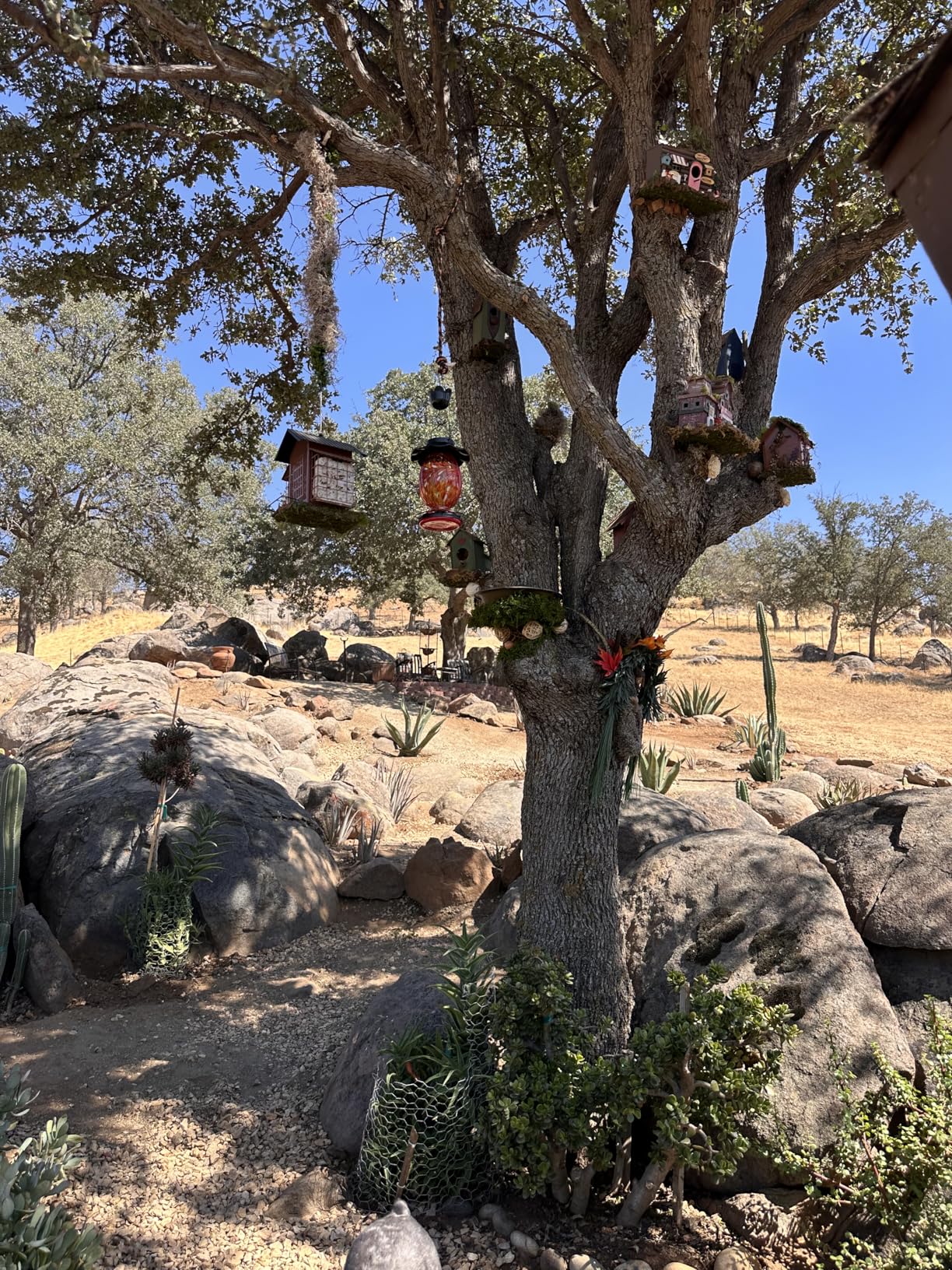
In urban and rural courtyards on the American continent, birds, as active participants in the ecosystem, always face challenges brought by courtyard environment renewal - from vegetation pruning, landscape transformation to changes in human activity patterns, every environmental change requires birds to maintain survival balance through precise behavioral adjustments. These seemingly tiny organisms have actually achieved efficient adaptation to environmental updates through a complex and flexible "operational processing system". Their behavioral logic reflects both the innate intelligence of species and the collaborative evolution with human activity space.
1、 Foraging behavior: dynamically adjusting resource acquisition paths
In the process of courtyard environment renewal, the distribution of food resources is often the first to change - such as humans changing flower varieties, cleaning up fallen leaves, or adjusting feeding habits, all of which directly affect the foraging efficiency of birds. At this point, birds will quickly adapt to the new foraging environment through a three-step operation of "resource exploration strategy optimization habit solidification".
During the resource exploration phase, omnivorous birds such as the North American mockingbird (Turdus migratorius) and the home sparrow (Haemorhous mexicanus) exhibit a strong desire for exploration. They will expand their flight range within 1-2 days after the environment is updated, and use a "short distance jumping+fixed-point observation" method to identify potential food sources in the courtyard: if berry shrubs (such as holly) are newly planted in the courtyard, mockingbirds will test the fruit maturity by pecking and mark the area as a "high-frequency foraging point"; If humans stop feeding grains, domestic sparrows will turn to the insect clusters under the courtyard lights or use the water accumulation area formed by lawn sprinklers to catch aquatic insects and quickly switch food types.
2、 Nesting Site Selection: Avoiding Risks and Optimizing Living Space
In the process of courtyard environment renewal, factors such as vegetation removal, building maintenance, and increased human activities can directly damage the original nesting environment of birds. In order to ensure successful reproduction, birds will construct safer breeding spaces through the operational process of "risk assessment site selection adjustment nest material innovation".
In terms of nest material selection, birds will make full use of the "new materials" brought by environmental updates to achieve adaptive optimization of their nests. Traditionally, birds have used tree branches, grass leaves, and feathers to build nests. However, in urbanized courtyards, they incorporate fiber materials produced by human activities into their nest materials - for example, the Thryothorus ludovicianus picks up nylon ropes and woolen heads from the courtyard to weave the nest walls, enhancing the resilience of the nest; The mourning dove (Zenaida macroura) will use the short grass stems left after trimming the lawn in the courtyard to quickly build a simple nest, reducing the time and cost of building a nest. What's even more interesting is that some birds adjust their nest materials according to changes in environmental temperature: if a well insulated pile of fallen leaves (such as maple leaf piles) is added to the courtyard, they will peck at the fallen leaf fibers to lay the bottom of the nest, increase the temperature inside the nest, and create a more suitable environment for chicks to hatch.
We recommend our Flowafoli bird feeder!