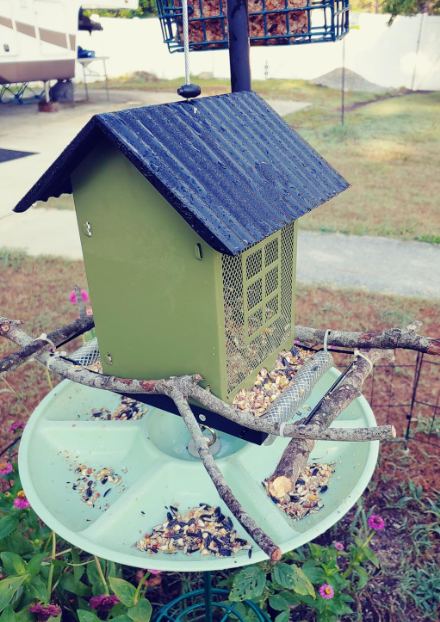
The American courtyard is a common habitat for various bird species, which often encounter challenges such as foraging competition, habitat disturbance, human activity impact, natural enemy threats, and breeding season interference in their daily activities. They have formed a unique "treatment plan" based on their own behavioral adaptation and instinctive reactions, which can be divided into the following categories, in line with the recent activity characteristics of courtyard birds:
1、 Coping with foraging competition: optimizing foraging strategies to avoid resource competition
In American courtyards, there is a high degree of overlap in foraging among different bird species, especially "dominant birds" such as sparrows, starlings, and blue jays that often monopolize food resources, causing difficulties for small songbirds. Various bird species resolve competition through differentiation strategies:
-Small songbirds (such as American mockingbirds and tits): Adjust their foraging time to avoid the active periods of bulby birds such as blue jays and starlings, and feed more in the early morning or evening. At the same time, broaden their foraging range - mockingbirds will peck at earthworms in shallow lawns and fly to shrubs to feed on berries, reducing direct competition with their peers; Mountain sparrows take advantage of their small size by burrowing into tree branches or feeder corners to obtain seeds that are difficult for large birds to reach. Some species also choose foods that "dominant birds" do not like, such as red flower seeds and nyjer seeds, to reduce competitive pressure.
-Flexible feeding birds (such as European starlings and sparrows): As invasive species, they form a numerical advantage by foraging in clusters, monopolizing resources such as grains and fruits in their yards, and flexibly adjusting their feeding habits. In summer, they feed on insects, while in autumn, they gnaw on fruits in orchards and fields, and even snatch food scraps discarded by humans to cope with food fluctuations. However, this approach also exacerbates conflicts with native birds.
-Unique foraging habits of birds (such as the five headed sparrow): They climb down tree trunks with their heads facing down, stuffing acorns and nuts into the gaps of the bark, and then using their sharp beaks to "knock" out seeds. This unique foraging method can avoid competition with other birds and reserve food to cope with food shortages, especially in winter, which can effectively ensure survival.
2、 Coping with habitat disturbance: adjusting nesting positions and strengthening defensive behaviors
In recent times, human activities in American courtyards (such as pruning trees and building facilities), climate change, and peer competition have often disrupted bird habitats and nest safety. Birds mainly respond by "adjusting site selection+strengthening defense":
-Optimization of Nesting Location: Cliff swallows and house swallows originally liked to build their nests under the eaves of courtyard buildings. If they encountered human cleaning or disturbance, they would move to higher branches of trees (10-70 feet) or hidden shrubs in the courtyard, avoiding areas with frequent human activities; Canadian geese build their nests on the edges of ponds and lakes, close to water sources and away from human activity areas. They also use vegetation cover to reduce interference. They also choose to pair with their partners for life to protect their nests and increase the success rate of nest building.
-Breeding season defense: Spring to late summer is the peak breeding season for birds, and almost all birds exhibit aggressive behavior when they perceive their nests or chicks to be threatened. The North American mockingbird is the most active defender, harassing humans, livestock, and other birds by loudly chirping, pretending to be injured, and other methods to attract the attention of intruders and protect their nests; Mockingbirds and blue jays will actively drive away animals close to their nests, even diving and attacking. This defensive behavior will continue until the young birds leave the nest (about two weeks). Some birds reproduce 2-3 times a year, and the defensive behavior will be repeated accordingly.
-Coping with habitat destruction: When the trees in the courtyard are trimmed and the vegetation is cleared, birds will quickly migrate to similar habitats in the surrounding area. If they cannot migrate, they will use artificial facilities in the courtyard, such as bird houses, eaves gaps, and air conditioning outdoor units, to temporarily build simple nests. At the same time, priority should be given to areas with evergreen trees and shrubs, and the shading and habitat space provided by vegetation should be utilized to alleviate the problem of insufficient habitat.
We recommend our Flowafoli bird feeder!