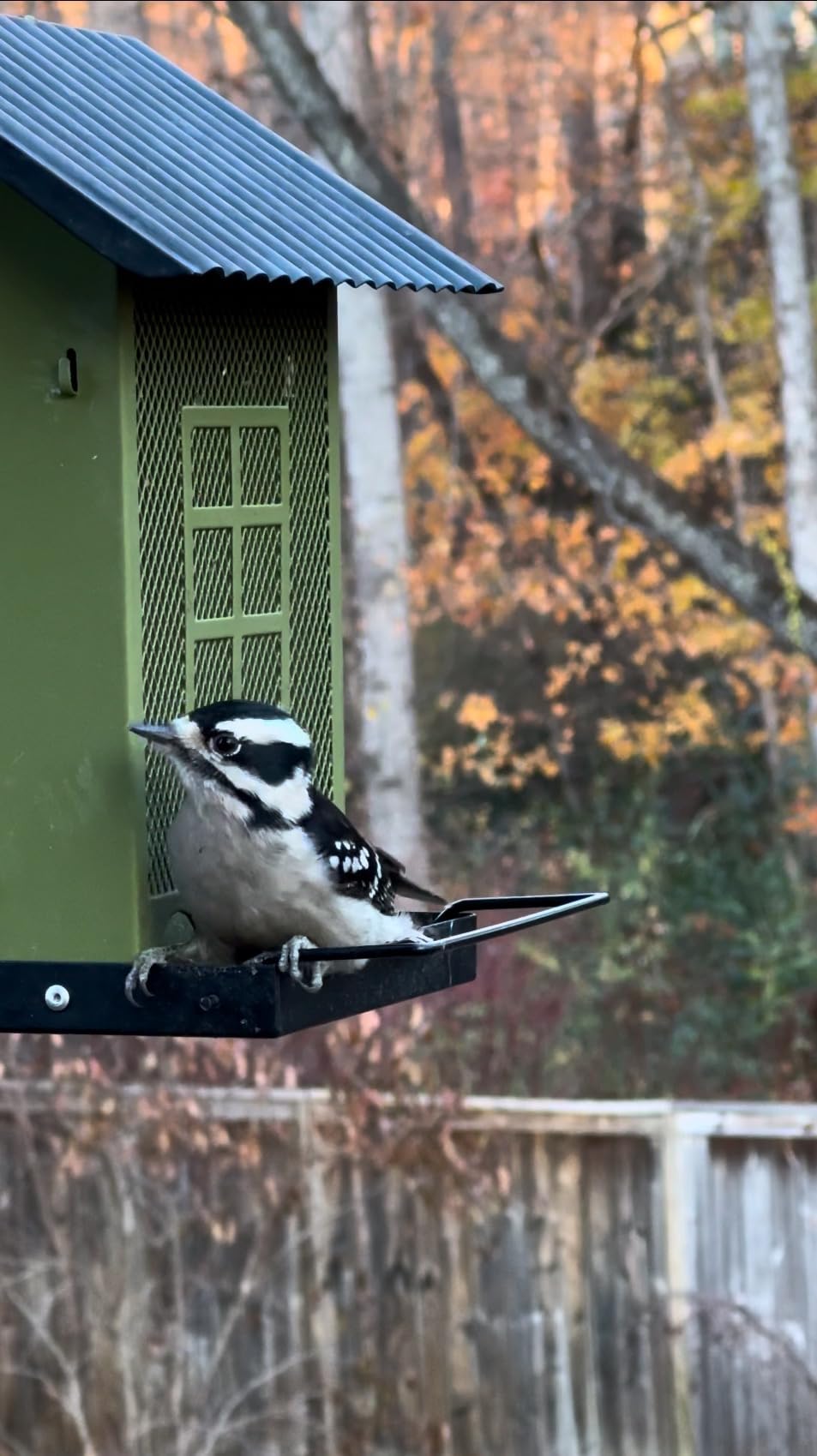
As a semi natural space with frequent bird activity, the American courtyard is affected by environmental uncertainty caused by human activities, as well as fluctuations in food and habitat resources. These factors may cause birds to experience feelings of hesitation in foraging, slow movement, abnormal vigilance, or social behavior disorder. Unlike humans, the "mentality adjustment" of birds is not an active adjustment of subjective consciousness, but a combination of innate instincts and postnatal adaptation through behavioral, physiological, and social strategies to quickly get rid of a state of confusion and return to a stable rhythm of survival. It can be specifically divided into the following two types.
1. Physiological adaptation: By regulating nerves and metabolism, reduce the stress response caused by confusion
The hesitation of birds is essentially a stress response. When there are fluctuations in the courtyard environment (such as increased human activity, temporary appearance of natural enemies, changes in food sources), their bodies produce stress hormones, triggering states of hesitation, anxiety, and so on. Through long-term adaptation, courtyard birds in the Americas have developed unique physiological regulation mechanisms, which internally alleviate feelings of confusion and adjust their "mentality".
Research has found that the Song Belt Bunting (a common courtyard songbird) living in American courtyards quickly regulates its cortisol (stress hormone) levels when faced with a situation of confusion. Female Song Belt Bunting in urban populations can even actively reduce cortisol secretion, reduce the confusion and anxiety caused by stress reactions, and restore calmness more quickly, allowing them to engage in normal activities such as incubating eggs and foraging. This physiological adaptability allows them to better cope with frequent human activities in the courtyard and avoid long-term confusion.
Meanwhile, neurotransmitters play a crucial role in regulating the mentality of birds. Serotonin, as a core neurotransmitter that regulates emotions, can alleviate the tension and confusion of birds, while dopamine can enhance their foraging and nesting motivation, helping them transition from a state of confusion to a state of goal orientation. For example, when the thrush in the courtyard wanders due to food scarcity, serotonin levels in the brain increase, relieving anxiety. At the same time, the dopaminergic system is activated, driving them to expand their foraging range, search for new food sources, and overcome confusion through clear behavioral goals.
2. Social reliance: Leveraging group interaction and peer signals to gain a sense of security and clarify direction
Most courtyard birds in the Americas, such as sparrows, starlings, and main cardinals, are social or semi social species, and social interaction is an important support for them to cope with confusion and adjust their mentality. When an individual falls into confusion, the behavioral signals of peers can provide them with direction, and the companionship of a group can alleviate loneliness and anxiety, helping them quickly recover to a stable state.
In the courtyard, when the house sparrow is lost due to sudden environmental changes (such as sudden noise or the appearance of unfamiliar objects), it will actively approach the group and communicate with its companions through physical contact and slight chirping. The stable behavior of dominant individuals in a group (such as normal foraging and roosting) will transmit a "safety signal", allowing lost individuals to gradually relax, imitate the behavior of their peers, and rediscover the rhythm of survival. In addition, some birds (such as the common myna) also alleviate confusion through cooperative behavior - when they encounter difficulties in foraging and are lost, they will cooperate in groups to find food, clarify goals in cooperation, reduce confusion, and the power of the group can also reduce the confusion caused by the threat of natural enemies.
For birds with strong territoriality (such as mockingbirds and main cardinals), although they usually move alone, they will confirm their status and territorial range through brief interactions with their peers (such as territorial calls or minor fights) when they are in a state of confusion (such as unclear territorial boundaries or encountering similar provocations), clarify their survival goals, and thus get rid of confusion. For example, when the mockingbird protects its food source in winter, it strengthens its territorial awareness and reduces confusion caused by food uncertainty by driving away other birds. At the same time, this defensive behavior can also vent inner tension and adjust its mentality.
We recommend our Flowafoli bird feeder!