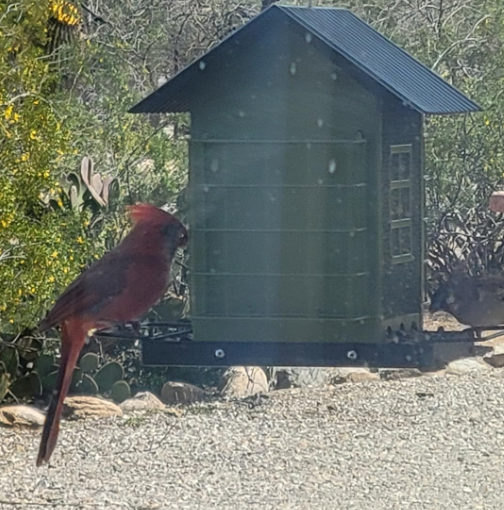
As a miniature habitat where cities and nature intertwine, American courtyards are home to dozens of common bird species such as thrushes, main cardinals, blue jays, and red bellied woodpeckers. Recently, influenced by multiple factors such as climate fluctuations, food resource fluctuations, human activity interference, and changes in natural enemy activities, these feathered elves need to simultaneously handle various miscellaneous tasks such as foraging, nesting, defense, and chick rearing. They rely on evolved behavioral strategies and collective intelligence to accurately balance survival and reproduction in dynamically changing environments, demonstrating strong adaptability.
1、 Fluctuations in foraging resources: flexible adjustment strategies to adapt to food changes
Recent extreme weather and changes in vegetation growth cycles have led to uneven distribution of food resources such as insects, berries, and seeds in the courtyard, resulting in short-term shortages of some food types. In response, courtyard birds in the Americas use a dual approach of expanding their diet and switching their foraging modes to alleviate food pressure.
For herbivorous and specialized foraging birds, targeted optimization techniques are used: the main Cardinals have thick conical beaks designed specifically to break through seed shells. In recent times, when there is a decrease in seed based food, they will prioritize plump berries and extend their foraging time, from early morning to dusk, to make up for the lack of single foraging. The red bellied woodpecker and the velvet woodpecker shift their foraging focus to overwintering insects under the bark of the tree. With their keen hearing, they locate the wormhole and use their hard beaks to dig open the bark to feed, avoiding competition for ground food while steadily obtaining high protein food. The ruby throated hummingbird, on the other hand, adjusted its flight route to explore honey plants such as trumpet vine one by one in the courtyard, and frequently visited artificial hummingbird feeders to supplement energy with sugary solutions because of the early or late flowering of some flowers.
2、 Nesting and brooding pressure: optimizing nest site selection and collaboratively nurturing offspring
Recently, it is the breeding season for most courtyard birds, with a shortage of nesting materials, intensified competition for nest sites, and a combination of issues such as raising young birds. Birds can improve their reproductive success rate through "precise site selection+parental cooperation".
During the chick rearing stage, parents work together to handle miscellaneous tasks such as feeding and guarding. Birds such as migratory thrushes and main cardinals adopt a "parental rotation" mode, with one parent staying in the nest to guard the chicks and drive away intruders, while the other goes out to forage. After returning, they feed the chicks mouth to mouth and adjust their food according to their growth stage - high protein insects are the main focus during the chick rearing stage, while seeds and berries are gradually added during the subadult stage to help the chicks adapt to independent foraging. Blue Jay shows a certain degree of "group mutual assistance" behavior. During the breeding season, non breeding individuals may assist their parent birds in guarding the nest, delivering food, and improving the survival rate of young birds.
We recommend our Flowafoli bird feeder!